
Bumblebee
Bombus
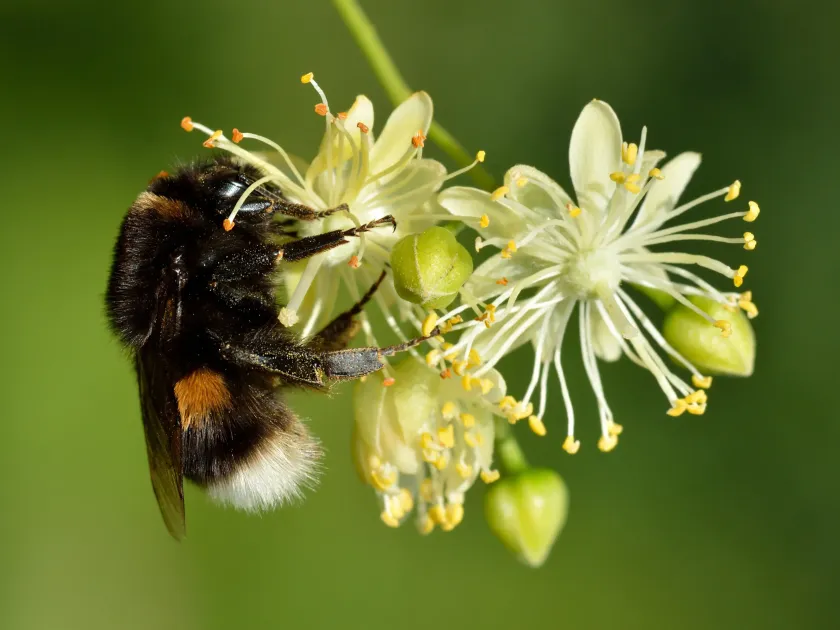
Description
How to identify
Bumblebees, belonging to the genus Bombus within the Apidae family, are large, fuzzy insects well-known for their role as pollinators.
They are characterized by their dense hair covering, which provides them with excellent thermal insulation, allowing them to work in cooler temperatures.
The colony cycle is strictly seasonal; queens emerge in spring to establish nests, typically in underground burrows or sheltered dark cavities.
A typical colony grows throughout the summer, producing workers, drones, and new queens before the cycle ends in the late autumn.
While primarily beneficial, their complex mouthparts can sometimes be used to bypass natural floral structures to access nectar.
What it damages
Damage occurs primarily when bumblebees act as "nectar robbers," biting through the base of long-tubed flowers to extract nectar.
Plants such as tomatoes and various legumes are particularly vulnerable to this behavior, especially in enclosed environments like greenhouses.
The biting action causes mechanical trauma to the floral tissue, preventing proper fertilization and leading to the premature abscission of buds.
Damaged flowers often show signs of wilting or misshapen fruit development, which negatively impacts the final marketable yield of the crop.
In high-density greenhouse operations, nectar-robbing can lead to significant economic losses if not properly managed.
When it appears
Bumblebee activity begins early in the spring as soon as ambient temperatures allow the overwintering queens to begin foraging.
The peak season for potential damage coincides with the primary flowering stage of crops, which occurs during the mid-summer months.
During the summer, the population of worker bees is at its maximum, increasing the likelihood of interactions with vulnerable agricultural flowers.
As autumn approaches, activity levels drop significantly, and the colony focus shifts toward rearing reproductive individuals.
Monitoring the bloom phenology of your specific crop is essential to anticipate when bumblebee activity poses the highest risk to flowers.
Signs of infestation
The most reliable sign of damage is the presence of small, deliberate puncture marks or slits located at the base of the flower corolla.
Flowers that wilt shortly after blooming or exhibit yellowing at the base are often indicators of recent nectar-robbing events.
Abnormal fruit shape, such as restricted development or scarring, can often be traced back to early-stage damage caused by bumblebee bites.
An observation of bees congregating at the base of flowers rather than entering the opening is a clear sign of aberrant feeding behavior.
Inspecting the ground under crop rows may reveal a carpet of fallen, bitten buds, which confirms ongoing damage in the area.
Control measures
To reduce damage, cultivate surrounding forage areas with easy-access flowers that can divert the bumblebees' attention from the crop.
In greenhouse settings, utilize physical barriers like fine mesh netting to limit access to vulnerable flowers during sensitive growth phases.
Maintain proper colony density in greenhouses; over-populating with bumblebee hives increases competition for food and promotes nectar-robbing.
Provide supplemental nectar or sugar water in greenhouses to satiate the bees, which reduces the need for them to damage flowers for moisture.
Always avoid the use of broad-spectrum insecticides, as the negative impact on beneficial pollination far outweighs the cost of occasional floral damage.
Taxonomy
- Latin name
- Bombus
- Order
- Hymenoptera
- Family
- Apidae
- EPPO code
- BOMUSP
Discussion
No discussions yet — be the first.