
Africanized honey bee
Apis mellifera
Description
How to identify
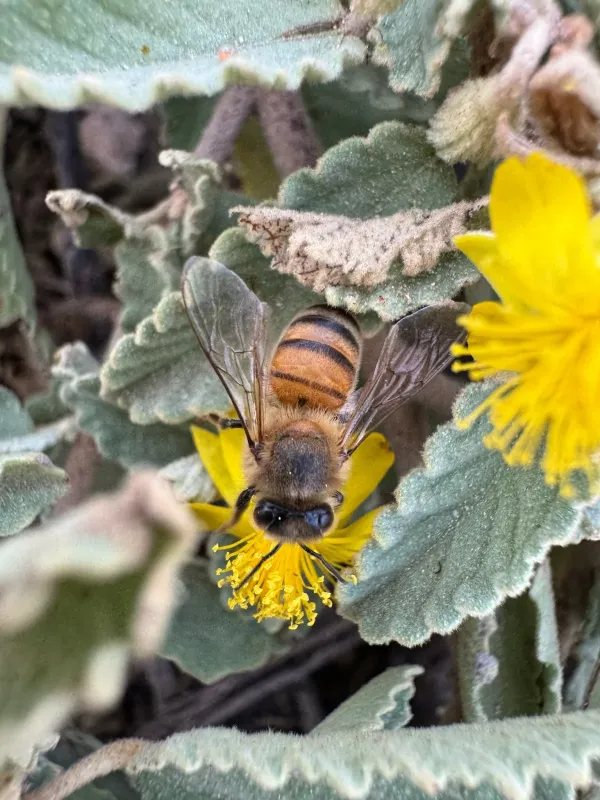
The Africanized honey bee Apis mellifera scutellata is a hybrid resulting from the crossbreeding of African and European bee subspecies. Morphologically, they are nearly identical to common honey bees, making definitive identification impossible without wing morphometrics or DNA testing.
The primary distinguishing characteristic of this species is its intense defensive behavior. Unlike domesticated honey bees, they exhibit extreme aggression, often attacking in large numbers and pursuing perceived threats for significantly longer distances.
Taxonomically, this species belongs to the order Hymenoptera and the family Apidae. It is recognized as an invasive species in many regions, capable of rapidly colonizing diverse habitats and disrupting local ecological niches.
Workers are slightly smaller than their European counterparts, which contributes to their high mobility and efficient reproduction cycles. Queen development is accelerated, allowing the colony to reach a large population size in a short period of time.
These bees demonstrate high adaptability, often nesting in non-traditional locations such as ground cavities, tree hollows, water meter boxes, or abandoned machinery. This versatility makes them difficult to manage in agricultural settings.
What it damages
The primary agricultural impact of these bees is the severe threat they pose to human safety during field operations. Their aggressive nature can force the suspension of harvesting, irrigation, and other routine farm activities.
They outcompete native pollinators, potentially leading to a decline in local biodiversity. This competition can disrupt the pollination efficiency of various crops, as their erratic foraging behavior is less predictable than that of managed honey bees.
In beekeeping, these bees are highly destructive. They can quickly invade or "Africanize" managed hives through mating or usurpation, causing a significant loss in honey production and rendering the apiary unsafe to maintain.
Economic losses often extend to livestock management. Due to their tendency to attack in massive swarms, they represent a lethal threat to confined or grazing animals, leading to potential fatalities and significant herd disruption.
Their rapid colony expansion creates a constant risk for orchards and plantations. The high density of nests requires constant monitoring and increases labor costs related to safety and site maintenance to prevent uncontrolled infestations.
When it appears
Activity is most intense during warm periods when environmental conditions favor brood development and swarming. In tropical climates, these bees remain active year-round, posing a constant, uninterrupted threat to operations.
Swarming occurs frequently throughout the growth season, as the species is genetically predisposed to rapid expansion. Multiple swarms can be produced by a single colony, leading to exponential population growth within a short timeframe.
Aggression levels peak during nectar flow and high-resource periods when colonies are most protective of their stores. During these times, even minor vibrations from tractors or equipment can trigger a massive defensive response.
The generation turnover is fast, which maintains high population pressure across the landscape. This continuous reproductive cycle ensures that colonies remain robust and capable of sustained defense throughout the vegetation season.
Autumn can be a period of increased conflict, as colonies may exhibit "robbing" behavior, attempting to seize honey stores from other hives. This intensifies the competition and increases the likelihood of encountering aggressive swarms.
Signs of infestation
A major warning sign is excessive guard bee activity near the hive entrance. If individuals approach within 10-15 meters of a nest and are immediately met by a high number of defensive bees, the colony is likely Africanized.
The presence of exposed nests in atypical locations, such as open tree branches, utility boxes, or machinery components, serves as a significant indicator. These bees are less selective about traditional nesting cavities.
Frequent and massive attacks on field equipment operators indicate the presence of a colony nearby. If equipment vibrations or exhaust odors trigger an immediate, aggressive, and long-range pursuit, the infestation is confirmed.
Sudden changes in the behavior of a previously docile managed apiary are strong indicators of genetic hybridization. Beekeepers may notice increased excitability and erratic flight patterns during standard hive inspections.
Reports of livestock or small animal deaths near wooded or industrial areas provide circumstantial evidence of established aggressive colonies. Such incidents should be reported immediately for professional assessment.
Control measures
The most effective management strategy is professional removal of the nest by specialized pest control services. Attempts at DIY removal are strongly discouraged due to the extreme risk of severe envenomation.
Insecticide use should be strictly targeted and limited to specific nest sites to prevent collateral damage to beneficial local pollinators. Chemical interventions must be performed by trained personnel using appropriate protective gear.
Proactive site management includes regular inspections of infrastructure and the sealing of potential nesting cavities. Removing abandoned equipment and maintenance of farm property reduces the availability of suitable nesting sites.
Beekeepers must prioritize the use of high-quality, certified queens to maintain the genetic integrity of their hives. Frequent re-queening with proven, docile stock is essential to resist Africanization of the apiary.
Safety training for farm staff is crucial. Workers should be educated on how to respond if they encounter a swarm, including the importance of retreat and the use of protective equipment during high-risk operations.
Taxonomy
- Latin name
- Apis mellifera
- Order
- Hymenoptera
- Family
- Apidae
- EPPO code
- APISMA
Discussion
No discussions yet — be the first.