
Anthophora
Anthophora
Description
How to identify
Anthophora is a genus of solitary bees within the family Apidae. Often mistaken for pests due to their activity near structures or bare soil, they are actually vital components of a healthy ecosystem.
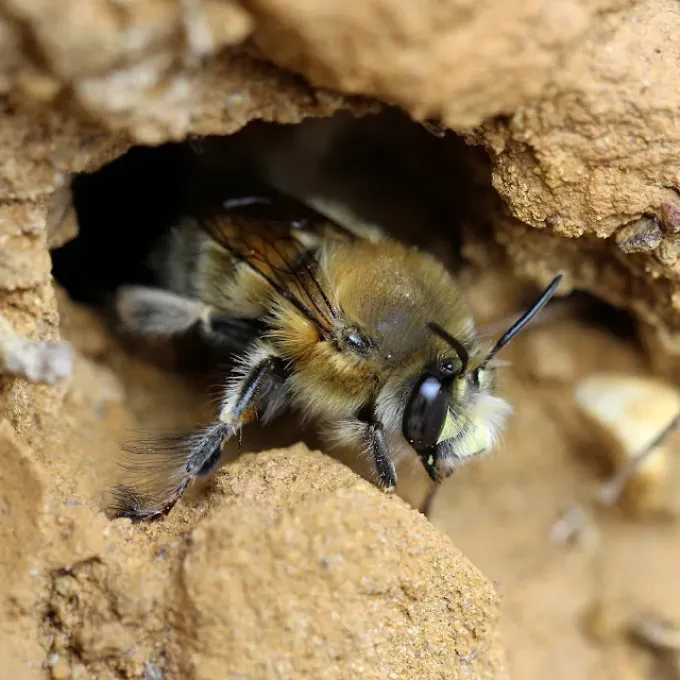
These bees are characterized by their dense hair and rapid flight. While they may resemble bumblebees, their behavior as solitary nesters sets them apart from social bee colonies.
Each female Anthophora constructs her own nest, typically in soil banks, clay structures, or even masonry, depending on the species and environmental conditions.
Their biological function is strictly focused on foraging for nectar and pollen to provision their offspring, making them highly efficient pollinators for various flowering plants.
Recognizing them as beneficial insects rather than pests is a critical step in modern integrated pest management for any agricultural professional.
What it damages
Anthophora species do not cause damage to crops. They are not phytophagous; they do not feed on leaves, stems, fruits, or roots, meaning they pose zero threat to harvest yields.
The misconception of them being pests usually stems from their ground-nesting behavior, which some farmers mistakenly link to potential damage to root systems or soil integrity.
In reality, their nest-building activity is minimal and has no negative impact on the structural health of the soil or the development of agricultural crops.
On the contrary, their presence is highly beneficial, as they actively visit the blossoms of vegetables, fruits, and legumes, significantly enhancing fertilization rates.
Protecting Anthophora populations is an essential practice for farmers who rely on natural pollination to maximize the quantity and quality of their production.
When it appears
The active flight period of Anthophora typically occurs during the spring and early summer, aligning perfectly with the blooming season of most major agricultural crops.
During this short window of activity, the bees are highly focused on gathering resources, ensuring that cross-pollination occurs efficiently across the field.
After the nesting phase is completed, the adult bees finish their lifecycle, leaving their offspring to develop safely inside the protected nest cells beneath the surface.
Development continues through the larval and pupal stages, with the bees overwintering in their cocoons, ready to emerge as adults in the following spring.
This seasonality ensures that the bees are only present when the plants are most in need of pollination, without requiring any intervention from the grower.
Signs of infestation
Evidence of Anthophora activity includes small, precise holes in the ground or clay embankments, often surrounded by a small amount of excavated soil.
You may observe the bees rapidly flying between blossoms, often emitting a distinct, low-pitched hum, which is a sign of healthy and active pollination in progress.
A lack of plant injury—such as chewed leaves or deformed fruits—is the best evidence that these insects are not pests but rather beneficial pollinators.
- Small 5-8mm diameter nest entrances in the soil.
- Persistent and rapid flower-to-flower visitation.
- Absence of necrotic spots or physical plant damage.
These signs confirm a vibrant pollinator population that is working to improve your crop yields naturally and efficiently.
Control measures
There is no need for control measures against Anthophora, as they are not pests. Implementing chemical treatments to remove them is counterproductive and harmful to your farm's health.
The use of broad-spectrum insecticides during the blooming period is strongly discouraged, as it eliminates these valuable pollinators and reduces overall crop profitability.
If insect management is necessary for genuine pests, always apply products during late evening hours when solitary bees are inactive and tucked away in their nests.
Maintaining wild, untilled margins around your fields provides the necessary nesting habitats for Anthophora, ensuring they return to your farm year after year.
Treating these bees as allies in your agricultural practice will lead to more sustainable farming and better results at harvest time.
Taxonomy
- Latin name
- Anthophora
- Order
- Hymenoptera
- Family
- Apidae
- EPPO code
- ANHPSP
Discussion
No discussions yet — be the first.