
Eastern honey bee
Apis cerana
Description
How to identify
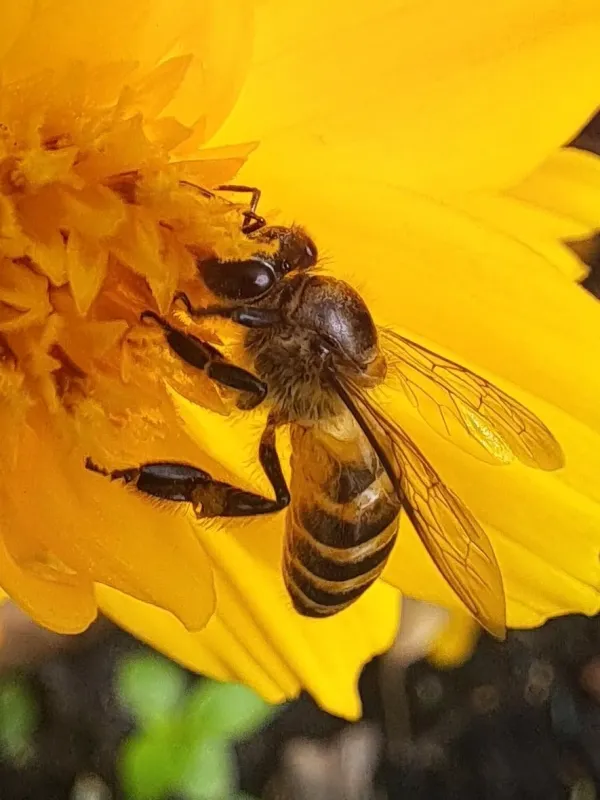
The Eastern honey bee (Apis cerana) belongs to the order Hymenoptera, family Apidae. It is slightly smaller than the common European honey bee and features distinct yellow and black abdominal bands.
This species is highly adapted to various climatic zones across Asia, ranging from tropical to temperate environments. They typically establish nests in dark, enclosed cavities like hollow trees or rock crevices.
A key biological trait is the construction of multiple parallel combs, which differs from the single-comb structures seen in some other species. They have evolved specific defensive mechanisms to thrive in their native habitat.
The colony cycle is tightly regulated by seasonal floral availability. Reproduction is achieved through natural swarming, allowing the colonies to colonize new areas effectively and rapidly in suitable environments.
Behavioral differences are notable in their foraging habits and defensive responses. They are known for being more alert and reactive to vibrations or intrusions near their hive entrance compared to other honey bees.
What it damages
While the Eastern honey bee is a valuable pollinator, it poses significant agricultural risks as a vector for pathogens. Specifically, it is the natural host for the Varroa destructor mite, which devastates European honey bee colonies.
Because Apis cerana has developed resistance to this mite, it can carry high parasite loads without showing symptoms. When these bees come into contact with other honey bee species, they transmit the mite, causing outbreaks.
Competition for forage resources with native pollinator populations can disrupt local ecosystems. This ecological displacement often leads to a decline in biodiversity, affecting the overall success of agricultural pollination.
The spread of viral diseases through mite infestation significantly lowers the health and productivity of neighboring apiaries. This indirect damage often leads to severe economic consequences for commercial honey producers.
In regions where it is considered an invasive species, its presence requires careful management to prevent the collapse of existing bee colonies and ensure the safety of apiary investments.
When it appears
Activity begins in early spring when temperatures reach a threshold for safe flight. During this time, colonies focus on brood rearing and gathering early spring pollen to strengthen the hive population.
Summer is the peak season for foraging and honey production, coinciding with the flowering of diverse agricultural crops. This is also the primary period for natural swarming and hive expansion.
As autumn approaches, the bees begin preparing for winter. They shift their focus towards resource conservation and maintenance of the hive microclimate to survive colder temperatures successfully.
During the winter months, the colony remains inside the nest. They survive by clustering together and vibrating their muscles to generate heat, which maintains the internal temperature at survivable levels.
Late autumn and early spring represent high-risk periods for the spread of diseases. High hive density during these times facilitates the rapid transmission of parasites if left unmonitored by beekeepers.
Signs of infestation
Identifying the presence of this species involves looking for the unique parallel-comb nest structure. Beekeepers may notice aggressive defensive behavior or heightened guard bee activity at the hive entrance.
Monitoring for mite infestation is crucial. The presence of mites on adult bees or within the brood is a clear indicator that the hive is acting as a reservoir for potential pathogens.
Distinctive flight patterns and rapid foraging behavior often differentiate them from European honey bees. Experienced observers can also identify them by their specific alarm pheromones and sound signals.
A sudden decline in the performance of adjacent hives is a warning sign of parasite transmission. If colony health decreases without clear environmental reasons, investigation into external pest factors is required.
Visual inspection of the colony reveals more alertness towards movement compared to calmer honey bee breeds. These guard bees are quick to respond to any external disturbance in the immediate vicinity.
Control measures
Effective control relies on rigorous quarantine measures to prevent the spread of invasive populations. Minimizing interaction between different honey bee species is essential for disease prevention.
Mechanical barriers on hive entrances can limit the entry of unauthorized insects. These simple devices are highly effective in managing hive security within commercial beekeeping operations.
Regular diagnostic testing for mite levels is mandatory for apiary health. If thresholds are exceeded, immediate application of biological or chemical treatments is necessary to prevent colony collapse.
Education and best management practices among beekeepers reduce the risk of accidental spread. Keeping clean, well-monitored apiaries helps in mitigating the negative impacts of invasive bee species.
- Strict quarantine and movement control.
- Entrance guards and bee exclusion screens.
- Routine diagnostic mite checks.
- Integrated pest management (IPM) strategies.
Taxonomy
- Latin name
- Apis cerana
- Order
- Hymenoptera
- Family
- Apidae
- EPPO code
- APISCE
Discussion
No discussions yet — be the first.