
Trigona hyalinata
Trigona hyalinata
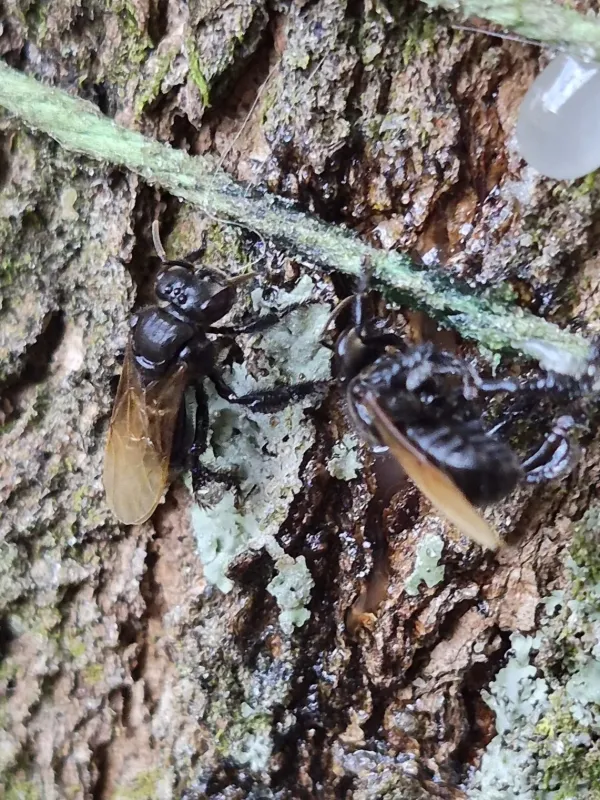
Description
How to identify
Trigona hyalinata is a species of stingless bee native to tropical regions. These social insects are well-known for their complex nesting habits and their role in local ecosystems, although their agricultural status is often negative.
The insects are primarily black in color with clear, hyaline wings, which provides the inspiration for their specific epithet. Despite lacking a stinger, they possess strong mandibles used for defense and resource collection.
They form large colonies in tree cavities or abandoned nests. Their behavior is characterized by high activity levels and strong defense mechanisms when their nesting sites are approached by potential threats.
In an agricultural setting, these bees are often misunderstood because other bee species are essential pollinators. However, this specific species prioritizes collecting plant materials over purely foraging for pollen and nectar.
Correct identification is crucial to avoid confusing them with beneficial pollinators. Entomologists look for specific facial patterns and wing venation to distinguish this species from other meliponines.
What it damages
The damage caused by Trigona hyalinata is mechanical rather than chemical. They utilize their mandibles to scrape off the bark and epidermis of trees to collect nesting materials.
Citrus trees are particularly vulnerable to this activity. The bees strip the bark from young stems and branches, which can lead to significant structural damage to the plant's vascular system.
This persistent scraping interferes with the tree's growth and makes it susceptible to opportunistic infections. Once the protective bark is removed, bacteria and fungi often enter the plant tissues.
Furthermore, these bees often damage fruit skins, creating indentations and unsightly lesions. This significantly lowers the commercial value of the crop and creates entry points for post-harvest decay.
Severe infestation can result in the loss of twigs and smaller branches, impacting the tree's ability to produce fruit and hindering its overall development in the orchard.
When it appears
As these bees live in tropical environments, their activity is not dictated by winter dormancy. They are active year-round, posing a constant challenge to orchard managers.
The period of most intensive damage often coincides with the flush of new shoots in citrus groves. During this time, the bees have a high demand for building materials to expand their colony structures.
Dry seasons can also exacerbate the damage, as the bees may seek out moisture from plant tissues when alternative water sources are scarce or hard to access.
Continuous monitoring is required because the colony's developmental cycles are ongoing. There is no off-season for managing this specific pest in tropical plantation settings.
Growers should be especially vigilant during fruit set and maturation, as the bees may shift their feeding preference toward the more succulent tissues of the growing fruit.
Signs of infestation
The most prominent sign of infestation is the appearance of light-colored, scraped patches on the bark of younger branches. These areas often appear fresh and raw against the darker, undisturbed bark.
Visible colonies of bees moving along the trunks and branches indicate a nearby nest. This activity is usually most intense during the warmer parts of the day.
Gum secretion or sap flow from the affected areas of the trunk is a common defensive response by the tree and serves as a diagnostic indicator of pest feeding.
The presence of fibrous plant debris near nesting holes suggests the bees are actively harvesting materials from the host trees to reinforce their nests.
Damaged fruits, showing distinct scrape marks and shallow gouges, are a clear indicator that Trigona hyalinata is present and actively feeding in the orchard.
Control measures
Management of Trigona hyalinata must be delicate, focusing on protection rather than broad-spectrum eradication, to ensure that other essential pollinator species remain unharmed.
Physical protection methods are highly effective. Wrapping the main stems and branches of young, vulnerable trees with fine-mesh netting prevents the bees from accessing the bark.
Natural repellents, particularly those based on essential oils or specific plant extracts, can be applied to young shoots to discourage the bees from selecting these areas for material collection.
If nests are located in close proximity to the orchard, they can be carefully relocated or removed. This requires professional expertise to minimize the impact on the local bee population.
- Implement physical barriers like protective tree wraps.
- Perform regular monitoring and early detection of bark scraping.
- Treat damaged bark with fungicides to prevent secondary infections.
Taxonomy
- Latin name
- Trigona hyalinata
- Order
- Hymenoptera
- Family
- Apidae
- EPPO code
- TRGOHA
Discussion
No discussions yet — be the first.