
Trigona fulviventris
Trigona fulviventris
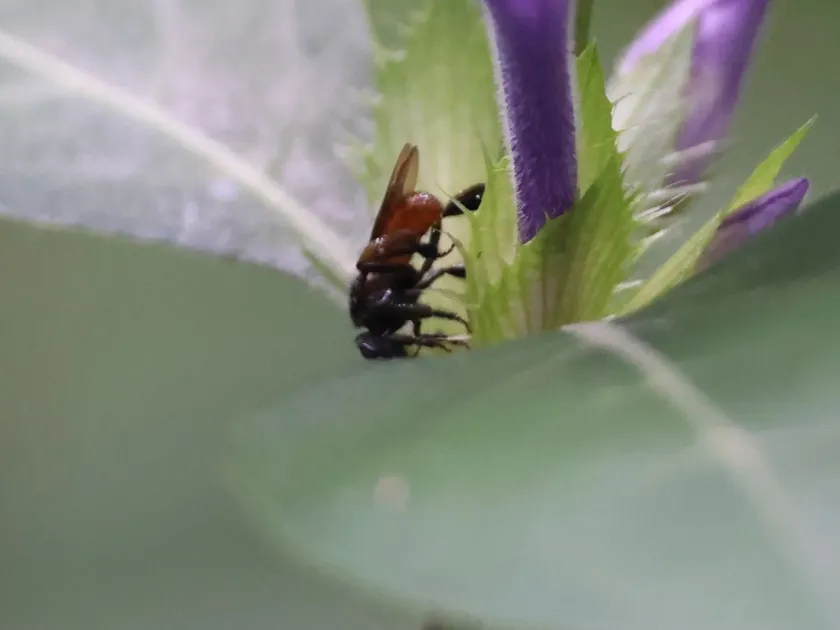
Description
How to identify
Trigona fulviventris is a species of stingless bee native to tropical regions. These small insects, measuring approximately 4 to 6 mm in length, are characterized by their dark thorax and distinctive reddish-brown abdomen, which makes them relatively easy to distinguish.
Belonging to the Apidae family within the order Hymenoptera, these bees are known for their complex social structure. While they perform pollination services for many wild plants, they are classified as agricultural pests in certain contexts due to their destructive foraging behavior.
The colony lives in large nests, typically established in tree hollows or bark crevices. Their biological activity is highly dependent on warm tropical temperatures, which allow them to remain active and forage throughout the year.
A colony consists of a queen, drones, and workers. The worker bees are responsible for the damage, as they frequently visit plantations not just for nectar, but to collect plant fibers and tissues for nest construction and maintenance.
Although they lack a stinger, their powerful mandibles allow them to scrape and gnaw through plant tissues. This mechanical damage can be quite significant, particularly on younger, more delicate plant parts that are easier for them to manipulate.
What it damages
Trigona fulviventris primarily targets fruit-bearing trees, including citrus, mango, avocado, and coffee plants. They focus their feeding and material-collection activities on young, tender leaves and the bark of developing branches.
Young seedlings are at the highest risk. The bees often strip the bark in circular patterns around branches, which disrupts the tree's vascular system, leading to wilting, branch dieback, or the total death of the seedling if the damage is severe enough.
In addition to bark, these bees frequently target reproductive structures. By gnawing on flower buds and blossoms, they prevent fertilization and development, resulting in substantial yield losses for the grower before the fruit even sets.
Beyond the immediate physical destruction, the damage creates entry points for various pathogens. Fungi, bacteria, and viruses often colonize the exposed tissues, leading to secondary infections that weaken the overall health of the tree.
- Mechanical destruction of young bark.
- Consumption of flower buds and blossoms.
- Stunting of plant growth due to vascular damage.
- Increased susceptibility to secondary plant diseases.
When it appears
The foraging activity of Trigona fulviventris is closely tied to the plant's vegetative growth cycles. Attacks are most prevalent during the dry season, when alternative natural resources are scarce and the bees seek concentrated food or material sources.
Periods of rapid vegetative growth are especially risky, as the high availability of soft, succulent new shoots provides an ideal environment for the bees to strip material for their hives.
In tropical climates, their activity is nearly year-round. While minor fluctuations in temperature might influence their foraging intensity, the persistent warm weather ensures that the pest remains a constant threat to agricultural productivity.
The life cycle of the colony is regulated by the availability of resources and nesting sites. A healthy, growing colony will have an increasing demand for building materials, which correlates with higher levels of damage to nearby vegetation.
Growers should maintain a consistent monitoring schedule, particularly focusing on the onset of flowering and leaf sprouting, to detect and respond to the early signs of bee activity before the damage becomes extensive.
Signs of infestation
One of the most obvious indicators of an infestation is the presence of scraped patches on the bark of young branches, often resembling superficial gouges or raw tissue. These areas are frequently visited by bees during the day.
Auditory evidence is also a strong indicator. An active colony foraging on a tree will produce a noticeable, persistent humming or buzzing sound, which can alert a farmer to the presence of the bees on specific branches or trees.
The presence of nearby nests in tree hollows is a major red flag. One might observe traces of wax or resin used by the bees to seal or modify their nest entrances, which can sometimes be seen on the tree trunks nearby.
Deformation or browning of young shoots is a classic sign of long-term damage. As the bees remove the outer tissue, the shoot loses its ability to transport water and nutrients, resulting in a rapid decline in vigor and eventually death.
Look for scars or jagged marks on the surface of young fruit, which indicates that the bees have attempted to access the moisture inside the fruit, causing cosmetic and physiological damage.
Control measures
Mechanical exclusion is the most reliable control method. Covering young trees or sensitive branches with fine-mesh netting during peak growth periods effectively prevents the bees from accessing and stripping the bark.
Sanitation through the pruning of damaged branches can help reduce the immediate attractiveness of the tree. By removing damaged areas, the grower encourages the plant to heal and reduces the sites where bees congregate.
Identifying and neutralizing nearby nests is the most effective way to address the source of the problem. Removing colonies located within close proximity to the orchard often eliminates the pest pressure for the remainder of the season.
The use of pungent botanical repellents can serve as a temporary deterrent for bees. While this does not solve the underlying colony issue, it can provide a window of protection for high-value crops during sensitive developmental stages.
Integrated Pest Management (IPM) strategies, including the application of specific biological control agents that target stingless bee populations, can help maintain balance without causing harm to other beneficial insect species.
Taxonomy
- Latin name
- Trigona fulviventris
- Order
- Hymenoptera
- Family
- Apidae
- EPPO code
- TRGOFU
Discussion
No discussions yet — be the first.