
Trigona amalthea
Trigona amalthea
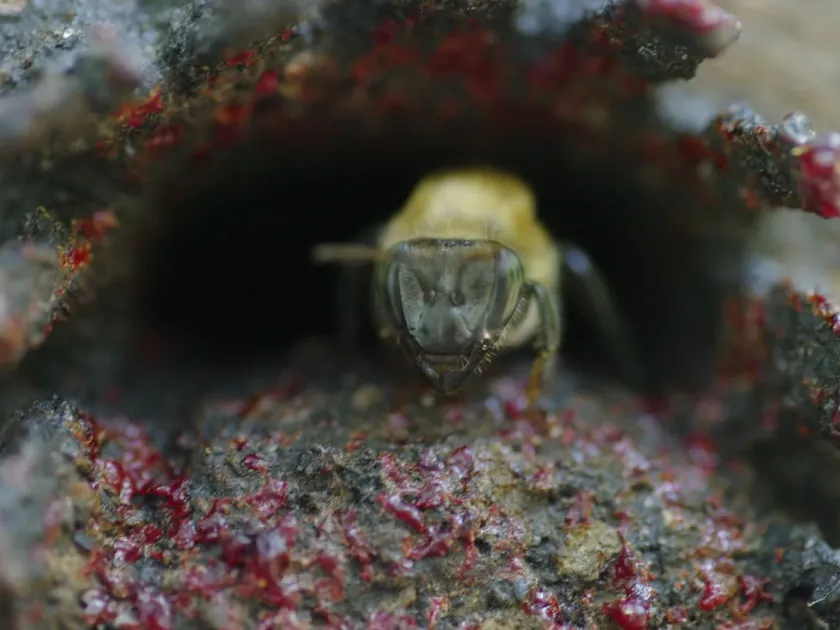
Description
How to identify
Trigona amalthea is a species of stingless bee belonging to the family Apidae, order Hymenoptera, known for its destructive habits in agriculture.
These insects are characterized by their dark-colored bodies and powerful mandibles, which they use to scrape bark from trees.
They typically build nests in tree cavities or natural hollows, utilizing resin, mud, and wax as primary building materials.
As social insects, they operate in organized colonies, often swarming around their foraging sites on tree branches.
Identifying them is straightforward due to their constant buzzing sound and visible physical impact on the branches they infest.
What it damages
The primary hosts for Trigona amalthea are citrus trees and various other fruit-bearing species in South American orchards.
By using their jaws to strip the bark, these bees expose the underlying cambium layer to extract nutrients and sap.
This feeding behavior causes significant physical damage to the plant, leading to the desiccation of the affected branches.
Chronic infestations reduce the overall yield of the tree and can lead to the death of young saplings if the trunk is girdled.
Furthermore, these wounds serve as entry points for bacterial and fungal pathogens, potentially causing long-term wood decay.
When it appears
Trigona amalthea remains active throughout the year, especially in tropical climates where seasonal temperatures remain constant.
The intensity of their destructive activity often correlates with the vegetative growth periods of the host trees.
Daily activity typically peaks during the brightest hours of the day when the bees are most energetic in their foraging.
During drier periods, their reliance on plant sap increases as natural water sources become more scarce.
Orchardists should monitor their groves continuously, as there is no specific hibernation period that limits their presence.
Signs of infestation
The most evident sign is the appearance of bare, scraped patches on the bark of young twigs and branches.
Freshly damaged areas often glisten due to sap leakage, which may attract secondary insect pests to the site.
Wilting foliage on specific branches indicates that the vascular system is being compromised by the bees' gnawing.
Visible clusters of bees working on the surface of the bark are a definitive indicator of an ongoing infestation.
Long-term exposure results in darkened, necrotic wounds and a stunted appearance of the tree's canopy.
Control measures
Regular monitoring and physical removal of the branches where colony activity is detected are essential for management.
Implementing physical barriers, such as protective wraps on trunks, can prevent the bees from accessing susceptible areas.
Application of fungicidal pastes or copper-based compounds to damaged areas helps protect the tree from opportunistic infections.
Maintaining tree vigor through proper fertilization and irrigation helps the plant recover faster from mechanical injuries.
The use of chemical insecticides should be minimized to protect local pollinator biodiversity, focusing only on targeted spot treatments.
Taxonomy
- Latin name
- Trigona amalthea
- Order
- Hymenoptera
- Family
- Apidae
- EPPO code
- TRGOAM
Discussion
No discussions yet — be the first.