
Triatoma sanguisuga
Triatoma sanguisuga
Description
How to identify
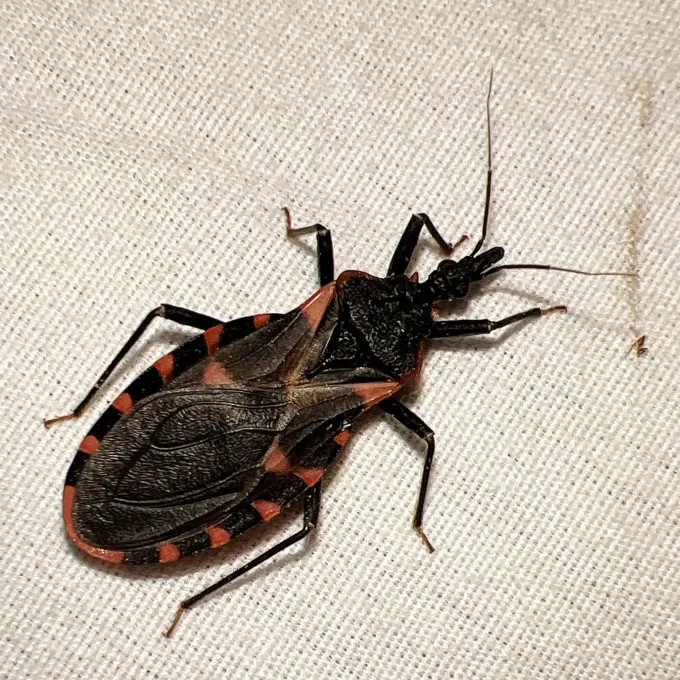
Triatoma sanguisuga, commonly known as a type of assassin bug, belongs to the family Reduviidae within the order Hemiptera. Adult insects typically measure between 20 to 25 mm in length.
The insect possesses a distinctive elongated, oval body shape, usually colored dark brown or black, with striking orange or reddish markings along the edges of the abdomen.
The head is elongated with a sharp, piercing-sucking proboscis that is folded under the body when not in use. They have prominent compound eyes, which are vital for their activity.
Nymphs resemble smaller versions of the adults but lack fully developed wings and exhibit less intense coloration that darkens as they progress through different molting stages.
This species is highly thermophilic, preferring environments with warm, temperate, or subtropical climates where they can remain concealed within dense vegetation.
What it damages
While primarily known for their predatory nature and blood-feeding, these bugs can exhibit phytophagous behavior, damaging various agricultural and vegetable crops.
The bugs feed on the reproductive parts of plants, piercing developing seeds and fruits with their proboscis to extract essential plant juices and moisture.
Damage is particularly significant during dry spells when the insects aggressively seek moisture from soft plant tissues, causing physiological stress to the host.
The punctures lead to localized necrosis and tissue death, which often results in the deformity of fruits and a significant decrease in total harvest quality.
Furthermore, these insects can act as vectors for various plant pathogens, introducing fungi or bacteria into the plant through their feeding wounds.
When it appears
The life cycle commences in the spring when adults emerge from their overwintering sites, such as leaf litter, soil crevices, or dry debris in the field.
Active feeding and reproduction cycles peak during the summer months, typically reaching their highest population density between June and July.
Females deposit eggs in small clusters on leaf surfaces or stems, favoring sheltered areas that are protected from direct exposure to sunlight.
The development from egg to adult occurs through several nymphal stages, with the duration of the cycle being heavily dependent on the ambient temperature.
As temperatures drop in autumn, the insects begin to migrate toward suitable overwintering locations to complete their dormancy phase for the cold season.
Signs of infestation
One of the primary indicators of a Triatoma sanguisuga infestation is the emergence of tiny, light-colored necrotic spots on leaves and plant stems.
When fruit is attacked, one can observe depressed, sunken areas on the surface, which eventually darken and may cause premature fruit drop.
- Yellowing or localized wilting of leaf segments.
- Presence of dark fecal droplets on the underside of foliage.
- Sudden shedding of developing buds and immature fruits.
- Direct observation of nymphs or adults resting on the foliage.
In cases of heavy infestation, a noticeable stunting of plant growth occurs, particularly impacting younger crops during their most active growth phases.
Control measures
Effective management requires an integrated approach that combines cultural practices with the strategic application of insecticides when damage thresholds are met.
Maintaining clean fields by removing weeds is essential, as these plants serve as alternative hosts and breeding grounds for the bug population.
Crop rotation and deep autumn plowing are highly recommended to disrupt overwintering sites and effectively reduce the overwintering population density.
For chemical suppression, use approved pyrethroids or organophosphates, ensuring that all safety protocols and pre-harvest intervals are strictly followed.
Preservation of natural predators, such as spiders and ground beetles, is encouraged, as they play a critical role in biologically regulating population numbers.
Taxonomy
- Latin name
- Triatoma sanguisuga
- Order
- Hemiptera (bugs, aphids, leafhoppers)
- Family
- Reduviidae
- EPPO code
- TRMASA
Discussion
No discussions yet — be the first.