
Triatoma rubrofasciata
Triatoma rubrofasciata
Description
How to identify
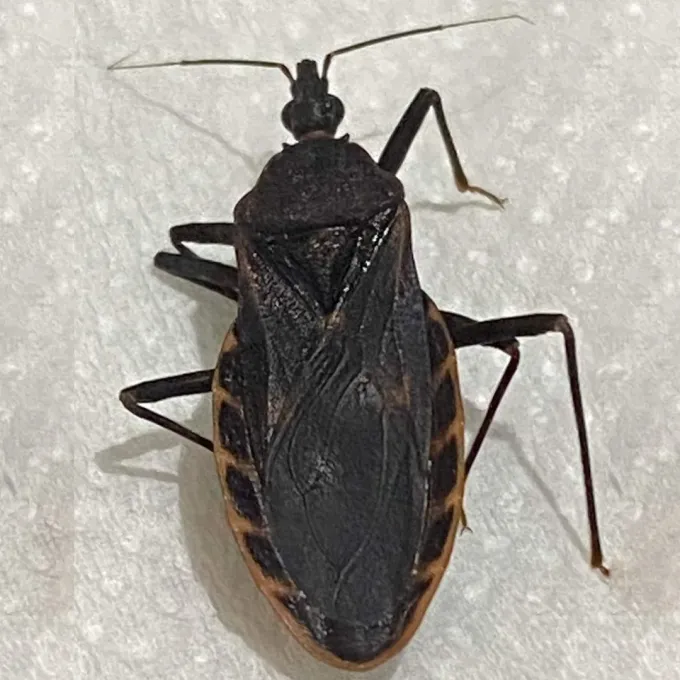
Triatoma rubrofasciata is a prominent member of the Reduviidae family, belonging to the Triatominae subfamily. Adult specimens typically reach 20–25 mm in length and feature a characteristic elongated head with a cone-shaped rostrum.
The insect's body is predominantly dark, almost black, contrasted by distinct reddish or orange bands along the margins of the pronotum and abdomen, which provides its common name.
Nymphs share the general body plan of adults but are smaller in size and lack fully developed wings, undergoing several molting stages throughout their lifecycle.
The legs of this species are long and agile, perfectly adapted for movement across various surfaces, ranging from rough bark to smooth structural components in barns and sheds.
When at rest, their wings are folded flat across the back, maintaining a streamlined profile characteristic of the Hemiptera order.
What it damages
While often categorized as a synanthropic species, Triatoma rubrofasciata can act as an incidental pest to plants by piercing stems, fruits, or seeds to extract sap.
This feeding activity causes the formation of necrotic spots on the plant surface, leading to localized tissue death and potential fruit deformation.
Vegetable crops and small fruits situated in proximity to human dwellings or storage areas are the most vulnerable to damage from these insects.
For seed production operations, the damage caused by these pests can be severe, as they significantly impair seed viability and germination rates.
The puncture wounds created by the rostrum also facilitate the entry of secondary pathogens, such as fungi or bacteria, causing further decay in the damaged plant parts.
When it appears
The activity and lifecycle of Triatoma rubrofasciata are highly influenced by environmental factors, particularly ambient temperature and humidity levels.
Peak activity is typically observed during warmer and more humid months, which provide optimal conditions for reproduction and larval development.
The insect follows a process of incomplete metamorphosis, progressing through egg, five larval instars, and finally the adult stage over several months.
Overwintering usually takes place in the adult stage, with insects seeking shelter in wall crevices, tree bark, compost piles, or neglected agricultural structures.
Spring emergence occurs as soon as consistent temperatures are reached, triggering the population to begin mating and searching for food sources.
Signs of infestation
One of the primary indicators of infestation is the appearance of small, discolored punctures on fruit surfaces, often accompanied by slight depressions in the skin.
Visual inspection during dawn or dusk often reveals the presence of adults hiding under leaves, within dense foliage, or near the base of the plant stem.
Small, dark fecal spots left on leaves or stems are a clear sign of a resident population and indicate the locations where they feed or congregate.
Large populations may lead to premature flower drop or fruit abscission, as the plant reacts to the extensive loss of sap and the irritation of the tissue.
A distinctive odor, produced by scent glands when the insect feels threatened, can sometimes alert growers to their proximity within a garden or field.
Control measures
Effective management of Triatoma rubrofasciata relies on an integrated approach, combining sanitation with targeted chemical intervention.
The first step in prevention is removing debris, wooden pallets, and leaf litter from around planting areas to eliminate potential overwintering and daytime hiding sites.
Insecticide treatments should be applied during the evening hours when these insects are most active and likely to be moving on the surface of the plants.
Mechanical removal and destruction of insects found during routine field scouting remain effective methods for small-scale operations.
- Pruning dense foliage to increase airflow and reduce favorable microclimates.
- Sealing cracks and openings in greenhouses and storage facilities.
- Using light traps as a monitoring tool to determine population spikes.
Taxonomy
- Latin name
- Triatoma rubrofasciata
- Order
- Hemiptera (bugs, aphids, leafhoppers)
- Family
- Reduviidae
- EPPO code
- TRMARU
Discussion
No discussions yet — be the first.