
Triatoma protracta
Triatoma protracta
Description
How to identify
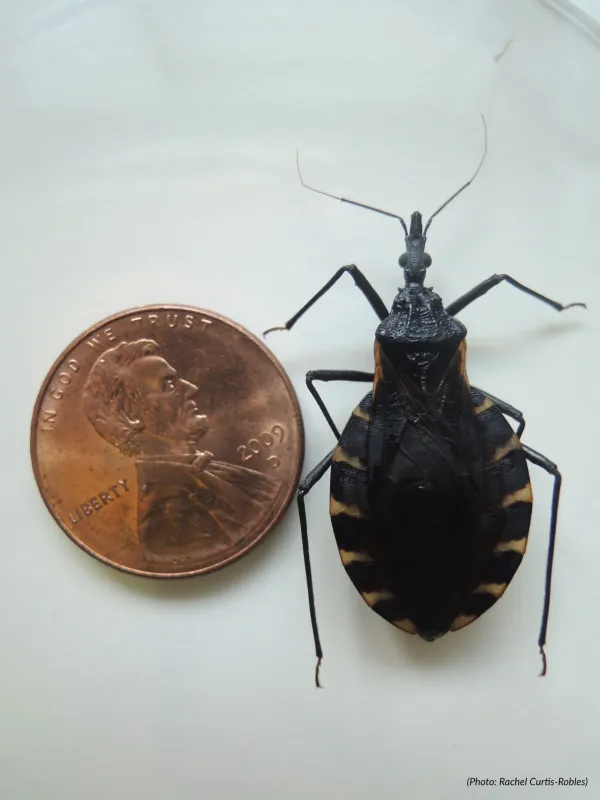
Triatoma protracta, commonly known as a type of kissing bug, is a member of the Reduviidae family within the order Hemiptera, recognized for its predatory nature.
Adult insects feature an elongated body measuring approximately 15 to 25 mm, typically displaying a dark brown to black coloration with distinct abdominal markings.
They possess a specialized needle-like rostrum (mouthpart), which allows them to pierce surfaces and consume fluids, a defining characteristic of this insect group.
Nymphs resemble smaller, wingless versions of the adults, progressing through several developmental stages before reaching maturity in the environment.
These insects are primarily nocturnal and cryptic, favoring habitats such as rodent burrows, rock crevices, and woodpiles, which makes them hard to detect during the day.
What it damages
While primarily zoophagous, Triatoma protracta may damage plant tissues by piercing stems and fruits during periods of heat and drought to seek moisture.
In agricultural settings, they are mainly considered pests due to their presence in storage areas, where they can contaminate harvested seeds with their waste.
The primary concern for crops arises when fields are situated near abandoned structures or rodent-heavy areas that serve as breeding grounds for the population.
Plant damage is often indirect, as the entry points created by their rostrum can lead to secondary fungal infections or localized tissue necrosis.
Severe infestations near nursery areas can cause stress to younger plants, making them more susceptible to environmental pressures and secondary diseases.
When it appears
Adults are most active during the warmer months, typically from late spring through early autumn, corresponding with the peak growth cycles of many field crops.
During the night, these insects are highly mobile and will readily travel to new locations, which can lead to rapid spread across adjacent agricultural parcels.
They overwinter in sheltered environments, including rock piles, hollow logs, and rodent nests, where they can survive until the next season's warmth.
The life cycle involves incomplete metamorphosis, with temperature significantly influencing the speed of development from egg to adult stages.
Increased temperatures trigger higher metabolic rates, which correlates with more frequent foraging behavior and potential interaction with agricultural crops.
Signs of infestation
Infestation is often confirmed by the presence of dark fecal spotting on walls, equipment, or the stems of plants in the vicinity of their nesting areas.
Discarded nymphal skins (exuviae) are frequently found in areas where the insects have successfully molted and transitioned to the next developmental stage.
If they attack produce, one may observe tiny, localized necrotic pits or shriveled areas on the skin of fruits or the surfaces of fleshy stems.
An unmistakable sign is the presence of rodent activity nearby, as these bugs are closely linked to the nests of wild vertebrates for shelter.
- Dark, granular fecal spots found on structures or plant debris.
- Empty nymphal skins found in sheltered, hidden cracks.
- Unusual pungent odor emitted when a colony is disturbed.
Control measures
Sanitation is the most effective control method: clearing away brush, woodpiles, and debris eliminates the harborage areas needed for their survival.
Implementing a rodent management program is crucial, as removing the nesting sites of small mammals effectively discourages Triatoma protracta colonization.
Structural sealing of storage sheds and barns prevents adults from entering and contaminating agricultural outputs during the harvest and storage season.
Where necessary, the targeted use of residual insecticides around building perimeters can manage populations without excessive application in fields.
Regular monitoring using night-time lighting or specialized traps helps identify the scale of the population and allows for a targeted management response.
Taxonomy
- Latin name
- Triatoma protracta
- Order
- Hemiptera (bugs, aphids, leafhoppers)
- Family
- Reduviidae
- EPPO code
- TRMAPR
Discussion
No discussions yet — be the first.