
Triatomine bugs
Triatoma
Description
How to identify
Triatomine bugs (subfamily Triatominae) belong to the Reduviidae family. While some species are well-known as vectors, certain members of this group are recognized as significant pests that feed on plant juices, impacting agriculture.
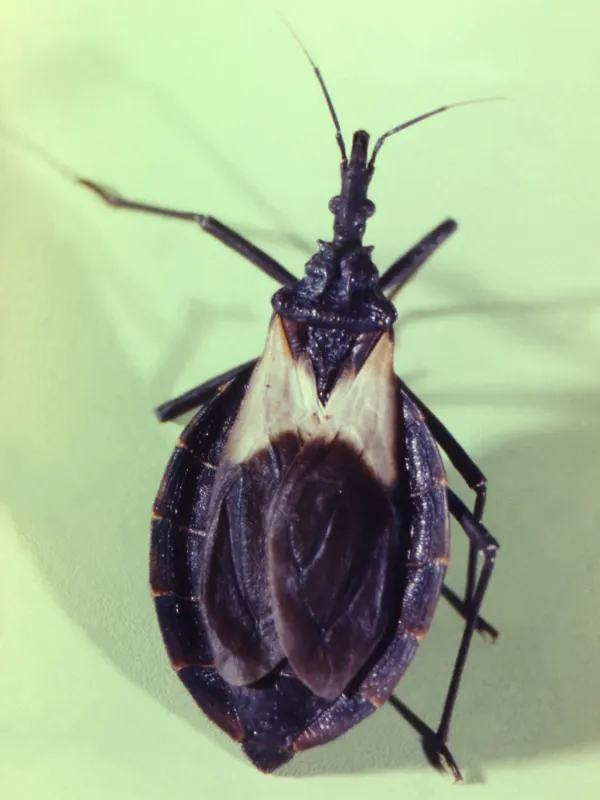
These insects are characterized by an elongated body shape, typically measuring between 15 and 30 mm in length. Their coloration ranges from dark brown to black, often accented with distinct red or orange abdominal margins.
The life cycle undergoes incomplete metamorphosis, consisting of eggs, five nymphal instars, and adults. Each stage requires substantial food intake, which the insects obtain by piercing plant tissues with their proboscis.
They are highly adaptable creatures capable of surviving in diverse environments. Their flight ability allows adults to disperse widely, seeking optimal host plants during peak growth periods.
Identification in the field relies on spotting their unique body structure, specifically the narrow head and thorax configuration, which distinguishes them from other common plant bugs.
What it damages
Triatomine bugs inflict damage on various crops, such as tomatoes, beans, corn, and cotton. They insert their stylets into plant stems and fruits to extract phloem and xylem sap.
Feeding sites develop characteristic necrotic spots, causing tissue collapse and fruit deformation. This damage significantly reduces the marketability and quality of harvested produce.
Furthermore, the physical wounds created by the insects serve as entry points for secondary infections, such as bacterial or fungal pathogens that cause fruit rot.
Heavy infestations can lead to premature dropping of blossoms and developing fruits, causing drastic yield losses for farmers if left unmanaged.
The impact is most severe during the reproductive phase of the plant, where any loss of nutrients directly correlates to reduced size and quality of the final product.
When it appears
Activity is strongly correlated with warmer temperatures, usually peaking during spring and summer months when metabolic rates are highest for growth and reproduction.
In regions with distinct seasons, overwintering occurs in the adult or late-nymph stage. They hide in soil debris, dense weeds, or dry structures, waiting for favorable conditions.
Once temperatures rise in the spring, they emerge and migrate to agricultural fields, targeting plants that are in early stages of vigorous growth.
Environmental factors like rainfall and humidity regulate their population dynamics, with excessive moisture sometimes hindering larval development and egg survival.
Predicting their appearance based on local climate data allows growers to time their monitoring efforts effectively and respond before the population reaches an uncontrollable density.
Signs of infestation
The first signs of infestation are small, dark punctures on fruits and leaves, which often expand into sunken, yellowish, or brown lesions as the tissue dies.
Stunted growth or abnormal twisting of stems indicates that the plant's vascular system has been compromised by multiple feeding events.
The presence of fecal spots on leaves and fruit surfaces is a reliable indicator of bug activity and can help confirm their presence on the field.
Observing increased flower abortion or small, underdeveloped fruits during inspection is a clear warning sign of pest pressure in the immediate area.
During the early morning hours, bugs can often be found congregating in sheltered parts of the plant, such as leaf axils or near the base of the stems.
Control measures
Effective management begins with cultural practices, such as removing weeds and crop residues that provide shelter for the bugs during the off-season.
Chemical control involving systemic insecticides is often necessary when populations exceed economic injury levels, ensuring long-lasting protection for the crop.
Integrated Pest Management (IPM) strategies incorporate the use of biological control agents, including predatory insects that naturally suppress bug populations.
Setting up pheromone or light traps helps in monitoring the flight activity of adult bugs, enabling precise timing of interventions to minimize chemical use.
Implementing crop rotation and maintaining healthy soil conditions can naturally decrease the susceptibility of plants to bug damage and increase overall yields.
Taxonomy
- Latin name
- Triatoma
- Order
- Hemiptera (bugs, aphids, leafhoppers)
- Family
- Reduviidae
- EPPO code
- TRMASP
Discussion
No discussions yet — be the first.