

Pest · Hemiptera (bugs, aphids, leafhoppers) · affects Onion, Winter wheat, Soybean
Especially harmful
Tarnished plant bug
Lygus sp.
Description
How to identify
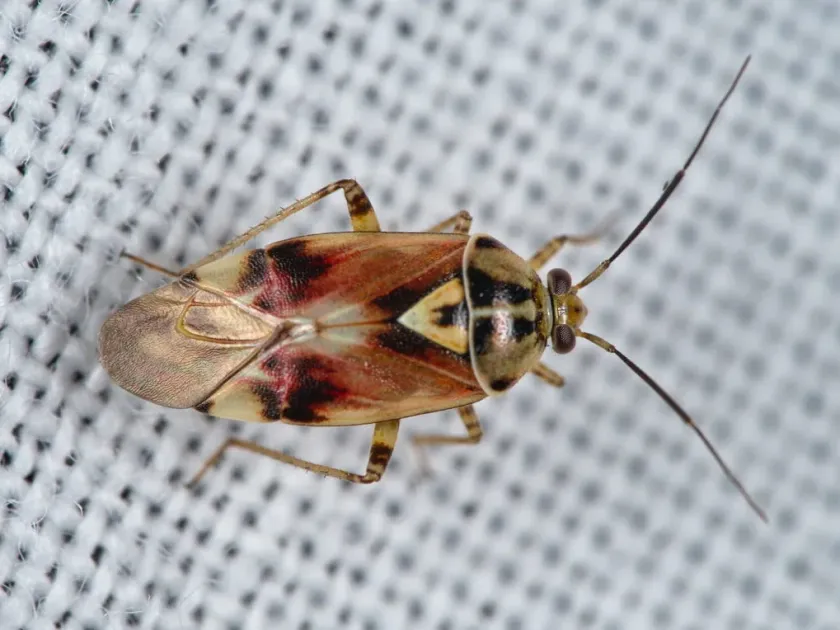
The tarnished plant bug (Lygus sp.) belongs to the family Miridae, order Hemiptera. These insects are small, typically 5–8 mm in length, characterized by an oval, flattened body shape and variable coloration ranging from pale green to reddish-brown or dark brown.
A reliable diagnostic feature is the small, light-colored triangular mark located on the scutellum, which is visible even on darker individuals. Adults have fully developed wings and are capable of strong flight, allowing them to migrate frequently between different host plants.
Nymphs are wingless and have a distinct bright green appearance, often making them difficult to spot against foliage. They go through five developmental stages (instars) before reaching maturity, becoming more active and voracious with each stage.
Adults overwinter in protected areas such as field debris, leaf litter, or protected soil crevices. As soon as temperatures rise in the spring, they emerge, feed, and begin laying eggs in the stems or buds of various host plants.
Multiple generations occur throughout the growing season. The development cycle is heavily influenced by ambient temperature and humidity, with warmer, drier conditions often accelerating the life cycle and leading to significant population spikes.
What it damages
The tarnished plant bug is a major polyphagous pest, affecting hundreds of different plant species including vegetables, fruits, and field crops. It is particularly notorious for damaging strawberries, tomatoes, peppers, beans, and sunflowers.
Damage is caused by the insertion of the insect's proboscis into plant tissues, accompanied by the injection of salivary enzymes. These enzymes break down plant cell contents to facilitate ingestion, leading to necrotic spots and cellular death.
When feeding occurs on developing buds or flowers, it often results in bud blast, flower drop, or the development of severely deformed fruits. On leaves, feeding appears as small, irregular holes or necrotic patches, which can reduce the overall photosynthetic capacity of the crop.
Young shoots that are attacked by nymphs or adults often show signs of stunting, wilting, or abnormal side-branching. For fruits like strawberries, feeding leads to the characteristic "cat-facing" defect, rendering the product unmarketable for fresh sales.
Beyond physical tissue damage, Lygus bugs can transmit various plant diseases. This interaction often exacerbates the harm done to the crop, as the plants become weakened and more susceptible to further physiological stress.
Control measures
Managing the tarnished plant bug requires a diversified IPM approach. Weed control is the most critical cultural practice, as wild hosts like pigweed and ragweed serve as primary nurseries for the pest before it moves into commercial crops.
Sanitation practices such as clearing debris after harvest and deep tillage help disrupt the overwintering habitat of the bug. By reducing the density of overwintering sites, growers can effectively lower the initial population pressure in the spring.
Monitoring is essential for informed decision-making. White or yellow sticky traps can be used to track the movement and density of the bug population within the fields, helping to determine the precise timing for intervention.
Biological control agents, including various predatory bugs (like big-eyed bugs) and parasitoid wasps, play a significant role in keeping populations in check. Preserving beneficial insect habitats around the fields is an essential component of sustainable management.
- Apply foliar insecticides only when economic thresholds are exceeded.
- Remove alternative weed hosts from field margins.
- Utilize row covers on sensitive young crops to provide physical barriers.
- Encourage beneficial predator populations by minimizing broad-spectrum pesticide use.
Content graph
Connections · Tarnished plant bug
Most often together:
Marketplace
Products · 1
Biology
Taxonomy
- Latin name
- Lygus sp.
- Order
- Hemiptera (bugs, aphids, leafhoppers)
- Family
- Miridae
- EPPO code
- LYGUSP
Community
Discussion
No discussions yet — be the first.