
Amblytylus
Amblytylus
Description
How to identify
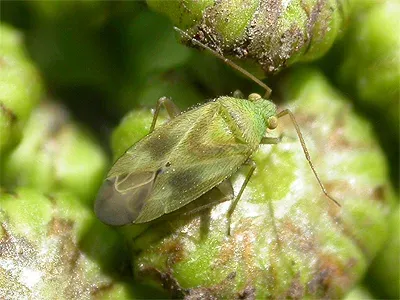
Amblytylus is a genus of insects belonging to the order Hemiptera and the family Miridae (plant bugs). These are small insects, typically measuring 5-7 mm in length.
Members of this genus are characterized by an elongated body, often greenish or yellowish-brown in color, covered with fine, soft hairs. Their heads feature well-developed eyes and long, thread-like antennae.
The mouthparts of Amblytylus are of the piercing-sucking type, which enables them to feed on plant sap. The tarsi are usually three-segmented, a key diagnostic feature for precise species identification.
Adults and nymphs are cryptic and often hide within flower heads or on the undersides of leaves. Their coloration frequently serves as camouflage against their host plant.
Identifying specific species within the genus often requires microscopic examination of male genitalia, as many species share very similar external morphological characteristics.
What it damages
Amblytylus species are polyphagous, feeding on a wide variety of herbaceous plants. They cause significant damage to cereal crops, including wheat, barley, and rye, particularly during the heading stage.
Beyond cereals, these bugs can feed on plants in the Asteraceae, Fabaceae, and Apiaceae families. The primary damage involves extracting cell sap from both reproductive and vegetative organs.
Feeding during the flowering and milk-ripening stages is especially critical, leading to shriveled grains and reduced yield. Plants lose turgor, growth slows down, and necrotic spots form at the puncture sites.
Colonies of these bugs can significantly lower seed germination energy, which is particularly harmful to seed production operations. Metabolic disruption within the plant often results in deformed heads or panicles.
Outbreaks during dry years can cause substantial crop losses, sometimes reaching 15-20% if effective management practices are not implemented.
When it appears
The life cycle of Amblytylus is closely synchronized with the phenology of its host plants. The overwintering stage typically consists of eggs laid within the stems or inflorescences.
Nymph hatching coincides with the start of active plant growth in the spring. Nymphs pass through several instars while feeding actively and moving across the plant.
The emergence of the new adult generation usually occurs in early summer. Depending on the local climate, the species may complete one or two generations per season.
Bug activity peaks during hot, dry periods when plants face moisture stress, making them more susceptible to damage from sap-sucking pests.
As the season nears its end, the bugs migrate to weeds, where mating occurs and eggs are laid to survive the winter.
Signs of infestation
The presence of Amblytylus can be identified by the appearance of "white heads" or partial drying of individual spikelets in cereals. Damaged areas often appear discolored and wilted.
Visual inspection of the crop can reveal the insects if you gently shake the heads over a white sheet of paper. Nymphs often hide deep within the chaff of the grain heads.
Small, light-colored spots (stippling) appear on leaves, which may eventually coalesce into larger necrotic patches. High population densities can lead to leaf curling and general plant deformation.
Infected inflorescences often show poorly filled or shriveled grains. In severe cases, the entire development of the plant may be stunted.
Using a sweep net is an efficient way to estimate population density per hectare and decide whether an insecticide application is necessary.
Control measures
Crop rotation and consistent weed management are the primary cultural practices to minimize populations, as weeds often serve as reservoirs for the pest between seasons.
Agrotechnical methods, such as early autumn plowing, help destroy overwintering egg sites and reduce the initial population levels before spring development.
Chemical control involves the application of contact-stomach insecticides during the peak nymph hatching period. Always adhere to pre-harvest intervals to ensure food safety.
Biological control strategies include the conservation of natural predators, such as predatory bugs, spiders, and parasitoid wasps, which help keep Amblytylus numbers in check.
- Monitoring populations with yellow sticky traps.
- Using high-vigor seed varieties to ensure rapid establishment.
- Targeted treatment of field edges during localized pest infestations.
Taxonomy
- Latin name
- Amblytylus
- Order
- Hemiptera (bugs, aphids, leafhoppers)
- Family
- Miridae
- EPPO code
- ABLYSP
Discussion
No discussions yet — be the first.