
Superb plant bug
Adelphocoris superbus
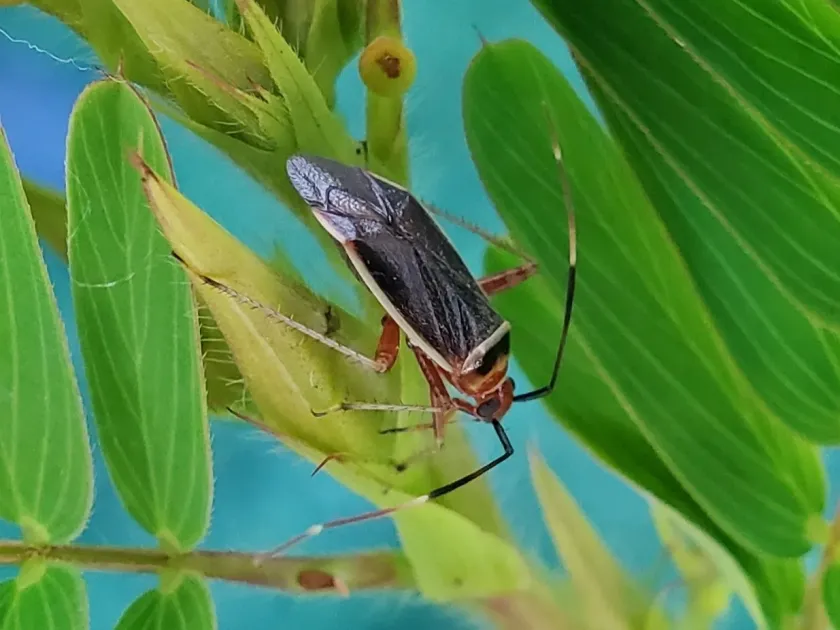
Description
How to identify
The Superb plant bug (Adelphocoris superbus) is a member of the Miridae family, commonly known as plant bugs. Adult specimens typically measure between 8 and 10 mm in length.
The body has an elongated shape and displays a color range from yellowish-brown to reddish-brown. The surface is covered with fine, light-colored hairs, giving the insect a characteristic matte appearance.
Nymphs resemble the adults in body structure but are smaller in size and lack fully developed wings. Their coloration allows them to blend in with the foliage of their host plants.
Eggs are oval and slightly curved, deposited by females deep within the plant tissues, primarily in stems. This placement protects them from environmental stressors and predators.
These bugs are predominantly active during the day, showing a preference for sunny and warm conditions. They are capable of rapid flight and can easily move between plants when disturbed.
What it damages
This pest is a specialized feeder on perennial forage legumes, causing significant economic damage to crops such as alfalfa, sainfoin, and clover.
Both adults and nymphs feed by piercing plant tissues and extracting sap. This feeding behavior targets both vegetative parts and reproductive organs, especially during the budding and flowering stages.
Infestations result in significant yield losses, as damaged buds and flowers often fail to set seeds. This premature shedding of reproductive parts drastically reduces the final harvest.
In addition to sap extraction, the bug's feeding sites develop necrotic spots. These lesions can weaken the plant structure and provide entry points for secondary pathogens.
Heavy infestations can lead to severe stunting of growth and thinning of the stand, making the crop vulnerable to other environmental stresses.
When it appears
The insect overwinters in the egg stage, embedded within the stems of host plants or crop residues. Hatching occurs in the spring when temperatures consistently rise above the developmental threshold.
The species completes several generations per year, with populations peaking in the mid-summer months. The number of generations depends on local climatic conditions and host availability.
By late summer, adults shift their focus toward reproduction and oviposition for the next season. They utilize both perennial crops and wild host plants to deposit their eggs.
Developmental speed is highly correlated with heat units and humidity. A warm, humid spring typically results in a higher survival rate for early-season nymphs.
The dormant stage is highly resistant to freezing temperatures, ensuring the survival of the population even during harsh winter months.
Signs of infestation
The earliest signs of an infestation include the appearance of tiny, light-colored stippling on the leaves, caused by the insects piercing and sucking cells.
Damaged flower buds often turn yellow or brown and wither before they can open. This is particularly noticeable in fields during the early stages of alfalfa flowering.
Inspection of the upper plant parts during the early morning often reveals clusters of nymphs feeding near the growing tips or on developing floral buds.
Severe infestations manifest as generally stunted and chlorotic plants. Farmers may notice a marked reduction in flower density and potential seed pods.
Dark fecal spots on the lower leaf surfaces are another indicator that the pest has been active in the area for an extended period.
Control measures
Timely harvesting of forage crops is a highly effective cultural control method, as it removes the nymphs before they can reach the adult stage and reproduce.
Maintaining crop rotation and managing the field borders to minimize weed hosts help to disrupt the insect's life cycle and reduce population buildup.
If economic thresholds are exceeded, targeted application of insecticides is required. Timing treatments to hit the nymphal stage is critical for effective suppression.
Monitoring the surrounding landscape for wild legume populations is important, as these often serve as a reservoir for the pest between growing seasons.
Conserving populations of natural enemies, such as predatory bugs and parasitic wasps, provides biological control that can significantly mitigate population surges.
Taxonomy
- Latin name
- Adelphocoris superbus
- Order
- Hemiptera (bugs, aphids, leafhoppers)
- Family
- Miridae
- EPPO code
- ADPHSU
Discussion
No discussions yet — be the first.