
Adelphocoris rapidus
Adelphocoris rapidus
Description
How to identify
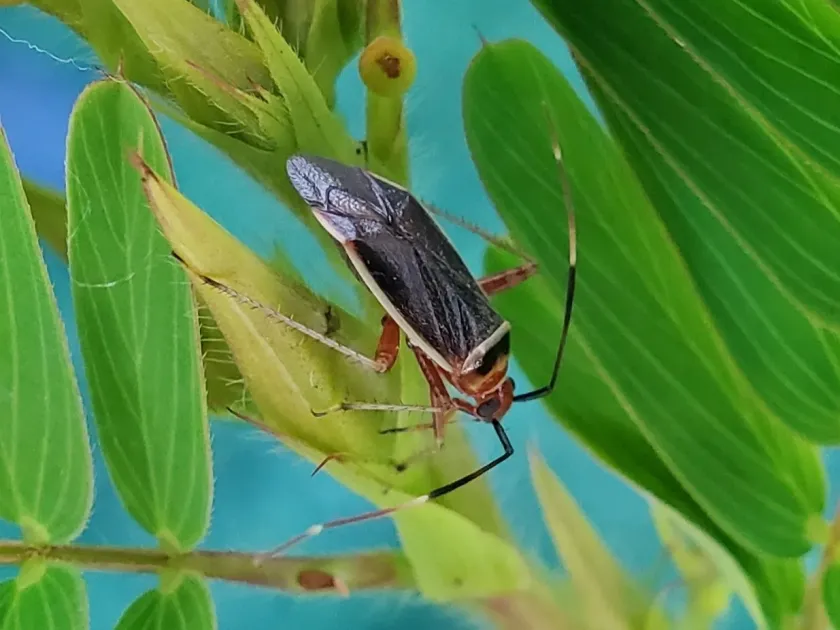
Adelphocoris rapidus, commonly known as a type of plant bug, belongs to the family Miridae within the order Hemiptera. These insects typically measure between 6 and 8 millimeters in length as adults.
Their coloration ranges from yellowish-brown to reddish-brown, which provides excellent camouflage against many field crops. They possess distinct dark markings on the pronotum and scutellum that help in precise species identification.
Nymphs resemble smaller, wingless versions of the adults. In their early developmental stages, they exhibit a bright green color, allowing them to blend seamlessly into the dense foliage of host plants.
The eggs of this species are elongated and light in color. Females typically insert their eggs into plant tissues, such as stems or leaf petioles, to protect them from environmental fluctuations and predators.
As the name suggests, these bugs are highly mobile. Adults are capable of active flight, which enables them to move quickly between fields or host plants, particularly when primary food sources begin to dry out.
What it damages
This species is a known polyphagous pest that feeds on a wide range of agricultural crops. It shows a strong preference for legumes, including alfalfa, clover, and various bean varieties.
They feed by piercing plant tissues with their specialized mouthparts and injecting salivary enzymes. This process causes localized cell death and systemic stress to the plant.
The primary damage occurs on reproductive structures like buds, flowers, and developing seeds. When these parts are damaged, they often drop prematurely, leading to significant yield losses in seed crops.
Besides legumes, the pest can also affect sunflowers, sugar beets, and several vegetable crops. On these plants, feeding on terminal growth tips causes stunted development and structural deformation.
In cases of high population density, entire fields can show reduced vigor. The depletion of nutrients caused by the feeding of both nymphs and adults significantly hinders the plant's ability to reach maturity.
When it appears
The overwintering stage for this species is primarily the egg, which remains dormant within the stems of host plants during the colder months. Hatching begins in the spring as temperatures rise.
The first generation typically emerges during late spring, coinciding with the active growth period of perennial legumes. Monitoring efforts should focus on these early-season populations.
Throughout the summer, multiple overlapping generations can occur if environmental conditions are favorable. Populations usually peak during the budding and flowering stages of major host crops.
Migration is a common seasonal behavior. After harvest or mowing of forage fields, these bugs readily migrate to neighboring crops or adjacent weed patches to continue their life cycle.
By late summer and early autumn, females prepare for the next season by laying overwintering eggs. The success of these eggs depends largely on the preceding weather conditions and the availability of suitable host stems.
Signs of infestation
Early signs of infestation often appear as small, chlorotic spots on the leaves at feeding sites. These spots eventually turn necrotic as the plant tissue dies due to the injected enzymes.
One of the most obvious indicators is the premature shedding of buds and flowers, leaving them scattered on the ground beneath the plants. The upper canopy of the crop may look visibly thinned.
Close inspection of the plant canopy, especially near the tender top growth, often reveals the presence of nymphs or adults. They are highly active and will scurry away when disturbed.
Pod development in affected legumes is often stunted or deformed. In some cases, the seeds inside the pods fail to develop completely, resulting in empty or withered pods at the time of harvest.
Using a sweep net is a reliable diagnostic tool for detecting populations. Consistent sampling allows farmers to see if the density of the bug reaches levels that threaten crop profitability.
Control measures
Integrated pest management (IPM) is essential for controlling this bug. Cultural practices, such as timely mowing of forage crops, are highly effective in disrupting the life cycle of the pest.
Sanitation of field margins is also critical. Eliminating weeds that act as alternate hosts or reservoirs prevents the buildup of populations that could otherwise move into the main crop.
If population counts exceed the economic threshold, chemical intervention may be required. Insecticides should be applied during the early morning or evening to maximize effectiveness and minimize exposure to beneficials.
Conserving natural enemies, such as predatory bugs and parasitic wasps, is an important strategy. Selective insecticides are preferred to ensure that the ecological balance of the field is maintained.
Scouting is vital for early detection. By tracking the population density of Adelphocoris rapidus, growers can decide when intervention is truly necessary, reducing both costs and chemical inputs.
Taxonomy
- Latin name
- Adelphocoris rapidus
- Order
- Hemiptera (bugs, aphids, leafhoppers)
- Family
- Miridae
- EPPO code
- ADPHRA
Discussion
No discussions yet — be the first.