
Adelphocoris
Adelphocoris
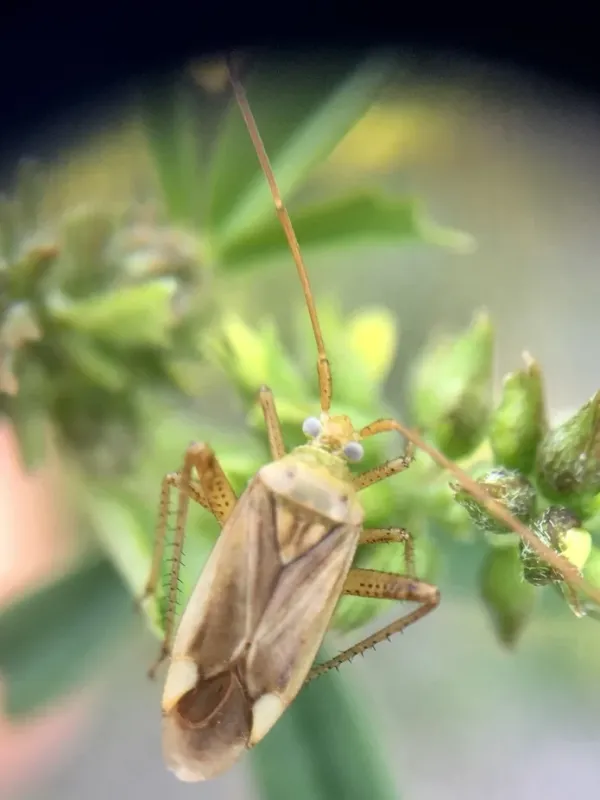
Description
How to identify
Adelphocoris is a genus of plant bugs belonging to the family Miridae (order Hemiptera). These insects are typically small to medium-sized, ranging from 6 to 10 mm in length, with an elongated body shape.
Their coloration varies from yellowish-green to reddish or dark brown. A key identifying feature is the presence of distinct markings on the pronotum and the scutellum, which aid in species differentiation.
They possess long antennae that often exceed the length of their bodies. Their legs are well-developed, allowing them to move rapidly across plant surfaces when disturbed.
Adults are fully winged and capable of active flight, which facilitates their movement between different host plants and fields throughout the growing season.
The lifecycle involves eggs that are typically inserted into the stems of host plants, such as perennial grasses or weeds, where they overwinter protected from environmental extremes.
What it damages
Adelphocoris is a significant polyphagous pest that affects a wide variety of agricultural crops, including alfalfa, sunflower, sugar beet, and various vegetable species.
These bugs feed by piercing plant tissues with their mouthparts and sucking cell sap. During feeding, they inject saliva containing toxins that disrupt metabolic processes and cause localized tissue death.
The most severe damage occurs on reproductive structures such as flower buds, blooms, and developing ovaries. This often leads to bud shedding and flower abortion, drastically reducing seed yield.
Leaves affected by their feeding develop chlorotic spots or necrotic lesions, which can eventually cause wilting and stunted growth of the plant if the infestation is heavy.
Furthermore, these insects act as vectors for various plant pathogens. The micro-wounds created during feeding provide entry points for bacteria and fungi, exacerbating the overall damage to the crop.
When it appears
The emergence of nymphs from overwintered eggs typically occurs in spring, coinciding with the initial growth stages of host plants, usually starting in April or May depending on the local climate.
Peak population levels and feeding activity usually align with the budding and flowering phases of host crops, when the plants are most vulnerable to damage.
During the warmer summer months, activity may fluctuate based on humidity levels. However, if conditions remain favorable, a second generation often develops, extending the pest's impact into late summer.
As autumn approaches and temperatures drop, the adult bugs prepare for the transition. Females lay their eggs within plant tissues to ensure the survival of the next generation through the winter.
The cycle concludes as the population naturally declines, leaving only the overwintering eggs behind to repeat the cycle once the following spring season commences.
Signs of infestation
Early signs of infestation include the appearance of small, light-colored stippling or spots on the leaves, which indicate where the bugs have been feeding.
A classic symptom of severe infestation is the mass shedding of buds and blossoms. Seeing healthy-looking buds yellowing and dropping off is a primary indicator of bug activity.
Presence of the insects themselves can be confirmed by inspecting the tops of plants, particularly during the cooler hours of the morning or evening when they are most active.
Deformed fruit and shriveled seeds at harvest time are strong indicators that feeding damage occurred during the critical stages of seed or fruit development.
An overall appearance of plant weakness, including wilting of the terminal shoots or secondary fungal growth on damaged areas, suggests that the crop is under pressure from these pests.
Control measures
Management of Adelphocoris relies on an integrated approach, combining cultural practices with chemical interventions when necessary to keep populations below economic thresholds.
Rigorous weed control is essential, as many common weeds serve as primary reservoirs for the bugs during the early spring before they migrate to cultivated crops.
Maintaining proper crop rotation and spatial isolation between perennial legumes and susceptible row crops helps to break the lifecycle and limit the spread of the pest.
Chemical control using authorized insecticides should be applied once scouting indicates that population densities have exceeded the economic injury level, typically during the budding phase.
Promoting biological control through the conservation of natural enemies, such as predatory bugs and parasitic wasps, can help manage populations and reduce the need for synthetic chemical applications.
Taxonomy
- Latin name
- Adelphocoris
- Order
- Hemiptera (bugs, aphids, leafhoppers)
- Family
- Miridae
- EPPO code
- ADPHSP
Discussion
No discussions yet — be the first.