
Tomaspis spectabilis
Tomaspis spectabilis
Description
How to identify
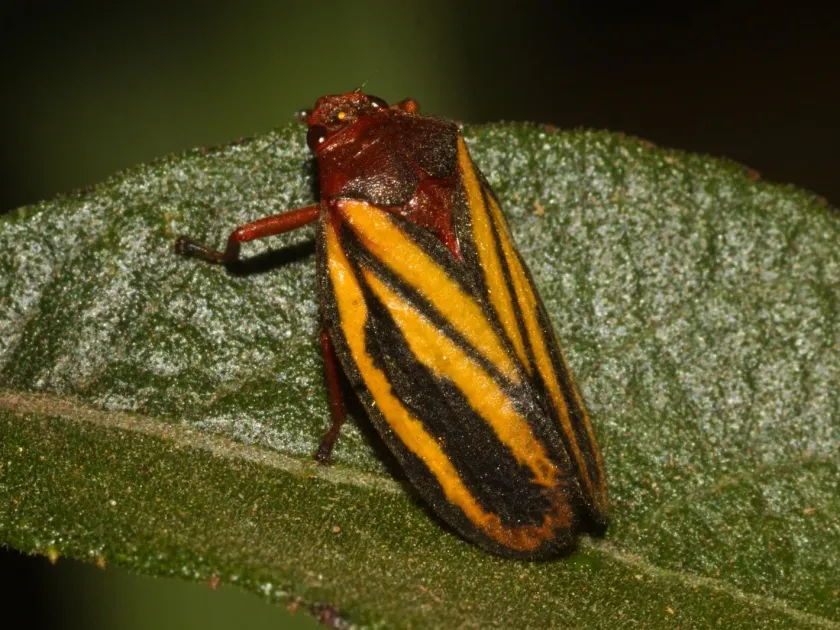
Tomaspis spectabilis is a species of froghopper or spittlebug belonging to the family Cercopidae within the order Hemiptera. These insects are recognized as significant pests in tropical and subtropical pasture systems.
Adult specimens measure approximately 8 to 10 mm in length. They are characterized by a striking color pattern, typically featuring dark or black bodies with bright yellow or reddish transverse bands on their forewings.
The immature stages, known as nymphs, are notable for their ability to secrete a characteristic white, frothy substance. This "spittle" provides essential protection against desiccation and natural predators.
The life cycle encompasses eggs, five nymphal instars, and the adult stage. Adults are strong jumpers, which facilitates rapid dispersal across fields and complicates direct mechanical control efforts.
The species thrives in humid environments, which are essential for both the survival of the nymphs and the rapid regrowth of the host plants they feed upon.
What it damages
This pest primarily attacks a wide range of perennial forage grasses. Damage is caused by both nymphs and adults through the piercing and sucking of plant sap.
Nymphs feed mainly on the roots and the base of the stems. By extracting xylem sap, they deplete the plant's vital resources, causing stunted growth and weakened root systems.
Adults consume the juices from the upper leaves and stems, which disrupts photosynthesis and nutrient translocation, leading to rapid yellowing and necrosis of the plant tissue.
Heavy infestations can result in the complete death of pasture grasses, turning vibrant green fields into brown, dry, and unproductive land within a very short period.
Furthermore, the physical damage caused by the insects' mouthparts can serve as entry points for phytopathogenic fungi and viruses, compounding the negative impact on forage quality.
When it appears
The life cycle of Tomaspis spectabilis is strictly tied to rainfall patterns. The emergence of the first generation is typically triggered by the onset of the rainy season.
Eggs are capable of entering a state of diapause during dry periods, allowing the population to survive unfavorable conditions in the soil until the return of sufficient humidity.
Multiple generations can occur throughout the wet season, provided that host plant availability and environmental moisture levels remain constant and favorable for development.
The peak of population density usually coincides with the period of greatest grass growth, as the insects capitalize on the abundant and succulent vegetation available at that time.
As the wet season wanes and conditions become drier, the adult population declines, and the species transitions back into the egg stage to prepare for the next season.
Signs of infestation
The most diagnostic sign of infestation is the presence of white frothy masses, or "spittle," around the base of the grass stems, often clearly visible in the early morning.
Affected plants initially exhibit signs of water stress, including wilting, loss of turgor, and a distinct chlorotic or yellowish appearance on the leaf blades.
In cases of severe infestation, patches of pasture may appear dead or scorched, as if affected by extreme drought, despite adequate moisture levels being present in the soil.
Close inspection of the crown and root zone will reveal the nymphs encased in their spittle, along with physical scarring of the stem tissue resulting from the insects' feeding activity.
A decline in livestock weight gain while grazing on affected areas is a common secondary indicator of reduced nutritional quality and biomass availability in the pasture.
Control measures
Effective management begins with robust pasture maintenance, including strategic grazing and mowing to disrupt the humid microclimate required by the nymphs for survival.
Cultural practices, such as soil aeration or controlled burning (where applicable), can help reduce the number of diapausing eggs present in the topsoil layers.
Biological control using entomopathogenic fungi, such as species of Metarhizium, has proven to be highly effective at suppressing nymph populations without environmental contamination.
Chemical control should be employed only as a last resort when threshold levels are exceeded. Systemic insecticides with targeted application methods are preferred to minimize impact on beneficial insects.
Regular monitoring using light traps for adults or yellow sticky cards is essential for determining the timing of control interventions to ensure maximum efficacy and lower economic losses.
Taxonomy
- Latin name
- Tomaspis spectabilis
- Order
- Hemiptera (bugs, aphids, leafhoppers)
- Family
- Cercopidae
- EPPO code
- TOMASE
Discussion
No discussions yet — be the first.