
Tomaspis humeralis
Tomaspis humeralis
Description
How to identify
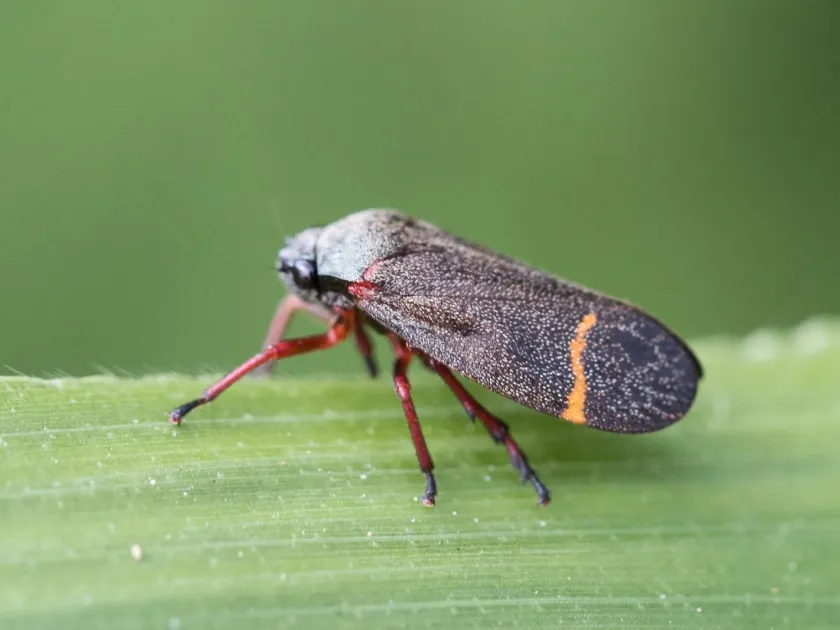
Tomaspis humeralis is a species of spittlebug belonging to the order Hemiptera and the family Cercopidae. This insect is widely recognized by its distinct coloration and its ability to jump using powerful hind legs.
The adults are characterized by a compact body, usually ranging from 8 to 10 mm in length, and are known for their dark, often patterned wings that provide camouflage.
Nymphs of this species are famously known for producing a white, frothy substance, often called «cuckoo spit,» which they use to protect themselves from predators and desiccation.
These insects possess a piercing-sucking mouthpart specifically adapted to extract nutrient-rich phloem sap from the stems of various grass species.
The life cycle involves an egg stage, several nymphal instars within the protective froth, and a highly mobile adult stage capable of rapid dispersal.
What it damages
Tomaspis humeralis is a significant pest of grasses, with a particular affinity for sugarcane, rice, and various pasture crops grown in tropical and subtropical regions.
The nymphs and adults drain sap directly from the vascular tissues, which can lead to severe stunting, leaf curling, and overall reduction in plant vigor.
Feeding activities cause mechanical injury to the epidermis, creating entry points for secondary pathogens and resulting in localized tissue necrosis.
In high populations, the insect can cause massive wilting and yellowing of the crop, significantly reducing the biomass and overall photosynthetic capacity.
Economic damage is observed when the infestation prevents the plant from reaching its developmental maturity, directly impacting the final yield and commercial quality.
When it appears
The seasonal activity of this pest is highly dependent on rainfall patterns and humidity, as the survival of nymphs is tied to moisture availability.
The life cycle begins with overwintering eggs, which hatch with the arrival of the rainy season, allowing the nymphs to access the necessary moisture for froth production.
Population surges typically occur during the wet season, with multiple generations per year often possible depending on local climate conditions.
Monitoring should intensify at the onset of the growing season, as initial infestations often start in areas with dense vegetation and high humidity.
Dry spells can temporarily reduce the pest population, but the insect exhibits remarkable resilience through its dormant egg stage in the soil.
Signs of infestation
The most reliable sign of an infestation is the presence of the characteristic white foam masses found at the base of the stems or within leaf axils.
Plants heavily infested by the pest show distinct chlorosis, where leaves turn yellow or brown, accompanied by visible wilting during the hottest parts of the day.
Adults are easily startled and will jump when the host plant is disturbed, making them relatively easy to detect during morning field scouting.
Small chlorotic spots or streaks on the leaves are early indications of the feeding damage caused by the insect's piercing-sucking mouthparts.
General growth retardation and failure of the crop to tiller properly are secondary signs of long-term feeding pressure by the nymphs and adults.
Control measures
Effective management of Tomaspis humeralis requires an integrated pest management (IPM) approach combining cultural, biological, and chemical methods.
Cultural practices such as crop rotation and managing edge vegetation can significantly limit the pest's ability to migrate and colonize new fields.
- Implementing deep tillage to destroy egg-laying sites in the soil.
- Utilizing biological control agents, such as entomopathogenic fungi (e.g., Metarhizium), to target nymphs.
- Applying systemic insecticides when threshold levels of infestation are exceeded.
- Maintaining proper soil fertility to help plants recover from sap loss.
Scouting is critical, as early detection allows for localized treatments, minimizing the need for broad-spectrum chemical applications.
Taxonomy
- Latin name
- Tomaspis humeralis
- Order
- Hemiptera (bugs, aphids, leafhoppers)
- Family
- Cercopidae
- EPPO code
- TOMAHU
Discussion
No discussions yet — be the first.