
Spittlebug
Tomaspis furcata
Description
How to identify
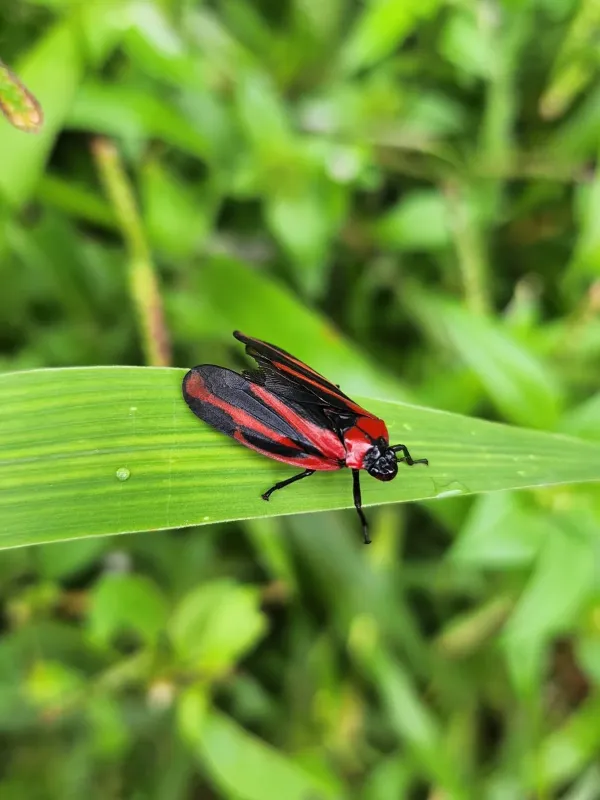
The spittlebug (Tomaspis furcata) is a species of insect belonging to the order Hemiptera and the family Cercopidae. These insects are characterized by their robust bodies, which can reach up to 10 mm in length, and powerful hind legs adapted for jumping.
Adults exhibit distinct wing venation patterns, which form a fork-like shape, leading to the specific name "furcata." Their coloration can vary, providing effective camouflage against various plant stems and leaves, making them difficult to spot at a distance.
The nymphs are famous for producing a white, frothy substance often referred to as "cuckoo spit." This foam is secreted from the insect's abdomen to provide a moist microenvironment that protects the soft-bodied nymphs from desiccation and natural predators.
The life cycle involves incomplete metamorphosis, progressing through egg, nymphal stages, and adult phases. Understanding these distinct stages is essential for timing monitoring efforts, as different management strategies may be needed for each phase.
These insects thrive in humid environments with dense vegetation. Areas with high soil moisture or lush canopy covers are prime habitats for population growth, as the foam production requires a stable and humid microclimate to function correctly.
What it damages
The primary damage is caused by both nymphs and adults using their piercing-sucking mouthparts. They feed on plant sap, withdrawing essential nutrients and fluids from the stems and leaves, which severely stunts the host plant's growth.
The pest frequently targets cereal crops, such as wheat, barley, and oats, as well as various perennial grasses. In some regions, they can also cause economic damage to vegetable crops and ornamental plants if the infestation is heavy enough.
When feeding, the spittlebug injects enzymes into the plant tissue, which interferes with the plant's metabolic processes. This leads to reduced photosynthesis, resulting in chlorosis (yellowing), leaf wilting, and overall physiological stress for the plant.
Heavy infestations can cause significant stunting, reduced tiller development in cereals, and overall yield loss. The stems may become deformed, making the crops more susceptible to lodging and secondary environmental stresses.
Furthermore, these insects can act as vectors for various plant pathogens, including viruses and phytoplasmas. Even low numbers of insects can lead to the widespread transmission of diseases, which often causes more damage than the physical act of feeding itself.
When it appears
The species overwinters in the egg stage, with eggs typically deposited on the lower parts of stems or within plant debris. Nymphs emerge in the spring as temperatures rise, usually coinciding with the tillering stage of cereal grains.
Peak activity for the nymphs occurs during the late spring and early summer. During this time, they are most easily identified by the presence of white foam masses, which are highly visible during the morning hours when dew collects on them.
Adult emergence typically happens in mid-summer. Unlike nymphs, adults are highly mobile and can migrate between different fields or crop types, searching for healthier host plants or suitable sites for mating and egg-laying.
As summer draws to a close, adults begin the process of mating and laying eggs. These eggs are hardy and designed to survive cold temperatures, ensuring the survival of the population until the next growing season begins.
Monitoring for the arrival of the first generation should begin early in the spring. Early detection is crucial, as controlling the nymphs before they reach the adult stage is much easier and more cost-effective than dealing with mobile adults later.
Signs of infestation
The most reliable sign of an infestation is the presence of frothy "spittle" masses on plant stems or in the axils of leaves. These white bubbles resemble saliva and are particularly noticeable in the morning when dew adds to their size.
Plants affected by these insects often appear stunted compared to healthy neighboring plants. You may notice localized chlorosis, where parts of the leaf tissue turn yellow or develop necrotic spots due to the insect's toxic saliva.
Stems may show signs of deformation or irregular growth patterns. Because the insects drain the sap, the plant's turgor pressure decreases, which can cause the leaves to wilt or curl, even if there is sufficient soil moisture available.
If you brush against the crop canopy, adult insects will often perform a sudden, quick jump, making a rustling sound. This is a very common observation in fields with high population densities and serves as a clear warning sign for the farmer.
Yield indicators, such as reduced grain size or lower overall harvest weight, are common signs of a sustained infestation throughout the season. These physical impacts are the result of long-term nutrient deprivation caused by the pest.
Control measures
Effective control of the spittlebug requires an integrated pest management (IPM) approach. A key cultural practice is the diligent removal of weeds and grasses around field edges, as these often serve as reservoirs for nymphs early in the season.
Deep plowing or soil cultivation after harvest can bury or destroy overwintering eggs. By disrupting the life cycle at the egg stage, farmers can significantly lower the pest pressure for the following planting season.
Chemical control should only be used when population levels exceed the economic threshold (ET). When choosing insecticides, systemic products are generally preferred because they can effectively penetrate the frothy foam protection used by the nymphs.
- Implementing diverse crop rotations to disrupt the pest's habitat.
- Selecting plant varieties that show higher resistance to sap-sucking insects.
- Early spring field cultivation to eliminate initial infestation spots.
- Supporting natural biological control by conserving local predator populations.
It is important to practice pesticide rotation to prevent the development of resistance. By varying the chemical classes used, farmers ensure that control methods remain effective over the long term, preventing population rebounds.
Taxonomy
- Latin name
- Tomaspis furcata
- Order
- Hemiptera (bugs, aphids, leafhoppers)
- Family
- Cercopidae
- EPPO code
- TOMAFU
Discussion
No discussions yet — be the first.