
Yellow-sided spittlebug
Tomaspis flavilatera
Description
How to identify
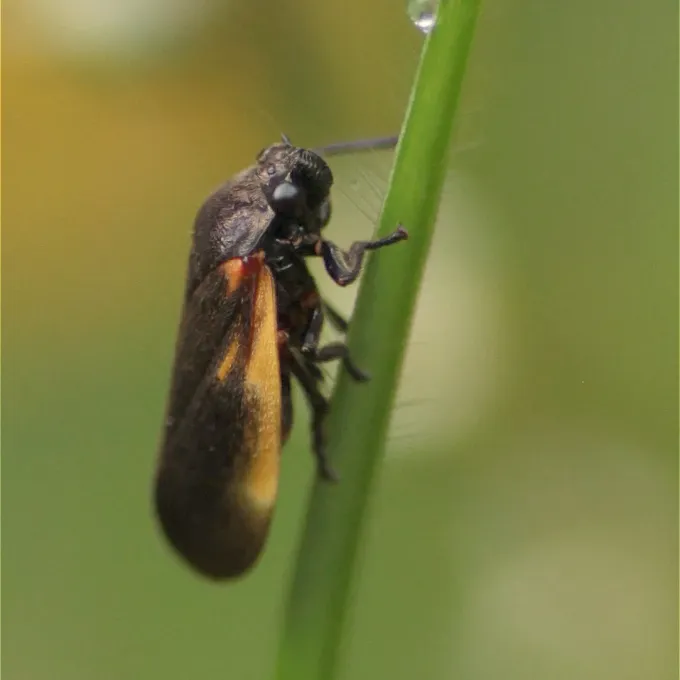
The yellow-sided spittlebug (Tomaspis flavilatera) is an insect belonging to the family Cercopidae. Known for its distinct yellow markings along the sides of the wings, this pest is a significant threat to various agricultural crops, particularly in tropical regions.
Adults possess powerful hind legs designed for jumping, which helps them escape predators. Their bodies are streamlined, and they feature a piercing-sucking mouthpart, which is the primary tool used for feeding on plant tissues.
The nymphal stage is uniquely characterized by the production of a frothy, foam-like substance. This "spittle" acts as a protective barrier against desiccation and natural enemies, allowing nymphs to feed undisturbed on the host plant's stem.
Lifecycle stages consist of egg, nymph, and adult. Eggs are typically laid in sheltered areas, such as leaf sheaths or soil debris, ensuring the survival of the species during off-seasons.
Field identification is largely based on locating these spittle masses on the host plants, which serve as the most reliable indicator of infestation levels in a given area.
What it damages
The primary damage caused by the yellow-sided spittlebug is the extraction of xylem sap from host plants. This constant drainage of nutrients severely stresses the plant, leading to stunted growth and reduced overall vitality.
In addition to sap loss, the feeding process often results in the injection of saliva containing toxins. This causes localized necrosis, visible as yellow or brown spots on the foliage, which can eventually lead to tissue death.
Severe infestations can cause significant yield losses, particularly in sugarcane and other graminoid crops. The loss of chlorophyll-rich tissue directly correlates to a decrease in photosynthesis and lower sugar content in commercial varieties.
Furthermore, the physical damage created by piercing mouthparts opens entry points for secondary infections by fungi and bacteria, which can exacerbate the decline of the plant health.
Young, rapidly growing crops are the most susceptible to attack, as their tender tissues provide easy access for the nymphs and adults to feed efficiently.
When it appears
The yellow-sided spittlebug is highly dependent on environmental humidity, with population peaks occurring during the rainy season. High moisture levels are essential for the nymphs to maintain their protective foam.
Temperature plays a crucial role in the development rate of the species. Warmer climates allow for faster generation cycles, often leading to multiple generations appearing within a single growing season.
Adult migration and peak activity usually occur during the cooler, more humid parts of the day, such as early morning or late evening, which is when they are most likely to be spotted by scouts.
Diapause or dormancy often occurs in the egg stage, which remains dormant until moisture and temperature conditions trigger synchronized hatching of the nymphs.
Agricultural monitoring programs typically track cumulative rainfall and temperature data to predict the emergence of nymphs and the subsequent need for control measures.
Control measures
Managing the yellow-sided spittlebug requires an Integrated Pest Management (IPM) strategy. Cultural practices, such as clearing crop residues and managing weed hosts, are fundamental to reducing the population reservoir.
Biological control agents, including parasitic wasps and entomopathogenic fungi, offer a sustainable method to suppress spittlebug numbers without the heavy use of synthetic chemicals.
Chemical control should be applied strategically, targeting the nymphal stages. Systemic insecticides are preferred as they are absorbed by the plant and target the pests directly as they feed, providing longer-lasting protection.
- Regular monitoring using yellow sticky traps for adults.
- Maintaining optimal planting density to discourage humid microclimates.
- Early detection of spittle masses to initiate localized treatments.
Adherence to chemical application guidelines is critical to prevent the development of insecticide resistance and to protect beneficial non-target species in the agricultural ecosystem.
Taxonomy
- Latin name
- Tomaspis flavilatera
- Order
- Hemiptera (bugs, aphids, leafhoppers)
- Family
- Cercopidae
- EPPO code
- TOMAFA
Discussion
No discussions yet — be the first.