
Spittlebug (Tomaspis bogotensis)
Tomaspis bogotensis
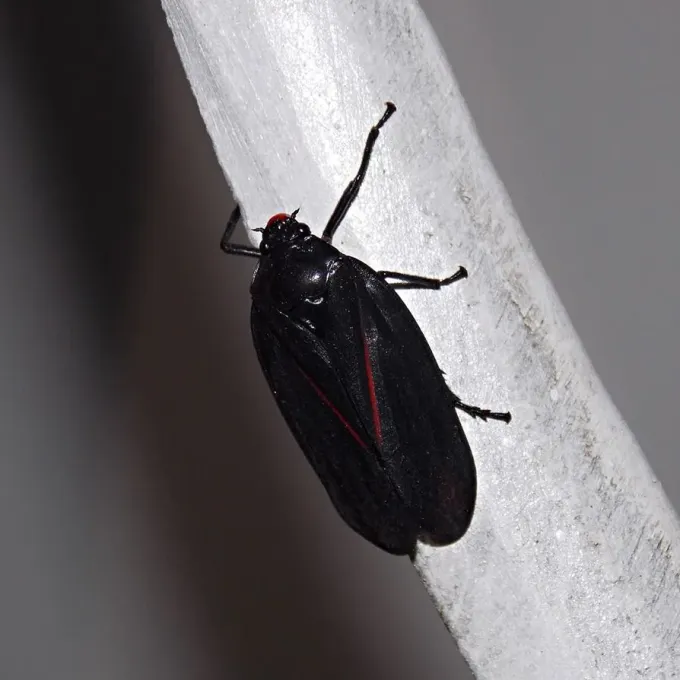
Description
How to identify
Tomaspis bogotensis is a member of the Cercopidae family, commonly known as spittlebugs. These insects are characterized by their robust bodies and powerful hind legs adapted for jumping.
The nymphs are best identified by the white, frothy spittle mass they produce around their bodies. This foam protects the soft-bodied nymphs from desiccation and various predators while they feed on plant fluids.
Adult spittlebugs are active fliers and jumpers, making them difficult to spot without specialized scouting tools. Their coloration often helps them blend into the surrounding vegetation.
Morphologically, these insects are well-adapted to the humid environments of tropical and subtropical grasslands. The structure of their mouthparts is designed specifically for piercing and sucking xylem or phloem sap.
Field identification involves inspecting the base of plants for the characteristic spittle masses during the early morning hours. This is the most reliable way to confirm the presence of an infestation.
What it damages
The primary damage caused by Tomaspis bogotensis is the depletion of nutrients from forage grasses. Both nymphs and adults extract sap, significantly weakening the host plants.
The salivary enzymes injected during feeding cause localized tissue necrosis, which inhibits normal growth and development. This leads to yellowing, stunted growth, and a reduction in biomass.
Infested pastures exhibit reduced forage quality, which directly impacts livestock weight gain and productivity. In severe cases, large patches of the pasture may turn brown and die off.
Weakened plants are less capable of recovering after grazing or mowing. This susceptibility to stress can lead to the thinning of pasture stands and the subsequent invasion of opportunistic weeds.
The economic impact is significant due to the loss of available grazing days and the potential costs associated with implementing pest control measures to restore pasture health.
When it appears
The life cycle of Tomaspis bogotensis is closely synchronized with seasonal rainfall patterns. Population peaks typically occur during the wet season, which provides optimal conditions for survival.
Nymphs emerge from eggs at the onset of the rainy season. This stage requires a stable microenvironment, which is provided by the dense, succulent growth of lush pasture grasses.
Adult populations usually reach their highest densities during the mid-season. During this time, they migrate across fields to find suitable host plants for feeding and mating.
Multiple generations may occur in a single year, depending on the climatic conditions of the region. Continuous warmth and high humidity facilitate rapid development and population growth.
The insect survives the dry season in the egg stage, often deposited in the soil or within protective organic matter. This strategy allows the population to endure periods of unfavorable weather.
Signs of infestation
The most distinctive sign of an infestation is the presence of white foam clusters on the stems of grasses. These clusters look like saliva and are easily visible upon close inspection.
Yellowing of the foliage and curling leaves are primary symptoms of nutritional depletion. The plants look stressed and lose their vibrant green color compared to healthy sections of the field.
Increased insect movement, particularly jumping adults being disturbed when walking through the field, indicates a high population density that requires immediate attention.
Reduced regrowth after harvest or heavy grazing is a critical sign of infestation. If the pasture takes significantly longer to recover than expected, spittlebug activity is likely to blame.
The development of necrotic lesions on leaves, often associated with secondary fungal infections, confirms that feeding has compromised the structural integrity of the plant tissues.
Control measures
Cultural control is a cornerstone of management, involving frequent mowing and careful pasture rotation. Managing grass height helps disrupt the humid microclimate the nymphs require.
Biological control agents, such as the entomopathogenic fungus Metarhizium anisopliae, are highly effective. These biological products offer a sustainable way to suppress spittlebug numbers.
Chemical control should be applied when the insect population exceeds the economic threshold. Systemic insecticides are generally preferred to target both nymphs and adults effectively.
Regular scouting using yellow sticky traps can help monitor adult flight activity. Early detection allows for more precise timing of insecticide applications, reducing the overall chemical load.
Integrating various management techniques—cultural, biological, and chemical—is essential for long-term control. Always follow safety protocols and pre-harvest intervals to ensure livestock safety.
Taxonomy
- Latin name
- Tomaspis bogotensis
- Order
- Hemiptera (bugs, aphids, leafhoppers)
- Family
- Cercopidae
- EPPO code
- TOMABO
Discussion
No discussions yet — be the first.