
Essex skipper
Thymelicus flavus
Description
How to identify
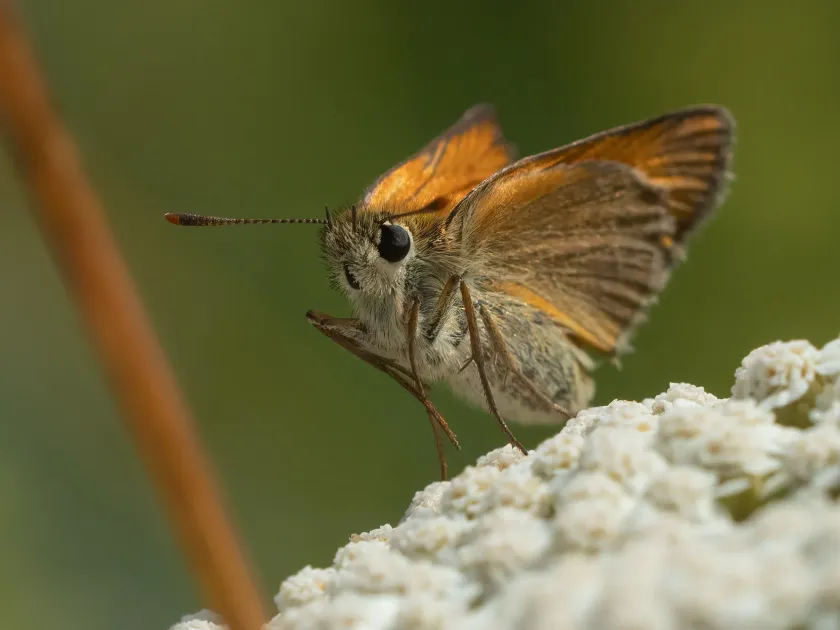
The Essex skipper (Thymelicus flavus) is a small butterfly species belonging to the Hesperiidae family. Adult butterflies typically have an orange-ochre wing color with narrow dark margins.
The wingspan of the species is generally between 25 and 30 mm. A distinct feature for identification is the tip of the antennae, which are black on the underside, differentiating them from the similar Small skipper.
Larvae are pale green with lighter longitudinal lines running along their bodies. The head capsule is usually dark brown, providing a camouflage effect against the stems of grass plants they inhabit.
The life cycle undergoes complete metamorphosis. Adults are diurnal, being most active in sunny weather while feeding on nectar, whereas larvae are strictly herbivorous and focus on various grass species.
This species produces one generation per year. Winter is spent in the larval stage, tucked away in silk-spun shelters near the base of the host plants, which provides essential protection from freezing temperatures.
What it damages
The primary damage is caused by the larvae, which feed on the leaves of wild and cultivated grasses. Host plants include various meadow grasses such as Timothy and Couch grass.
In agricultural settings, the Essex skipper can impact pastures and fodder crops. High populations may lead to significant reduction in green biomass, impacting the overall yield of hay or forage.
Damage symptoms include irregular feeding patterns on leaf edges and large holes in the middle of the leaf blades. In severe cases, larvae can strip the leaf tissue, leaving only the midribs.
Cereal crops grown near unmanaged grassland or field margins are most vulnerable. The pest can migrate from wild grasses to cultivated crops, potentially affecting the quality of the green forage.
While economic damage is rarely catastrophic, in years with high population density, the combined grazing of larvae can significantly stress young plants and reduce their vigor and growth potential.
When it appears
Adult flight occurs during the summer months, specifically from June through July. During this period, adults mate and deposit eggs on the leaves of host plants.
After hatching, larvae develop until they reach an overwintering stage. Their activity is heavily influenced by the vegetative growth of grasses, which provides both food and essential shelter.
Spring activity coincides with the onset of the growing season. This is the period when larvae resume feeding after the winter diapause, making them most visible during late spring and early summer.
Pupation takes place within folded leaf structures during mid-summer. The pupal stage lasts approximately two to three weeks before the next generation of adults emerges.
Population dynamics are often regulated by environmental factors, such as humidity and the presence of natural enemies, which can keep numbers low in balanced ecosystems.
Signs of infestation
The most reliable sign of an Essex skipper infestation is the presence of rolled or folded leaves. Larvae use silk to bind leaf edges together, creating a tubular shelter for protection.
Foliage inspection often reveals notched leaf edges. Unlike simple chewing by some larger pests, skipper damage typically leaves a characteristic clean-cut edge or a jagged feeding track.
Frass (larval excrement) found near the leaf shelters is a key diagnostic indicator. Finding these deposits provides clear evidence of an active population before the larvae themselves are spotted.
Increased butterfly activity around the field margins during sunny days suggests an upcoming risk. Observing the adults can help agronomists time the field scouting for larval presence.
Wilting of leaf tips or entire leaf blades caused by the disruption of the plant's vascular tissue within the larval shelter is a sign of localized heavy infestation.
Control measures
The most effective strategy involves maintaining clean field margins and eliminating nearby stands of wild grasses. Reducing habitat variety for the larvae effectively lowers population density.
Deep soil cultivation after harvest can physically destroy the overwintering sites of larvae. This cultural practice disrupts the life cycle and reduces the probability of high infestation in the following season.
Insecticide applications should be reserved for scenarios where economic thresholds are exceeded. Selective treatments that spare beneficial insects and pollinators are highly recommended.
Biological control using Bacillus thuringiensis-based products offers a safe and targeted solution, particularly effective against younger larval stages without harming the surrounding environment.
Implementing pheromone monitoring can provide early warnings of adult activity, allowing farmers to schedule inspections and interventions at the most sensitive points in the pest's life cycle.
Taxonomy
- Latin name
- Thymelicus flavus
- Order
- Lepidoptera (butterflies)
- Family
- Hesperiidae
- EPPO code
- THYMFL
Discussion
No discussions yet — be the first.