
Lulworth Skipper
Thymelicus actaeon
Description
How to identify
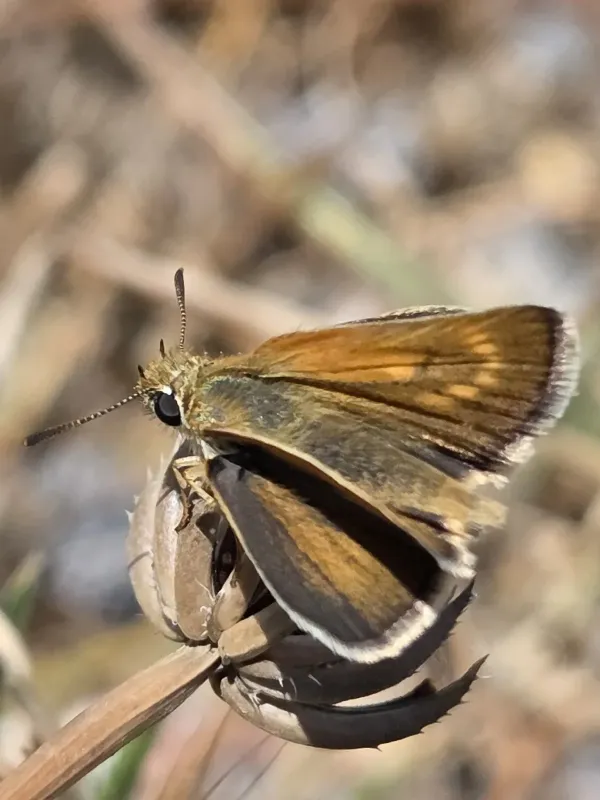
The Lulworth Skipper (Thymelicus actaeon) is a butterfly species within the Hesperiidae family, order Lepidoptera. Adult wingspan typically measures between 25 and 30 mm.
The upper side of the wings is distinctively ochre-yellow to golden-brown, bordered by darker margins. Males exhibit a noticeable dark androconial streak on their forewings.
Larvae are pale green, providing camouflage against the stems of their host grasses. They feature a darker head, which distinguishes them from other similar caterpillar species.
The pupa is also greenish in color, allowing it to remain inconspicuous among the dense foliage of grasses throughout its developmental stage.
This butterfly is most frequently found in dry, warm environments, such as chalk grasslands, which often sit adjacent to cultivated agricultural lands.
What it damages
The primary hosts for Lulworth Skipper larvae are various species of wild and cultivated grasses, including major cereal crops like wheat and barley.
Damage is characterized by larvae feeding on the edges of leaf blades, which can reduce the total photosynthetic area and impair plant vigor.
Heavy infestation levels can lead to significant defoliation, potentially stunting crop development and impacting final yields in highly localized areas.
While typically not a major pest, in years with favorable climate conditions for larval growth, they can contribute to overall stress on cereal crops.
The feeding patterns often leave ragged leaf edges, making it easier for farmers to identify the presence of these insects during scouting.
When it appears
The Lulworth Skipper typically completes one generation per year. Adults emerge in mid-summer, with peak flight activity occurring from late June through August.
The insect overwinters as a young larva, typically hiding in the base of grass stems or within the protective layer of plant debris on the ground.
In spring, larvae resume feeding as temperatures rise, targeting the fresh green shoots of grasses, which corresponds with the tillering stage of cereals.
Pupation occurs in late spring to early summer. The pupal stage lasts approximately two to three weeks, depending on ambient weather conditions.
Temperature fluctuations during the early spring can significantly affect the emergence date of the subsequent generation of adult butterflies.
Signs of infestation
The presence of irregular notches along the leaf margins of grass or cereal crops is the primary visual sign of a Lulworth Skipper infestation.
Larvae are often found tucked into leaves that they have rolled and secured with silk threads, which serves as a protective retreat from predators.
Frass (larval droppings) found at the base of the plant or within the leaf whorl provides further evidence of active feeding by the caterpillars.
Adult sightings on nearby vegetation during sunny, warm weather can indicate that egg-laying has occurred in the vicinity of the field.
Reduced crop biomass in localized patches of the field, despite appropriate fertilization and watering, often warrants further inspection for larval pests.
Control measures
Cultural management, particularly the removal of wild grasses and weeds surrounding the fields, is effective in reducing the potential population size.
Autumn tillage (plowing) helps destroy the overwintering sites of the larvae, reducing the numbers that survive to initiate the next growing season.
In cases where larval populations exceed economic injury levels, the application of approved systemic or contact insecticides may be necessary.
Biological control through the encouragement of natural predators and parasitoids is a sustainable method to maintain the pest population below threshold levels.
Regular field scouting during the spring is essential to detect early infestations before they lead to significant leaf damage or yield loss.
Taxonomy
- Latin name
- Thymelicus actaeon
- Order
- Lepidoptera (butterflies)
- Family
- Hesperiidae
- EPPO code
- THYMAC
Discussion
No discussions yet — be the first.