
Theretra oldenlandiae
Theretra oldenlandiae
Description
How to identify
Theretra oldenlandiae, known as the Impatiens hawk moth or Oldenlandia hawkmoth, is a species of moth in the family Sphingidae. The adult moth features a wingspan of approximately 60–80 mm with distinct brown and grey longitudinal stripes on its wings.
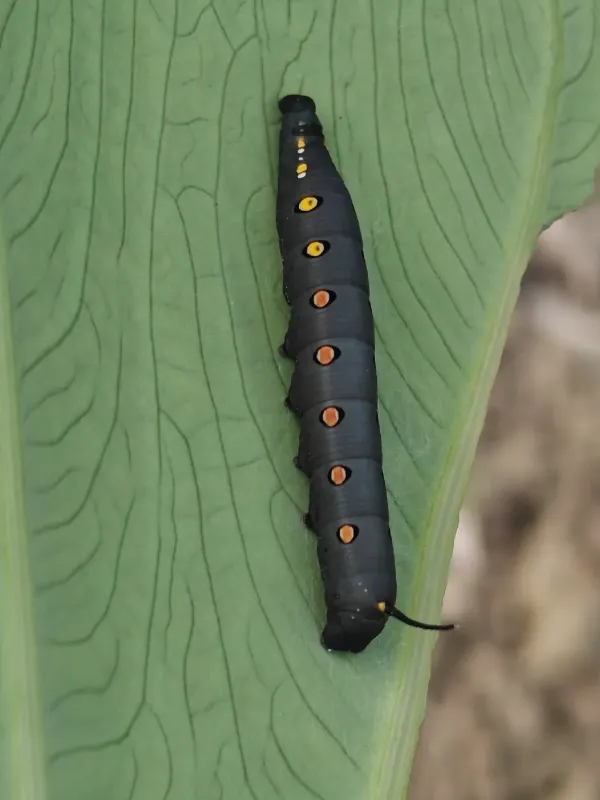
The larvae, or caterpillars, are the primary destructive stage. They are notable for their size, reaching up to 80 mm in length, and possess a characteristic caudal horn on the final abdominal segment, a hallmark of the Sphingidae family.
The coloration of the larvae typically ranges from light green to dark brown, serving as camouflage against host foliage. Their body segments, particularly the fourth and fifth, often exhibit eye-like spots to deter predators.
The pupal stage occurs underground, where the insect remains dormant through winter within a subterranean chamber. Adult moths emerge when environmental conditions are suitable for mating and egg-laying.
The developmental life cycle includes the egg, five larval instars, pupa, and adult moth. These insects are nocturnal, with adult moths being most active after sunset.
What it damages
This pest has a wide host range, frequently attacking plants in the Balsaminaceae, Vitaceae, and Araceae families. It poses a significant threat to ornamental gardens and vineyards.
The primary damage is inflicted by caterpillars that possess powerful mandibles. They feed voraciously, often stripping entire leaves down to the midrib, which severely reduces the photosynthetic capacity of the host plant.
In addition to foliage, larvae may feed on tender buds, young shoots, and developing flowers. This can significantly reduce the yield of crops and decrease the ornamental quality of garden plants.
Heavy infestations can lead to stunted growth and severe dehydration of the plant tissue. Weakened plants become highly susceptible to secondary bacterial and fungal pathogens that exploit the damaged areas.
For young seedlings, a single large larva can potentially cause enough damage to result in the death of the entire plant if left unchecked during the critical growth phase.
Signs of infestation
The most reliable early sign of infestation is the presence of large, pellet-shaped frass (excrement) scattered around the base of the plant. This often indicates the presence of larger larvae.
Visual observation of foliage reveals irregular feeding patterns or completely consumed leaf blades. A quick inspection of the underside of remaining leaves often reveals the presence of eggs or young larvae.
Distorted or partially eaten leaves suggest recent feeding activity. Because larvae are nocturnal, observing the plants in the evening with a flashlight is the best method for accurate detection.
The appearance of damaged buds or deformed new growth is an indication that the caterpillars have moved to the more tender parts of the host plant, often occurring in later larval instars.
Regular monitoring of the garden, particularly during the warm months when the moth is active, is essential for detecting the initial onset of an infestation before it reaches critical levels.
Control measures
Cultural control practices, such as tilling the soil in late autumn or early spring, are highly effective as they expose pupae to winter temperatures and natural predators, significantly reducing the next generation.
Hand-picking remains the simplest and most environmentally friendly method for managing small-scale infestations. Collected caterpillars should be disposed of to prevent further damage to the crops.
Biological control using formulations containing Bacillus thuringiensis is effective against younger larval stages and provides an excellent alternative to broad-spectrum chemical pesticides.
Chemical intervention should be reserved for severe outbreaks. Select insecticides targeting Lepidoptera, ensuring that the application complies with safety guidelines and pre-harvest intervals for edible crops.
Maintaining a weed-free environment around the perimeter of the crop area helps to reduce alternative hosts for the moth, thereby lowering the likelihood of recurring infestations in subsequent seasons.
Taxonomy
- Latin name
- Theretra oldenlandiae
- Order
- Lepidoptera (butterflies)
- Family
- Sphingidae
- EPPO code
- THETOL
Discussion
No discussions yet — be the first.