
Agrius
Agrius
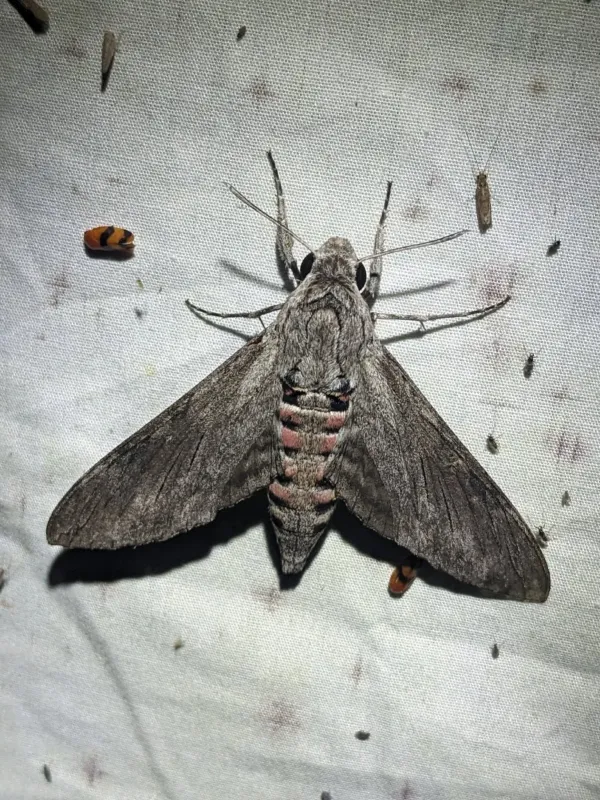
Description
How to identify
The genus Agrius belongs to the order Lepidoptera and the family Sphingidae, commonly known as hawkmoths. These insects are recognized for their large size and high-speed flight capabilities.
Adult moths possess long proboscises, enabling them to feed on nectar from flowers while hovering in the air, which makes them highly efficient pollinators, though their larvae are considered agricultural pests.
The larvae, or caterpillars, are large and distinctive, typically featuring a curved horn on the posterior end. They are known for their voracious appetite and rapid physical development.
Development follows a complete metamorphosis cycle: egg, larva, pupa, and adult. The pupal stage typically occurs within the soil, providing the insect with protection from environmental fluctuations.
Identification often requires careful inspection of wing patterns and morphological details, as the genus includes several closely related species with similar appearances.
What it damages
The primary agricultural damage is caused by the larval stage. These caterpillars consume large quantities of leaf tissue, significantly impacting the plant's structural and physiological integrity.
Key host plants include various members of the Solanaceae family, such as tobacco, potatoes, and tomatoes, which are essential for commercial agricultural production.
Defoliation reduces the photosynthetic area of the crop, directly leading to diminished plant vigor and lower potential yield, often resulting in significant economic losses.
In severe infestations, the larvae can strip a plant bare of all green foliage, leaving only the stem and major veins, which often leads to the death of the host plant.
Even moderate infestations can negatively affect the quality of the harvest, as the loss of leaves disrupts the accumulation of essential nutrients in the fruits or tubers.
When it appears
Adult moths are nocturnal or crepuscular, showing maximum activity during the night. They fly to search for nectar sources and suitable host plants for oviposition.
The lifecycle duration is highly dependent on ambient temperatures and regional climate; warmer regions may support multiple generations within a single growing season.
Peak larval activity generally occurs mid-to-late summer, as caterpillars reach their final instars before descending to the soil to pupate.
Overwintering occurs in the pupal stage. The pupae remain dormant in the ground, protected from winter conditions, until warmer temperatures trigger the emergence of the next generation.
The timing of adult flight is usually synchronized with the flowering phases of host crops, ensuring the moths have sufficient energy resources for successful reproduction.
Signs of infestation
The most reliable sign of an Agrius infestation is the presence of large, pellet-like frass (droppings) on the soil surface beneath the affected plants.
Heavy defoliation is visible on the foliage, characterized by large, irregular holes or the complete removal of leaf blades, leaving only the midribs intact.
Although large, the larvae are experts at camouflage, often blending into the stem or leaf structures, which frequently leads to delayed discovery by field scouts.
General plant stress, such as wilting or stunted growth, may be observed in cases where the infestation is concentrated on younger or more sensitive crop varieties.
Light traps are highly effective in detecting the presence of adults in the vicinity, serving as a primary monitoring tool for integrated pest management programs.
Control measures
Tillage and soil cultivation are effective physical controls, as they disrupt the pupal chambers in the ground and expose the pupae to desiccation and natural predators.
Biological control using microbial insecticides, such as products containing Bacillus thuringiensis, offers a selective and environmentally friendly way to manage larval populations.
Chemical intervention should be reserved for threshold-level infestations, utilizing systemic insecticides that ensure maximum efficacy against the active feeding larvae.
Sanitation practices, including the removal of weeds that serve as alternate hosts, play a crucial role in reducing the overall pest pressure within the farming system.
- Autumn soil cultivation to destroy pupae.
- Monitoring using pheromone or light traps.
- Application of selective biological insecticides.
- Regular field scouting during peak flight periods.
Taxonomy
- Latin name
- Agrius
- Order
- Lepidoptera (butterflies)
- Family
- Sphingidae
- EPPO code
- AGRSSP
Discussion
No discussions yet — be the first.