
Death's-head hawkmoth
Acherontia
Description
How to identify
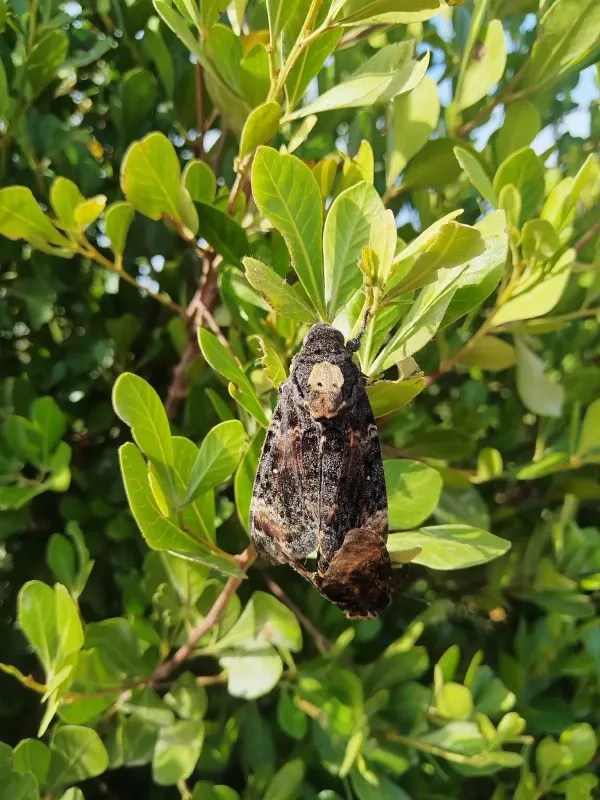
The Death's-head hawkmoth (Acherontia atropos) is a large, iconic moth belonging to the Sphingidae family. It is renowned for its impressive size, with a wingspan that can reach up to 13 centimeters, making it a prominent member of the Lepidoptera order.
The insect derives its common name from the distinct, skull-shaped pattern on its thorax. Its forewings are dark and mottled for camouflage, while its hindwings are bright yellow with black bands, providing a striking contrast when exposed.
The larvae, or caterpillars, are exceptionally large, reaching lengths of up to 15 centimeters. They come in various color morphs, ranging from vivid yellow to green or brown, featuring diagonal stripes and a characteristic curved horn on their posterior segment.
The pupa is large, smooth, and dark-colored, developing underground. The moth typically pupates in a subterranean chamber at depths of 20 to 40 centimeters, where it often remains during the winter months in milder climates.
Adult moths are notable for their ability to emit a squeaking sound when threatened. Furthermore, they are unique among moths for their habit of entering beehives to feed on honey, facilitated by their specialized, short, and robust proboscis.
What it damages
The primary damage is caused by the voracious larvae, which feed almost exclusively on foliage from the Solanaceae family. Agricultural crops such as potatoes, tomatoes, eggplants, and peppers are frequent targets for these pests.
Equipped with powerful mandibles, the caterpillars are capable of rapid defoliation. They can consume large quantities of green tissue in a very short time, leaving behind only the stems and major veins of the plants.
Such extensive damage severely hinders the plant's ability to photosynthesize, directly impacting the development of tubers or fruits. This leads to a substantial loss in both the quality and quantity of the agricultural yield.
While the damage is often localized, the sheer size of the caterpillars means that just a few individuals can cause significant visible harm to a garden plot or small-scale farming operation within a few days.
In addition to solanaceous crops, larvae may occasionally be found on other plant families, but their preference remains firmly rooted in plants like potatoes and tomatoes due to their chemical profile.
When it appears
Adult moth migration usually begins in late spring or early summer, depending on the climatic conditions and the prevailing winds that carry these insects from warmer southern regions.
Egg-laying typically occurs at night, with females depositing eggs on the undersides of leaves of host plants. The larval stage unfolds throughout the summer months as the caterpillars undergo several instars.
The developmental cycle is highly temperature-dependent. Warm summer conditions accelerate the larval growth rate, leading to peak consumption periods during the height of the growing season.
The most intense feeding activity is generally observed during July and August, coinciding with the critical phase when potato plants are bulking up their tubers and tomato plants are actively fruiting.
By autumn, the mature larvae retreat into the soil to pupate. In colder latitudes, this stage is a bottleneck for the population, as many pupae succumb to freezing temperatures, despite the species' migratory patterns.
Signs of infestation
The initial sign of an infestation is the sudden appearance of large, ragged holes in the leaves of solanaceous crops. The caterpillars consume the leaf blades efficiently, leaving behind only the tough midribs.
Large, cylindrical dark droppings (frass) found on the soil or lower leaves provide a clear indicator of the presence of the larvae. Their size corresponds to the caterpillar's stage of development.
Visual inspection is highly effective because of the size of the pests. Despite their camouflage, the large, fleshy bodies of the caterpillars are often easy to spot against the backdrop of the host plants.
Wilting of the plant canopy or a general decline in vigor can also signal an ongoing infestation, as the plant struggles to compensate for the significant loss of photosynthetic surface area.
At night, using a flashlight to scan the crops can reveal the activity of the larvae, which are often more mobile during the darkness, moving from leaf to leaf in search of optimal foliage.
Control measures
Manual collection is the most effective and eco-friendly control method for small gardens. Because the caterpillars are so large, they are easy to hand-pick and remove from plants without special equipment.
Tilling the soil deeply after the harvest helps to disturb or expose the pupae to surface predators such as birds, or to the elements, which effectively reduces the local population for the next season.
Biological pesticides containing Bacillus thuringiensis are highly effective against younger larval stages and are recommended for those seeking a sustainable approach that minimizes harm to beneficial insects.
Chemical control using broad-spectrum insecticides should be a last resort, used only during severe infestations, and must strictly follow local regulations regarding safety intervals before harvesting.
Managing weed populations, particularly wild solanaceous plants like nightshade near farming plots, serves as an important preventative measure to reduce the habitat available for the moths to lay their eggs.
Taxonomy
- Latin name
- Acherontia
- Order
- Lepidoptera (butterflies)
- Family
- Sphingidae
- EPPO code
- ACHESP
Discussion
No discussions yet — be the first.