
Theretra hawkmoth
Theretra
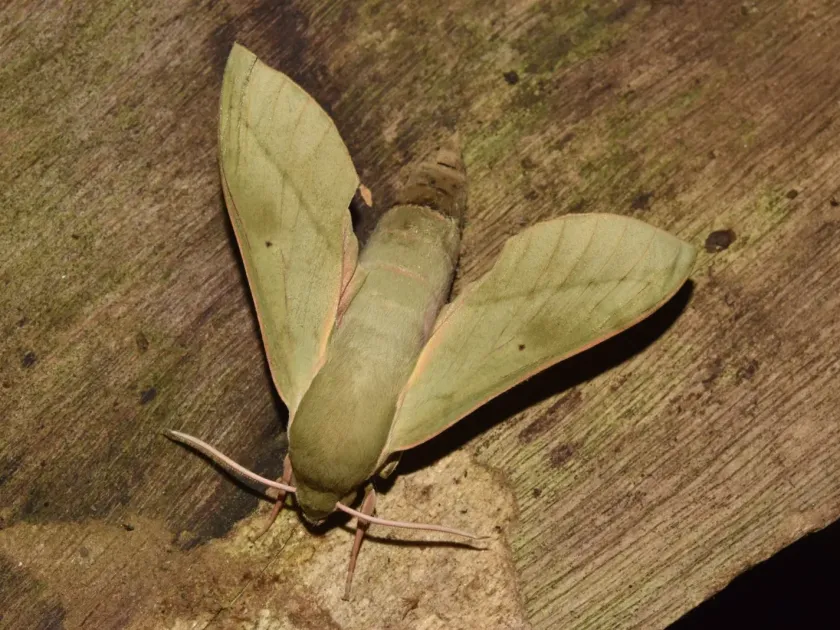
Description
How to identify
The Theretra hawkmoth (genus Theretra) belongs to the Sphingidae family of the order Lepidoptera. Adult moths are characterized by their streamlined bodies and powerful wings, allowing for rapid and precise flight across long distances.
The caterpillars of this genus are easily recognized by the presence of a distinct horn located on the posterior end of their body. Their coloration ranges from bright green to various shades of brown, which acts as camouflage to blend into stems or leaves.
The life cycle undergoes complete metamorphosis, including egg, larva, pupa, and imago stages. Adult moths are typically nocturnal or crepuscular, often visiting flowers to feed on nectar, which makes them difficult to observe during the day.
Pupae generally develop within the soil or in a layer of leaf litter, where they overwinter to survive adverse conditions. They possess high resilience, staying in the pupal stage until environmental temperatures are optimal.
Females lay eggs individually or in small clusters on the underside of the host plant's leaves. They selectively choose succulent and young parts of the plant to ensure food availability for the emerging larvae.
What it damages
The primary concern for agriculture involves the larvae, which feed extensively on members of the Vitaceae family, particularly grapevines. In vineyards, they can cause significant defoliation if populations are left unchecked.
Beyond grapes, several species within the genus may damage ornamental plants such as Balsaminaceae. High population densities can lead to rapid destruction of leaf mass across multiple plant species in a garden setting.
The larvae possess powerful mandibles, which they use to consume leaf tissue at a rapid rate. They often skeletonize leaves or consume entire leaf blades, leaving only the primary veins intact during heavy infestations.
Damage to the foliage reduces the plant's photosynthetic capacity, which adversely affects sugar accumulation in fruits and weakens the overall vigor of the plant. Weakened vines are more susceptible to diseases and environmental stress.
For younger, newly planted vines, severe defoliation can be life-threatening. The reduction in energy reserves often prevents the plant from maturing properly before winter, increasing the risk of frost damage.
When it appears
The flight of adult moths usually begins in late spring and persists through the summer months. During this time, they actively reproduce, spreading eggs across new host plants to propagate their lineage.
Larval activity peaks in mid-summer when crops are at their most vulnerable state. This is the critical window for agronomists to perform visual inspections and implement control measures to prevent economic losses.
Depending on the climatic zone, the Theretra species can complete multiple generations within a single season. This rapid turnover makes persistent monitoring essential for effective management in warm regions.
Wintering occurs primarily in the pupal stage buried within the soil. As the ground warms in the spring, the pupae emerge as adults, effectively restarting the infestation cycle for the next season.
Predictive monitoring is often carried out using light traps or pheromone-based lures. These tools help track the arrival of adults, allowing for precise timing of interventions against the next generation of caterpillars.
Signs of infestation
The most prominent sign of infestation is irregular, notched edges on leaves. Since caterpillars feed from the leaf margins inwards, their feeding pattern is distinct and easily distinguishable from fungal or mechanical damage.
Frass (caterpillar droppings) appearing as small, dark pellets on the ground or on lower leaves is a clear indicator of feeding activity. High concentrations of frass usually suggest that a caterpillar is currently residing on the branch above.
Caterpillars are expert at hiding during daylight hours, often remaining motionless on the undersides of leaves or along petioles. Close inspection, ideally in the evening with a flashlight, is necessary to locate them.
Severe infestations often result in the total consumption of terminal growth. If only bare stalks remain where leaves once were, the infestation is likely well-established and requires immediate action.
Another secondary indicator is the presence of silk threads or slight webbing, although this is less pronounced in hawkmoths compared to other Lepidopterans, they may occasionally use silk to anchor themselves to the plant.
Control measures
Mechanical removal is the most environmentally friendly approach for small gardens. Hand-picking caterpillars in the evening hours is highly effective at reducing the population before significant damage occurs.
Cultural control measures, such as deep tilling of the soil around the base of vines, can disrupt the pupation cycle. By disturbing the soil in the off-season, pupae are exposed to predators and freezing temperatures.
Biological insecticides containing Bacillus thuringiensis are highly effective against younger larval stages. These treatments are target-specific, ensuring that beneficial insects and the surrounding ecosystem remain unharmed.
Chemical control should be reserved for cases of mass outbreaks. Contact or systemic insecticides applied according to labels can halt feeding quickly, protecting the harvest from further degradation.
Encouraging natural predators, such as parasitic wasps (braconids) and predatory bugs, acts as a long-term suppression strategy. Integrated Pest Management (IPM) focuses on maintaining this balance to minimize chemical dependence.
Taxonomy
- Latin name
- Theretra
- Order
- Lepidoptera (butterflies)
- Family
- Sphingidae
- EPPO code
- THETSP
Discussion
No discussions yet — be the first.