
Wilkinson's pine processionary moth
Thaumetopoea wilkinsoni
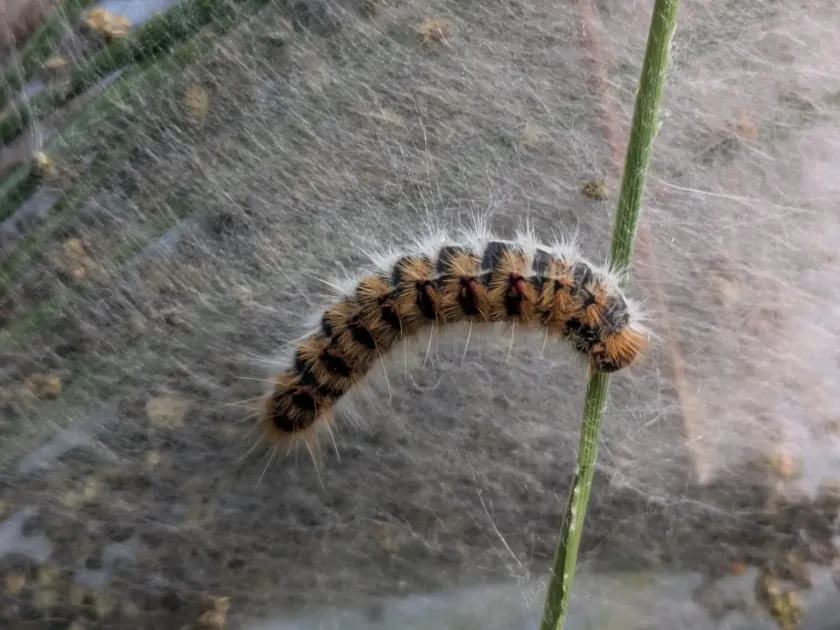
Description
How to identify
Wilkinson's pine processionary moth (Thaumetopoea wilkinsoni) is a moth species belonging to the Notodontidae family, primarily found in the eastern Mediterranean region.
The adult moth is nocturnal, featuring grayish-brown forewings with darker, irregular transverse lines that provide effective camouflage against pine bark.
The larvae are known for their urticating hairs, which contain the protein thaumetopoein, capable of causing severe skin irritation and respiratory issues in humans and animals.
They are characterized by their social behavior, living in communal silk nests that provide thermal protection during the winter months.
The specific "processionary" movement of larvae, where they follow each other in a line to reach pupation sites, is a hallmark of this species.
What it damages
The larvae feed exclusively on pine needles, which can lead to significant defoliation and physiological stress for the host trees.
Severe infestations reduce the tree's photosynthetic capacity, causing stunted growth and increasing susceptibility to secondary pests like bark beetles.
While mature trees can often withstand occasional defoliation, repeated attacks over consecutive years can lead to the death of the tree.
Young plantations and nurseries are particularly vulnerable, with heavy larval feeding often resulting in the total loss of young seedlings.
Beyond forestry damage, the presence of these caterpillars poses a public health risk, leading to dermatitis and allergic reactions for those in the vicinity of infested forests.
When it appears
Adult moths typically emerge during the summer, specifically in July and August, when they mate and lay eggs on pine needles.
The eggs hatch in the autumn, at which point the larvae immediately begin constructing their silk nests to survive the winter temperatures.
Feeding activity is most intense during the spring when larvae grow rapidly as temperatures rise and pine trees begin new growth.
The migration to pupation sites, occurring on the ground, usually takes place between late spring and early summer depending on local climate.
The entire life cycle is strictly synchronized with the phenology of the host pine trees, ensuring an optimal food supply for the developing larvae.
Signs of infestation
The most visible sign of an infestation is the presence of large, white, silken nests attached to the branches of pine trees.
Yellowing or desiccated needles in parts of the crown often indicate active feeding sites where larvae have damaged the foliage.
Dark, granular larval excrement accumulating on lower branches or the forest floor beneath the tree confirms the presence of a thriving colony.
Observing lines of caterpillars moving along branches or across the ground is a clear sign that the larvae have reached the final stage of development.
Egg masses, which appear as elongated, scale-like structures on pine needles, are an indicator of future larval emergence in the area.
Control measures
Mechanical removal and destruction of the silk nests during the winter months is a highly effective control measure for localized infestations.
Biological control using formulations of Bacillus thuringiensis var. kurstaki is recommended for safe and targeted elimination of larvae.
Chemical control with systemic or contact insecticides may be deployed during mass outbreaks in larger forest areas to mitigate damage.
- pheromone traps for monitoring populations and disrupting mating cycles;
- protection and encouragement of natural predators like insectivorous birds and parasitic wasps;
- application of insect growth regulators (IGRs) to prevent larvae from successfully molting.
Ongoing forest pathology monitoring is essential to detect outbreaks early and implement integrated pest management strategies efficiently.
Taxonomy
- Latin name
- Thaumetopoea wilkinsoni
- Order
- Lepidoptera (butterflies)
- Family
- Notodontidae
- EPPO code
- THAUWI
Discussion
No discussions yet — be the first.