
Cerura lanigera
Cerura lanigera
Description
How to identify
Cerura lanigera is a moth species belonging to the family Notodontidae. Adults are medium-sized moths with a characteristic dense layer of hair on their bodies, which justifies their common name.
The wings of the moth feature complex patterns and dark bands, providing excellent camouflage against tree bark. The wingspan usually ranges from 40 to 55 millimeters.
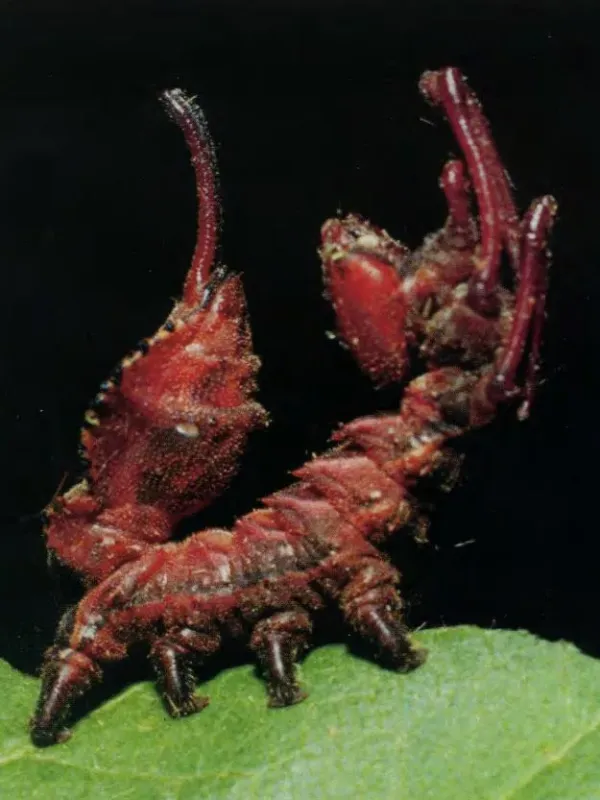
The caterpillar of this species is highly distinct, featuring a large head and a swollen anterior section. Its most recognizable feature is the pair of long, whip-like tails at the rear end.
When threatened, the caterpillar can protrude red filaments from these tails, a defensive mechanism intended to startle potential predators.
The pupa is dark, robust, and develops within a hard, durable cocoon constructed from silk and bits of bark, usually situated in deep crevices on the tree trunk.
What it damages
This pest primarily attacks members of the Rosaceae family, with apple and pear trees being the most common hosts, along with various ornamental shrubs.
The larvae feed on the foliage, initially causing localized damage, but they can quickly lead to heavy skeletonization of leaves, leaving only the primary veins intact.
Significant defoliation hampers the plant’s ability to conduct photosynthesis, leading to stunted growth and reduced energy storage for the upcoming season.
Young trees are particularly susceptible; heavy infestations can severely weaken the plant, making it prone to winter damage and secondary pathogen attacks.
In addition to physical foliage loss, the presence of these larvae creates stress that may negatively affect fruit production and overall tree vigor.
When it appears
Adult moths typically emerge in late spring or early summer, when the temperature is optimal for mating and oviposition on the foliage of host trees.
Larval development occurs throughout the summer months. Depending on the geographical region and climate, the species may complete one or two generations per year.
Feeding intensity peaks mid-summer as the larvae accumulate biomass for their transition into the pupal stage, which requires significant nutritional input.
As autumn approaches, the caterpillars stop feeding and search for protected sites on the tree to construct their overwintering cocoons.
The species survives the winter exclusively as a pupa, protected within its camouflaged cocoon until the return of favorable spring conditions.
Signs of infestation
The most evident sign of an infestation is the presence of chewed leaf edges or irregular holes in the leaf blades throughout the tree canopy.
Close inspection of the branches often reveals the caterpillars themselves, which mimic twigs or leaf petioles due to their unique shape and cryptic coloration.
Larval excrement (frass) visible on leaves beneath the feeding site is a clear indicator that the pests are active in the upper parts of the tree.
The characteristic behavior of displaying their rear filaments when disturbed is a definitive diagnostic trait for identifying this specific larva.
Hardened, bark-colored lumps on the trunks or main branches during the dormant season are indicators of overwintering pupae.
Control measures
Manual collection of larvae is highly recommended for small orchards or individual ornamental trees to prevent the population from expanding.
Biological control agents, such as Bacillus thuringiensis, are effective against young larvae and are considered safe for beneficial insects.
Chemical insecticides should be utilized only during periods of high larval activity, applying them as targeted sprays to affected areas.
- Implementing sanitary pruning to remove infested branches.
- Encouraging local populations of insectivorous birds and parasitic wasps.
- Scrubbing rough bark to destroy potential overwintering sites for pupae.
Regular monitoring using light traps can help track adult moth activity, allowing for timely intervention before large-scale damage occurs.
Taxonomy
- Latin name
- Cerura lanigera
- Order
- Lepidoptera (butterflies)
- Family
- Notodontidae
- EPPO code
- CERULA
Discussion
No discussions yet — be the first.