
Cerura cinerea
Cerura cinerea
Description
How to identify
Cerura cinerea, commonly known as a type of puss moth or prominent moth, belongs to the family Notodontidae. Adult moths are characterized by their grayish wings with distinct dark markings, providing excellent camouflage against tree bark during the day.
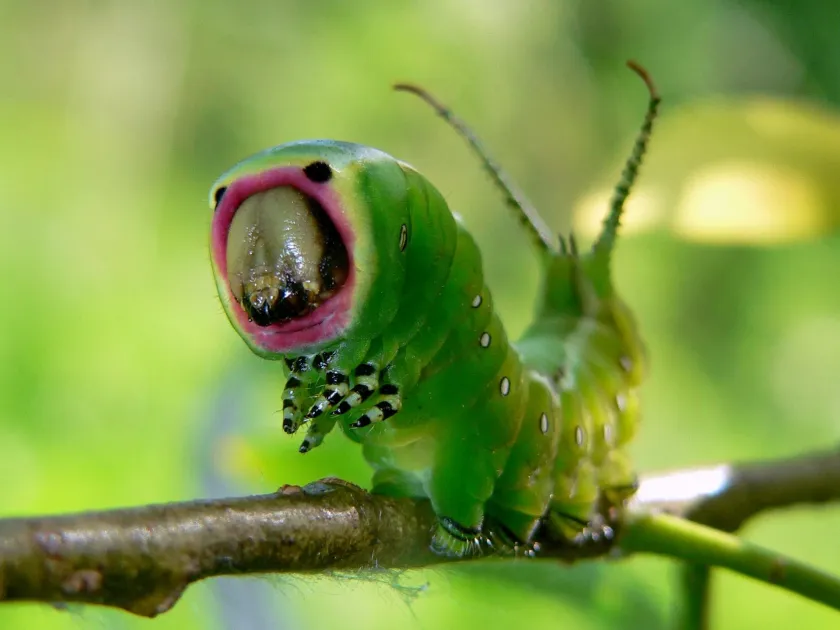
The larvae, or caterpillars, are the primary stage causing damage. They exhibit a bright green color with a dark dorsal stripe. A notable feature is their ability to project long, tail-like appendages when threatened, serving as a defensive mechanism against predators.
The life cycle typically includes one or two generations per year depending on the climate. The species overwinters in the pupal stage, encased in a hard, bark-like cocoon that is incredibly difficult to spot on the trunks of host trees.
Eggs are laid individually on the host plant leaves. They are dark in color and spherical, often found on the underside of leaves or near the main veins, ensuring the newly hatched larvae have immediate access to food.
As a member of the Notodontidae family, it shares biological traits with other prominent moths, yet its specific host preference for Salicaceae makes it a distinct pest in urban and forestry settings.
What it damages
Cerura cinerea primarily infests trees of the family Salicaceae, with a strong preference for Populus (poplar) and Salix (willow) species. These trees are critical for windbreaks and landscaping, making the pest's impact economically significant.
The caterpillars are voracious feeders. In their early instars, they create small holes in the leaf tissue, but as they grow, they can completely consume entire leaves, leaving only the midribs and main veins intact.
Severe defoliation stresses the host trees, reducing their ability to photosynthesize. This leads to weakened growth, reduced wood production, and increased susceptibility to secondary pests like wood-boring beetles and fungal pathogens.
In nursery environments, repeated infestations by Cerura cinerea can lead to the stunting of young saplings, often rendering them unsalable or requiring extensive recovery time.
The aesthetic damage to ornamental poplars and willows is also a concern for urban park management, where the visual quality of trees is essential for public spaces.
When it appears
Adult moths typically emerge in late spring, generally between May and June, when temperatures are warm enough for mating and egg-laying activities.
Caterpillars are active throughout the summer months (June to August). This is the peak period for feeding and development, during which they rapidly accumulate biomass.
Pupation occurs in late summer or early autumn. The larvae spin robust, camouflaged cocoons, often directly on the woody parts of the tree, where they remain throughout the winter.
The cycle completes when temperatures rise in the following spring. In warmer regions, a second, partial or complete generation may occur, extending the infestation period.
Monitoring should be focused on the early summer period to detect the presence of egg clutches or early-stage caterpillars before extensive damage occurs.
Signs of infestation
Signs of infestation include:
- Significant leaf damage, ranging from small perforations to complete skeletonization of the canopy.
- Presence of caterpillars with unique tail-like appendages on the leaves or stems of host trees.
- Accumulation of frass (caterpillar droppings) on the leaves below the feeding sites or at the base of the tree.
- Hard, bark-colored, wart-like cocoons located on the trunks or main branches of host trees.
- Premature leaf yellowing and dropping in affected branches during mid-summer.
Control measures
Biological control using Bacillus thuringiensis (Bt) sprays is highly effective against young larvae while remaining environmentally safe for beneficial insects and birds.
Chemical control involving systemic or contact insecticides may be necessary in cases of heavy infestation, particularly in commercial tree nurseries or when specimen trees are at risk.
Manual removal of cocoons during the dormant season (late autumn/winter) is a practical and effective method for small-scale operations or individual trees in landscapes.
Encouraging natural predators, such as insectivorous birds and parasitic wasps, is a key component of an Integrated Pest Management (IPM) strategy to keep the moth population below damaging thresholds.
Good cultural practices, such as maintaining tree health through appropriate watering and soil management, help trees recover faster from foliage loss and improve their natural resistance to pest attacks.
Taxonomy
- Latin name
- Cerura cinerea
- Order
- Lepidoptera (butterflies)
- Family
- Notodontidae
- EPPO code
- CERUCI
Discussion
No discussions yet — be the first.