
Cerura japonica
Cerura japonica
Description
How to identify
Cerura japonica is a species of moth belonging to the family Notodontidae. These moths are characterized by a medium size, with a wingspan ranging from 50 to 60 mm.
The forewings are typically grayish-white with distinctive dark wavy lines and patches, which allow the moth to blend perfectly with the bark of trees during the day.
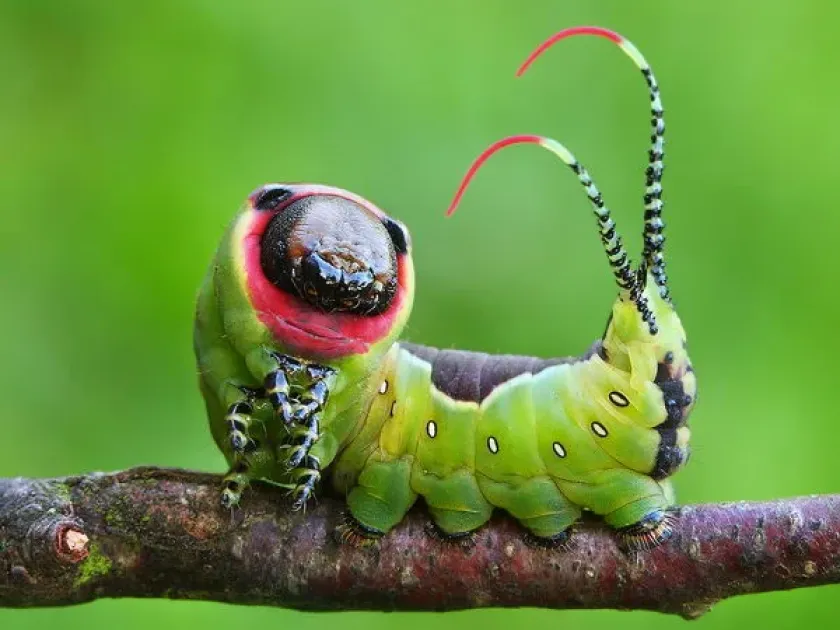
The larvae, known as caterpillars, are notable for their unique appearance, featuring a bright green body with a purple-brown saddle pattern on the back.
They possess two long, whip-like filaments at the rear of their body, which they twitch when threatened to startle predators, a classic trait of the Puss Moth group.
The pupae are concealed within very tough, bark-colored cocoons that are intricately integrated into the surface of the host tree trunk.
What it damages
The primary host plants for Cerura japonica are trees from the Salicaceae family, specifically poplars (Populus) and willows (Salix).
Larval feeding is the sole cause of damage, where caterpillars consume leaves, often leading to total defoliation of branches during heavy infestations.
This pest is particularly problematic in nurseries and fast-growing biomass plantations where foliage health is critical for tree development.
Repeated defoliation by the caterpillars weakens the trees, making them susceptible to secondary wood-boring insects and various fungal diseases.
Economic damage is most significant in early summer when the caterpillars are at their peak feeding stage and rapidly strip the canopy.
When it appears
The life cycle of this species typically consists of one generation per year, although warmer climates may support a partial or full second generation.
Adult moths emerge in late spring, generally peaking between May and June, coinciding with the fresh growth of leaves on host plants.
Females deposit eggs on the foliage, and after a short incubation period, young larvae emerge to begin their feeding cycle.
The larval stage lasts throughout the summer months, with the most intensive feeding occurring during June and July.
By late summer, the fully grown caterpillars spin their protective cocoons, where they undergo pupation and remain dormant throughout the winter.
Signs of infestation
Initial signs of infestation include small, irregular holes in the leaves, created by the young larvae as they begin to feed.
As the larvae mature, they consume entire leaf blades, often leaving behind only the main midribs, which gives the canopy a skeletonized appearance.
Dark frass (droppings) on the leaves or the ground beneath the host tree is a strong indicator of the presence of a large population of caterpillars.
Careful inspection of the tree trunks may reveal the presence of camouflaged cocoons, which appear as hard, bark-textured bumps.
Observation of the caterpillars themselves, especially the distinctive ones with rear filaments on the foliage, confirms an active infestation.
Control measures
Integrated Pest Management (IPM) is the most effective approach to handle Cerura japonica populations in forestry and orchard settings.
For small-scale or ornamental trees, mechanical removal of infested branches or manual collection of caterpillars can significantly reduce the pressure.
Biological control agents, such as Bacillus thuringiensis (Bt), are highly effective when applied during the early larval stages.
In cases of severe outbreaks in large plantations, chemical insecticides should be used selectively to minimize impact on beneficial insects and predators.
- Monitoring for egg clusters in late spring.
- Encouraging natural predators like birds and parasitic wasps.
- Ensuring proper plant spacing to improve canopy air circulation.
Taxonomy
- Latin name
- Cerura japonica
- Order
- Lepidoptera (butterflies)
- Family
- Notodontidae
- EPPO code
- CERUJA
Discussion
No discussions yet — be the first.