
Processionary moth
Thaumetopoea
Description
How to identify
The processionary moth (genus Thaumetopoea) belongs to the family Notodontidae. They are well-known for their communal behavior and the medical impact their larvae have on humans.
The caterpillars are covered in thousands of tiny, urticating hairs that contain a protein called thaumetopoein, causing severe allergic reactions, rashes, and respiratory distress.
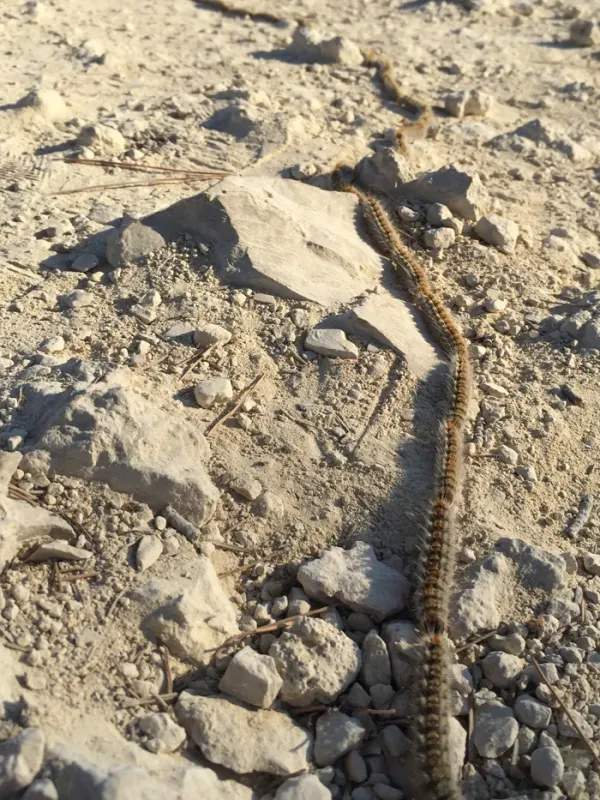
These insects are named for their unique behavior of moving in single-file columns, mimicking a procession, when they migrate from their nests to feeding areas.
The life cycle typically spans one year. The moths lay eggs on branches in clusters, which are covered with scales that serve as protective camouflage against predators.
After hatching in spring, the larvae pass through several developmental stages, feeding intensely on foliage before eventually pupating in the soil or silk-lined nests.
What it damages
While oaks are the primary host for many species, these moths also attack various conifers, including pine and cedar, causing significant ecological and economic damage.
The caterpillars consume massive amounts of foliage, which can lead to complete defoliation of large trees during peak spring and early summer feeding months.
Weakened trees experience reduced growth rates and become highly susceptible to drought, secondary pest infestations, and fungal diseases that may prove fatal.
Beyond forestry issues, the presence of these caterpillars renders parks, schoolyards, and gardens hazardous due to the toxic hairs floating in the wind.
The repeated loss of leaves year after year forces the trees to exhaust their energy reserves, leading to structural instability and permanent canopy decline.
Signs of infestation
Large, silk-like tent nests constructed in tree crotches are the most obvious indicators of an established processionary moth colony.
Distinctive silk trails found running along the trunks or branches act as highways for the caterpillar columns and are a sure sign of active infestation.
Sudden skin irritation or rashes among people frequenting forested areas can indicate that the toxic hairs are present in the immediate environment.
Accumulation of black frass (caterpillar droppings) under the tree canopy is a clear indicator that a large number of larvae are feeding high above.
Visible thinning of the foliage and the emergence of skeletonized leaves are late-stage signs that the infestation has reached a significant level.
Control measures
Physical removal of nests using specialized equipment is effective, but it must be performed by professionals wearing full respiratory and skin protection.
Biological control methods, such as applying Bacillus thuringiensis sprays, are highly recommended because they target larvae specifically while sparing other insects.
Chemical insecticides are used in extreme cases to prevent total defoliation of high-value trees or in areas where public safety is at immediate risk.
Enhancing natural biodiversity by installing bird boxes helps attract predators, which play a crucial role in suppressing the moth population naturally.
- Use pheromone traps to monitor and estimate adult moth populations.
- Implement winter pruning to remove and destroy egg-infested branches.
- Install warning signs in public areas during high-risk seasons.
Taxonomy
- Latin name
- Thaumetopoea
- Order
- Lepidoptera (butterflies)
- Family
- Notodontidae
- EPPO code
- THAUSP
Discussion
No discussions yet — be the first.