
Stingless bees
Tetragonula
Description
How to identify
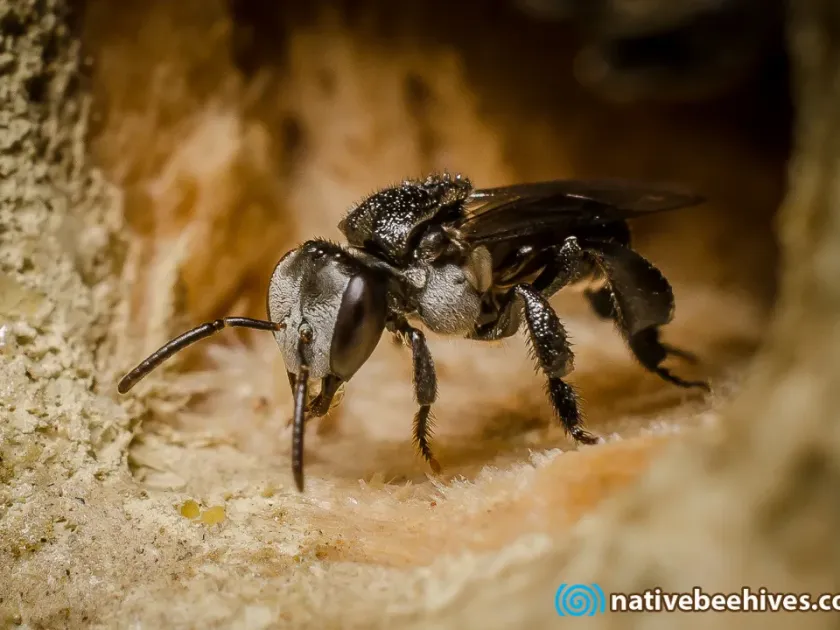
Tetragonula is a diverse genus of stingless bees belonging to the family Apidae. They are native to tropical and subtropical regions across the globe, known for their unique social behavior.
These insects are generally small and dark in color. As the common name suggests, they lack a functional stinger, relying instead on mandibles to defend their nests against intruders.
Their life cycle involves the construction of elaborate nests, often inside tree hollows or crevices, using a mixture of wax and plant resins collected from their environment.
Social colonies are highly organized, with a queen and worker bees that perform specialized tasks, ensuring the survival and growth of the hive throughout the year.
While often regarded as beneficial pollinators for various crops, their need for building materials can occasionally bring them into conflict with agricultural production.
What it damages
Damage caused by Tetragonula occurs primarily when workers strip bark and resin from young, tender shoots of fruit trees and ornamental plants to construct their nests.
This feeding behavior can cause localized tissue necrosis, ring-barking of small twigs, and general weakening of the plant's vascular structure.
In nurseries, repetitive damage to main stems or buds can inhibit plant growth, cause malformations, and significantly lower the commercial value of seedlings.
The resulting wounds on the bark serve as entry points for various pathogens, including fungi and bacteria, leading to secondary infections that may kill the host plant.
Economic damage is typically localized but can be severe in areas where bee populations are high and alternative sources of resin are scarce.
When it appears
As tropical insects, Tetragonula are active throughout the year, provided temperatures remain within their favorable range for foraging and colony maintenance.
The intensity of foraging activity often correlates with the vegetative flushing of host plants, which provides the necessary resins and juices they seek.
During the transition between wet and dry seasons, activity levels can peak as colonies repair or expand their nest structures to adapt to changing humidity levels.
There is no true hibernation period for these insects, which means that plantations must be monitored continuously for signs of damage across all four quarters.
Environmental conditions that favor rapid plant growth often simultaneously trigger increased bee foraging, creating a critical window for crop protection.
Signs of infestation
The most prominent sign of infestation is the appearance of wax tubes or sticky resinous patches near the entrance of hollows in tree trunks or artificial structures.
Observation of the plant surface reveals irregular grazing marks, where the bark has been chewed off, often accompanied by visible droplets of resin.
The presence of numerous small dark insects flying persistently around specific branches or stems is a reliable indicator of active foraging on the plant.
Wilting of terminal buds or new shoots without apparent disease symptoms is a common indicator that bees have damaged the conductive tissues of the plant.
Sticky, thick deposits of propolis on the branches are definitive evidence that a colony is utilizing the specific plant as a primary resource for nest construction.
Control measures
Management strategies should prioritize preservation, as Tetragonula bees are vital pollinators, requiring farmers to balance crop protection with conservation efforts.
The use of physical barriers, such as protective mesh sleeves or trunk wraps, is highly effective in preventing bees from accessing sensitive plant tissues.
Chemical control via insecticides is strongly discouraged, as these substances can cause widespread ecological damage and kill beneficial pollinator populations.
Preventative measures should focus on sealing potential nesting cavities in fruit trees and keeping orchard areas clear of debris that could support new colonies.
- Implement proactive monitoring of young orchards during flushing phases.
- Utilize botanical-based, non-toxic repellents to deter bees from specific high-value plants.
- Provide alternative, non-crop resin sources away from the main production area to distract the foragers.
Taxonomy
- Latin name
- Tetragonula
- Order
- Hymenoptera
- Family
- Apidae
- EPPO code
- TETNSP
Discussion
No discussions yet — be the first.