
Chinese mantis
Tenodera sinensis
Description
How to identify
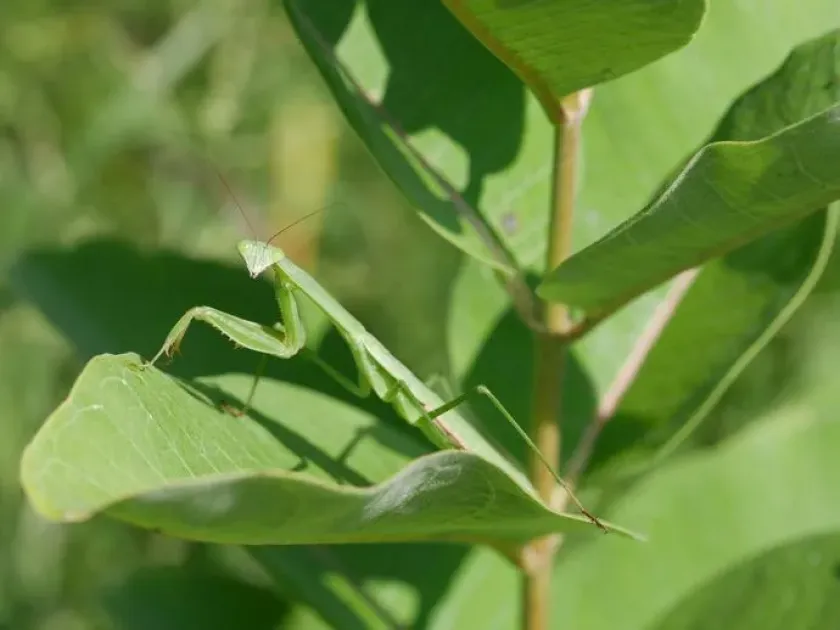
The Chinese mantis (Tenodera sinensis) is a large insect from the order Mantodea, family Mantidae. Adults typically grow to be 10-12 centimeters long, making them the largest mantis species in North America and parts of Asia.
Their body color ranges from bright green to brown, providing excellent camouflage against vegetation. The head is highly mobile, and the forelegs are lined with sharp spines designed to trap prey efficiently.
They possess well-developed wings, although sustained flight is more common in males seeking females. Their biology is adapted for ambush predation, allowing them to remain motionless for hours.
The egg cases, known as oothecae, are robust, foam-like structures attached to stems or fences. These cases are highly resistant to winter temperatures and represent the primary means of overwintering.
The species is known for its voracious appetite and aggressive territorial nature, which can lead to significant population density in well-managed garden environments.
What it damages
While often considered beneficial, the Chinese mantis becomes a pest when it disrupts the balance of a garden by preying on essential pollinators such as bees, butterflies, and bumblebees.
Because they are non-selective hunters, they often consume beneficial parasitoid wasps that are vital for controlling common agricultural pests like aphids and caterpillars.
By consuming these beneficial species, the Chinese mantis can lead to an increase in other pest populations, indirectly causing crop damage and necessitating further pest control.
In greenhouses or controlled growing environments, a high population of Chinese mantis can decimate the local population of beneficial predatory insects, leading to ecosystem degradation.
Consequently, agricultural experts advise monitoring their numbers to ensure they do not outweigh the benefits of their predatory role in keeping other pests in check.
When it appears
The lifecycle begins in spring when nymphs hatch from the oothecae. These small nymphs immediately begin hunting small insects to support their rapid growth.
During summer, mantises grow and undergo several molts, increasing their size and the complexity of their prey choices. This is the period of peak predatory activity in gardens.
By late summer and early autumn, the mantises reach maturity. They become larger and more visible, patrolling vegetable patches and flower beds in search of food and mates.
Following the mating season, females deposit their egg cases on sturdy structures. The adult mantises die shortly after the first hard frosts of the season.
Timing is critical for management: identifying the oothecae before the spring hatch is the most effective way to manage their impact on the garden ecosystem.
Signs of infestation
The most reliable sign of a Chinese mantis population is the presence of their large, foam-like egg cases on woody stems, tall grasses, or man-made structures.
During the growing season, you may spot them in their characteristic ambush stance on leaves, waiting for pollinators or other insects to come within range.
A noticeable decline in pollinator activity in areas where these insects are present suggests that the mantis population is effectively reducing the local population of bees.
Discarded exoskeletons, which mantises leave behind during their molting process, can often be found on plants, serving as evidence of their growth and residency.
In some cases, the presence of these insects is marked by localized disturbances in pest populations that might otherwise be managed by other predatory insects.
Control measures
Mechanical removal of the oothecae during the winter or early spring is the most effective control measure. Simply pruning and destroying these egg cases prevents the next generation.
Encouraging native predators, such as birds, which naturally feed on mantises, is an environmentally friendly way to balance their population in larger garden areas.
Using protective netting over sensitive crops during the pollination season can help shield beneficial insects from being hunted by resident mantis populations.
Avoid buying or introducing Chinese mantis egg cases into gardens, as they are non-native in many regions and can displace smaller, less destructive native species.
- Manual removal of oothecae
- Bird-friendly garden design
- Protective plant netting
Taxonomy
- Latin name
- Tenodera sinensis
- Family
- Mantidae
- EPPO code
- TENOAS
Discussion
No discussions yet — be the first.