
European mantis
Mantis
Description
How to identify
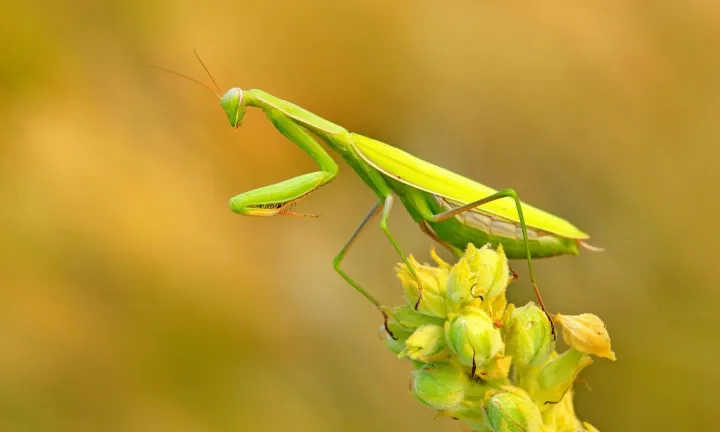
The European mantis (Mantis religiosa) is a large insect belonging to the family Mantidae, characterized by specialized forelegs used for capturing prey.
Adults typically measure between 50 and 75 mm in length and exhibit cryptic coloration, ranging from bright green to brown, which mimics leaves and stems.
The head is highly mobile with a wide visual field, allowing the insect to track prey movements with high precision before striking.
A key identifying feature is a dark spot, often with a white center, located on the inner surface of the coxa of the front legs.
The life cycle involves incomplete metamorphosis, with the insect overwintering as eggs encased within a protective, hardened foam structure known as an ootheca.
What it damages
In an agricultural setting, the mantis is not a traditional crop pest but acts as a generalist predator, which creates a complex ecological impact.
The primary concern is their predation on beneficial insects, including honeybees, bumblebees, and other essential pollinators required for crop fertilization.
In apiaries or specialized seed-production gardens, high mantis populations can significantly reduce the efficiency of pollination services.
Additionally, they may disrupt integrated pest management (IPM) programs by consuming other beneficial biological control agents like ladybugs and lacewings.
While they do not feed on plant tissue, their presence can indirectly lead to lower yields if the pollinator population is significantly thinned by predation.
When it appears
The season begins in late spring, when warming temperatures trigger the hatching of nymphs from the overwintering oothecae.
Nymphs undergo several molting stages throughout the summer, gradually increasing in size and hunting capability as they develop toward adulthood.
Peak adult activity occurs during late summer and early autumn, which corresponds with the peak period for insect feeding and mating.
The adult lifespan ends with the arrival of the first hard frosts, which also marks the end of their hunting cycle in the field.
The next generation is already preserved in the oothecae, which are laid in late autumn to withstand the harsh winter conditions.
Signs of infestation
Direct observation of adult mantises waiting in ambush on foliage is the most common sign of their presence in the landscape.
During the winter, identifying the papery, tan-colored oothecae attached to stems, fences, or garden structures reveals where the next generation will emerge.
Evidence of feeding can sometimes be found near ambush sites, consisting of discarded insect parts, such as wings or chitinous remains of bees and other victims.
A decline in the density of pollinator traffic in specific areas of the garden may also serve as a behavioral indicator that a mantis is hunting nearby.
Localized patches of missing flowers or reduced fruit set in areas with high mantis density can serve as circumstantial evidence of pollinator disruption.
Control measures
Management strategies should focus on population balance rather than eradication, as mantises also contribute to controlling some harmful insects.
Mechanical removal and destruction of oothecae during the winter dormancy period is the most effective way to prevent spring population surges.
For apiaries, implementing physical barriers or using protective netting can prevent mantises from accessing bee flight paths or hive entrances.
Maintaining a diverse garden ecosystem helps spread the predator population, preventing the concentration of mantises in highly sensitive areas.
Chemical control is strictly discouraged, as it is non-selective and would be far more damaging to the environment and pollinator populations than the mantis itself.
Taxonomy
- Latin name
- Mantis
- Family
- Mantidae
- EPPO code
- MANTSP
Discussion
No discussions yet — be the first.