
Orthodera
Orthodera
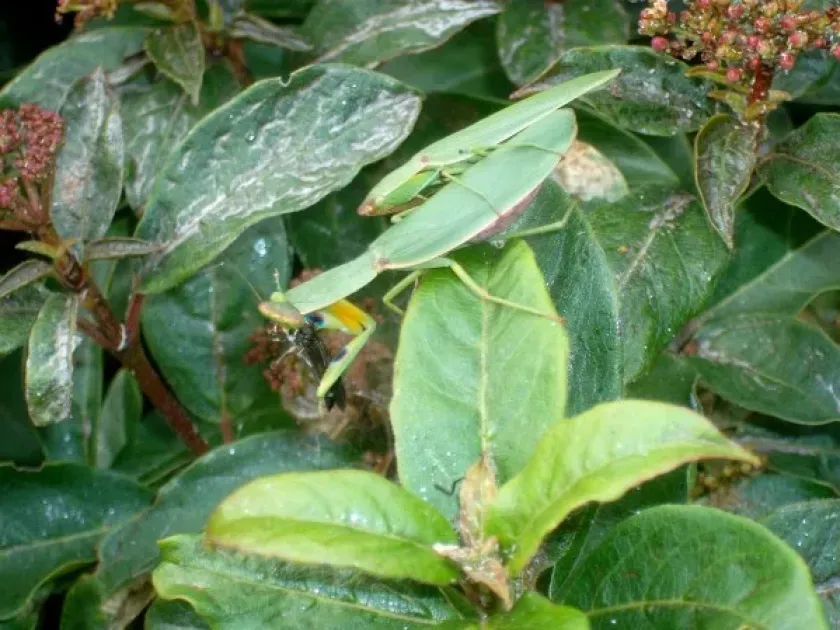
Description
How to identify
Orthodera is a genus of praying mantises belonging to the family Mantidae. These insects are characterized by their slender bodies and a predominantly green coloration, which provides excellent camouflage among foliage.
Morphologically, they possess the typical mantid structure, including a triangular head with high mobility and raptorial front legs designed for pinning prey efficiently.
The life cycle involves incomplete metamorphosis. Nymphs hatch from eggs and resemble miniature adults, undergoing several molting stages throughout their development.
They are famous for their egg cases, known as oothecae, which are hardened, protective structures attached to branches or tree trunks to withstand winter conditions.
Identification often relies on the specific shape of the pronotum and distinct markings on the thorax, distinguishing them from other locally occurring mantid species.
What it damages
Orthodera are not phytophagous; they do not cause direct damage to plants, foliage, or fruit. They are obligate predators that hunt other arthropods.
However, their impact is considered controversial in agricultural settings because they are non-selective predators. They may prey on beneficial insects, such as pollinators and parasitic wasps.
In high densities, their presence can reduce the efficiency of natural biological control agents that target specific agricultural pests, leading to an indirect agricultural impact.
They inhabit a variety of garden crops, including fruit trees and vegetables, where they wait for prey, causing no mechanical damage to plant tissues themselves.
Occasionally, if an ootheca is deposited on a delicate stem, there is a minor risk of plant stress, but this is statistically insignificant for commercial farming.
When it appears
The life cycle initiates in early spring when nymphs hatch from overwintering oothecae, following the onset of warmer temperatures.
The period of maximum activity for both nymphs and adults occurs throughout the summer months when food resources like aphids and flies are most abundant.
Mating occurs toward the end of the season, followed by the deposition of oothecae on protected surfaces to ensure the next generation survives the winter.
Seasonal development is strictly dependent on temperature; warmer springs may lead to earlier appearances of the first instars.
Activity decreases as temperatures drop in autumn, at which point adults begin to perish, leaving the next generation protected within their eggs.
Signs of infestation
The most common sign of an Orthodera presence is the discovery of hardened oothecae on tree branches during winter pruning or maintenance.
The presence of molted exoskeletons on leaves or stems is a clear indicator of the insect's recent developmental activity in that specific area.
Visual observation of adult mantises on garden plants during the peak of the growing season confirms their residency on the plot.
A decline in the number of visiting pollinators, despite favorable conditions, could be a potential, though not definitive, sign of high predator activity.
Unlike true pests, their presence never results in chlorosis, holes in leaves, or wilting, which helps distinguish their presence from a pest outbreak.
Control measures
In the vast majority of agricultural cases, no control measures are required, as Orthodera act as part of the natural balance of garden biodiversity.
If management is necessary due to excessive predator population, mechanical removal of oothecae during the dormant season is the most effective and eco-friendly method.
Broad-spectrum insecticides are strongly discouraged, as they kill beneficial predators and can lead to a secondary outbreak of true plant pests.
Integration of biological control practices should focus on maintaining a healthy ratio of predators to ensure the garden's ecosystem remains stable.
- Winter removal of egg cases.
- Avoidance of non-specific chemical sprays.
- Regular observation of garden pollinator activity.
- Support for native biodiversity.
Taxonomy
- Latin name
- Orthodera
- Family
- Mantidae
- EPPO code
- ORTDSP
Discussion
No discussions yet — be the first.