
Spallanzani mantis
Ameles spallanzania
Description
How to identify
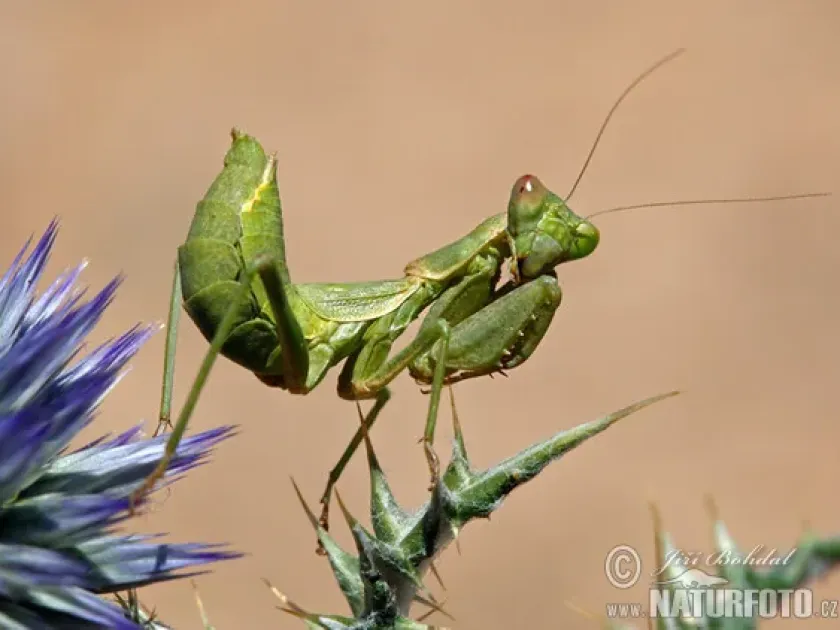
The Spallanzani mantis (Ameles spallanzania) is a small insect species belonging to the Amelidae family, distinct from larger mantid varieties.
Adult specimens generally reach lengths of 20–30 mm, making them relatively compact predators within their habitat range.
The species exhibits clear sexual dimorphism, as males are winged and capable of flight, while females have shortened, non-functional wings.
Their coloration typically mimics the dry vegetation, grasses, or sandy soil of their environment, providing excellent camouflage for ambush hunting.
The characteristic triangular head and raptorial front legs are well-adapted for precision striking against small arthropod prey.
What it damages
The Ameles spallanzania is not an agricultural pest; it does not consume or damage plant tissues in any stage of its life cycle.
Instead, it acts as a predatory insect that feeds on a variety of small arthropods, effectively functioning as a beneficial natural control agent.
By consuming aphids, small flies, and other potential garden pests, these insects contribute to the natural regulation of population dynamics.
There is no economic harm caused by these mantids, and their presence is generally seen as a sign of a healthy, diverse agricultural ecosystem.
Any concern regarding their status as a pest is misdirected, as they serve as allies rather than threats to the crops grown in their vicinity.
When it appears
This species has an annual life cycle, which is closely linked to seasonal shifts and local temperature patterns.
Overwintering occurs at the egg stage within protective cases called oothecae, which are secured to plants or solid surfaces by the female.
Nymphs emerge in spring once temperatures are sufficiently high, beginning their hunt for small prey immediately after hatching.
Adult activity peaks during the summer months and early autumn, which corresponds with the peak breeding season for the species.
Life expectancy is short, with adults typically perishing as colder temperatures arrive in late autumn, marking the end of the yearly cycle.
Signs of infestation
The most reliable sign of their presence is the detection of small, tan-colored oothecae attached to stems or stones during the colder seasons.
During the active season, stationary behavior on leaves and stems is a key indicator of a mantis patiently awaiting its next target.
The absence of typical pest damage in areas where these insects are observed further highlights their role as effective predatory regulators.
Their quick, reactive head movements when detecting nearby motion make them identifiable to keen observers in the field.
Observing a diverse range of insects in the garden, including these predators, indicates a stable balance of predator-prey interactions.
Control measures
No control measures are necessary for the Spallanzani mantis; in fact, they should be encouraged as part of an integrated pest management strategy.
Avoiding broad-spectrum insecticides is essential to prevent the unnecessary killing of these beneficial predatory insects in the landscape.
Maintaining patches of native vegetation and avoiding late autumn garden clean-ups can help preserve oothecae for the following spring season.
In agriculture, viewing these mantids as biological assets rather than pests helps reduce reliance on chemical inputs for pest control.
Support for these predators can be achieved by ensuring a pesticide-free environment that promotes the health and longevity of natural entomophagous populations.
Taxonomy
- Latin name
- Ameles spallanzania
- Family
- Mantidae
- EPPO code
- AMLESA
Discussion
No discussions yet — be the first.