
Australian wood mantis
Tenodera australasiae
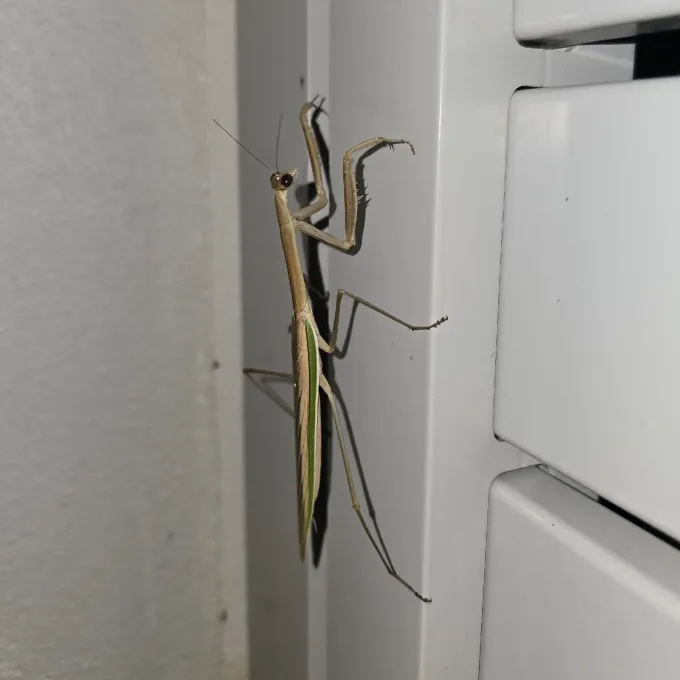
Description
How to identify
The Australian wood mantis (Tenodera australasiae) is a large predatory insect belonging to the Mantidae family, known for its exceptional camouflage and size.
These insects possess a slender body and colors that range from vibrant green to earthy brown, perfectly mimicking tree bark or leaves to ambush prey.
The head is highly mobile, allowing the mantis to scan its surroundings, while the forelimbs are equipped with sharp spikes for securing captured victims.
The life cycle proceeds from egg to nymph and finally to the adult stage, with females producing hardened egg cases called oothecae to protect the next generation.
These insects are capable flyers, enabling adults to relocate over long distances to find mates or new hunting grounds during the warmer months of the year.
What it damages
While they are not phytophagous, their presence can be detrimental by depleting populations of beneficial insects that control common plant pests.
They frequently target pollinators like bees and butterflies, which are essential for the productivity and yield of flowering and fruit-bearing garden crops.
By consuming beneficial predators like ladybugs or lacewings, the mantis can disrupt the biological balance, leading to outbreaks of aphids and spider mites.
In intensive gardening environments, their high-efficiency hunting can jeopardize the success of integrated pest management programs and pollination services.
Nymphs, as they grow, consume high volumes of small insects, including those that are helpful in keeping the garden ecosystem healthy and balanced.
When it appears
Adults are most active during the late summer and early autumn when food resources are plentiful and the temperature is ideal for hunting.
Nymphs begin to emerge in the spring once temperatures are sufficiently high to support their rapid growth and metabolic needs.
Overwintering occurs exclusively at the egg stage inside the protective ootheca, which is highly resistant to freezing temperatures and environmental stress.
Late summer marks the peak of mating activity, followed by the deposition of egg cases on trees, fences, or other firm surfaces before the first cold snap.
Each generation typically lasts for one season, making their population dynamics highly dependent on favorable weather conditions during the spring hatching period.
Signs of infestation
The most reliable sign of their presence is the discovery of the oothecae, which appear as sturdy, beige or brownish foam-like masses on tree branches.
Visual detection of the insect is often difficult due to its excellent mimicry, though they can sometimes be seen waiting motionless for prey in dense foliage.
A sudden decline in the number of bees or other beneficial pollinators in a specific garden area can suggest an overpopulation of predatory mantids.
Exuviae, or discarded exoskeletons, are often found stuck to leaves or bark, indicating that nymphs are actively growing and molting in the immediate area.
Adult mantids are occasionally observed around artificial light sources at night, which can provide a clear view of their size and typical morphology.
Control measures
Manual removal and destruction of the oothecae during winter pruning is the most efficient and eco-friendly way to reduce population numbers.
Broad-spectrum insecticide use should be avoided as it kills beneficial insects and pollinators, which is counterproductive for overall garden health.
Encouraging insectivorous birds to visit the garden can help provide natural biological control against adult mantids during their active season.
Maintain proper garden hygiene and thinning of dense branches to minimize the number of suitable spots available for egg case attachment.
Using physical barriers or protective netting during the peak pollination season can safeguard bees from being preyed upon by the mantids.
Taxonomy
- Latin name
- Tenodera australasiae
- Family
- Mantidae
- EPPO code
- TENOAU
Discussion
No discussions yet — be the first.