
Chinese mantis
Tenodera augustipennis
Description
How to identify
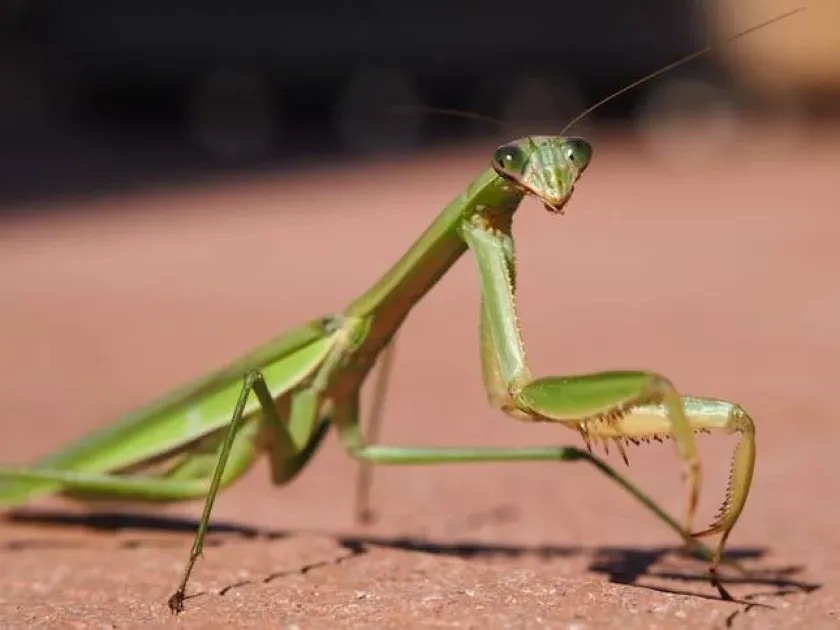
The Chinese mantis (Tenodera augustipennis) is a large predatory insect that can reach lengths of up to 10 centimeters. Its body shape is elongated and slender, typically exhibiting green, brown, or tan coloration that mimics the stems and foliage of its habitat.
The head features prominent compound eyes and three simple ocelli, allowing for exceptional depth perception, which is crucial for their predatory lifestyle. The front legs are modified into grasping raptorial appendages, armed with sharp spines to secure prey.
Adults possess functional wings, with males often being more agile fliers than females. The wings are usually well-developed and serve both for mobility and as a defensive display when the insect feels threatened.
The egg cases, known as oothecae, are the most recognizable sign of their presence during the winter months. These hardened, papery, or foam-like structures are typically attached to twigs or tall grasses and serve to insulate the eggs.
Distinguishing features compared to other mantis species include the specific size and the coloration patterns on the inner sides of their fore-tarsi, as well as their generally larger overall size.
What it damages
The primary concern regarding the Chinese mantis is its role as a generalist predator. While they do consume some pest insects, they are indiscriminate hunters that frequently target beneficial pollinators like bees, butterflies, and lacewings.
In gardens and agricultural settings, they can negatively affect the balance of natural predators. By preying upon species that control aphids, mites, and scale insects, they may unintentionally lead to an increase in the populations of these primary plant pests.
Because they are highly effective predators, their presence in high densities can significantly reduce the local biodiversity of beneficial insects, which are vital for the health and productivity of crops.
While the Chinese mantis does not directly feed on plant tissue, their hunting behavior involves waiting for prey on flowers or leaves, which can disrupt the natural activity of garden inhabitants.
In regions where the Chinese mantis is non-native, it acts as an invasive species, outcompeting native mantid species for resources and space, thus permanently altering the local insect community structure.
When it appears
The lifecycle of the Chinese mantis is univoltine, meaning there is one generation per year. The insect survives the harsh winter temperatures solely in the egg stage, safely protected within the ootheca.
Nymphs emerge in the spring as temperatures rise, typically coinciding with the emergence of other small insects that serve as their first food source. They go through several molting stages, growing larger with each one.
Adults usually appear by mid-to-late summer. During this time, they are most conspicuous as they reach sexual maturity and actively hunt for mates, often congregating on tall herbaceous plants or garden shrubs.
Mating occurs in late summer or autumn. Following successful fertilization, females dedicate their remaining energy to finding suitable substrates for oviposition, constructing oothecae that will overwinter.
The adult lifespan ends with the arrival of the first heavy frosts. The cycle is maintained by the offspring emerging from the overwintered egg cases in the following year.
Control measures
The most effective strategy for population management is the manual removal of oothecae. During the dormant season, inspect your shrubs and perennial stalks for the characteristic egg cases and remove them.
Destroying the egg cases is the most reliable way to prevent the next generation from hatching in your garden, which helps keep their population density under control throughout the subsequent growing season.
Keeping the garden tidy by clearing out old plant debris and overgrown stalks reduces the number of suitable sites where female mantids can lay their eggs, effectively limiting their spread.
Avoid using broad-spectrum insecticides, as these will kill your garden's beneficial insect population, including the very predators that help regulate pest numbers, often leading to a worse infestation.
Encourage natural predators of mantids, such as certain bird species, to inhabit your garden. Birds can help keep the mantid population in check by consuming both nymphs and adult insects.
Taxonomy
- Latin name
- Tenodera augustipennis
- Family
- Mantidae
- EPPO code
- TENOAG
Discussion
No discussions yet — be the first.