
Tenodera
Tenodera
Description
How to identify
The genus Tenodera belongs to the order Mantodea and the family Mantidae. These insects are well-known predators that can occasionally become a nuisance in horticultural settings.
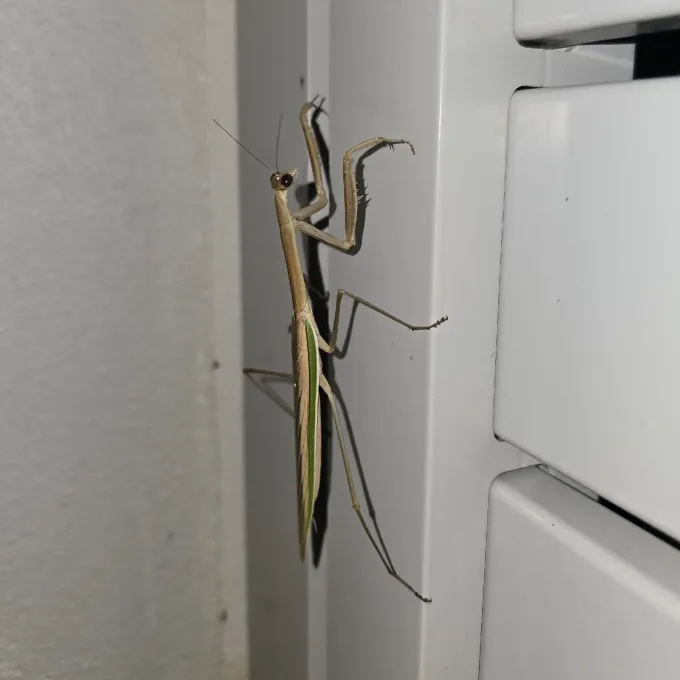
Physically, they possess an elongated body with highly developed raptorial forelegs specifically designed to catch and hold prey during hunting.
Their head is triangular and highly mobile, featuring large compound eyes that provide exceptional visual depth perception for monitoring the environment.
The coloration of Tenodera species typically ranges from bright green to various shades of brown, providing excellent camouflage against plant stems and branches.
The life cycle involves incomplete metamorphosis, including the egg stage (protected within an ootheca), nymph stages, and the final winged adult stage.
What it damages
While primarily insectivorous, Tenodera can damage plants indirectly during the egg-laying process, as females select sturdy stems for their oothecae.
The attachment of the foam-like egg cases can cause mechanical stress, micro-cracks, and tissue necrosis in young shoots or thin-barked branches.
These damaged areas often become entry points for secondary infections, such as fungal pathogens or bacteria, which can harm the plant's overall health.
In ornamental nurseries, the presence of these large egg cases can be aesthetically unpleasing and may require intervention to prevent damage to the growth tips.
Furthermore, in environments with a high population density, their hunting activities may unintentionally disturb delicate blossoms or small leaves during the summer.
When it appears
Adults are most active during the peak of the summer, particularly in July and August, when they hunt for various insects to sustain their high metabolic rate.
Egg laying usually takes place in late summer or early autumn, when female mantises secure their oothecae to suitable host plants before the cooler weather arrives.
The insects overwinter exclusively in the egg stage, safely protected within the hardened, insulated ootheca which withstands harsh winter temperatures.
Nymphs typically emerge in late spring as the ambient temperature rises, beginning their life cycle anew as small, active hunters in the garden ecosystem.
Throughout their development, the nymphs undergo several molts, progressively increasing in size until they reach reproductive maturity by the end of the season.
Signs of infestation
The most reliable sign of Tenodera presence is the discovery of distinct, hardened, foam-like egg masses (oothecae) attached to twigs or branches.
Localized tissue damage or discoloration around the attachment site of the egg case is a clear indicator that the plant has served as a host for reproduction.
A noticeable reduction in the population of other pests, such as aphids or caterpillars, is often a secondary sign of these predators hunting in the area.
The visual presence of large, distinctively shaped insects resting on foliage during the late afternoon is a common occurrence in infested gardens.
Presence of localized surface scarring on the bark of younger branches, left behind by the female's ovipositor, provides evidence of their past activity.
Control measures
Chemical control against Tenodera is generally discouraged because these insects act as valuable biological control agents, keeping other pests in check.
If management is necessary due to excessive egg laying, the most effective method is the physical removal of the oothecae during winter pruning.
Selective pruning of heavily infested branches ensures the removal of the next generation without the need for toxic substances that harm beneficial fauna.
Maintaining a balanced ecosystem through proper garden hygiene and avoiding indiscriminate insecticide use helps regulate their population naturally.
- Manual removal of oothecae
- Sanitary pruning of host branches
- Integrated pest management practices
- Support of natural predatory balance
Taxonomy
- Latin name
- Tenodera
- Family
- Mantidae
- EPPO code
- TENOSP
Discussion
No discussions yet — be the first.