
Telchin licus
Telchin licus
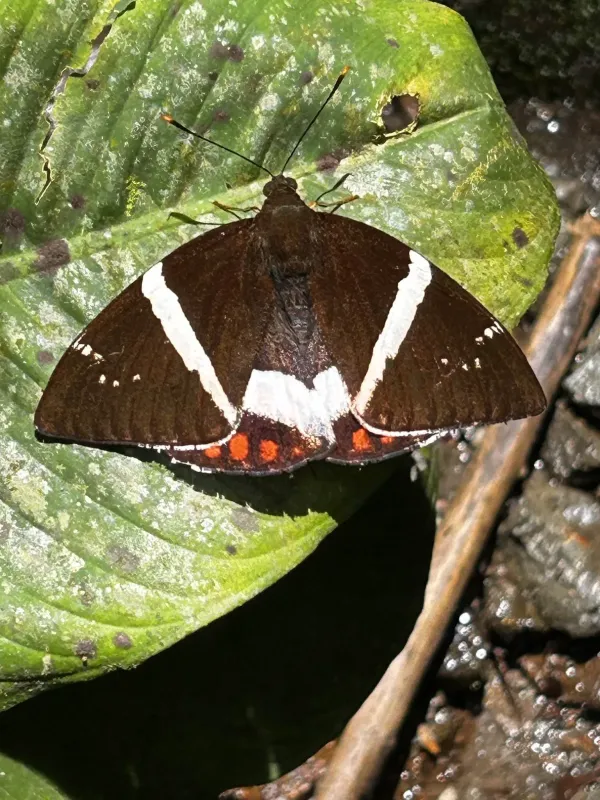
Description
How to identify
Telchin licus, formerly classified as Castnia licus, is a moth species belonging to the Castniidae family. Despite its appearance, which mimics some diurnal butterflies, it is a significant agricultural pest that primarily attacks sugar cane plantations.
The adult moth features a dark brown to black coloration with distinct white or orange transverse bands on the wings, with a wingspan that can reach up to 10–12 centimeters. This makes them relatively large compared to other lepidopteran pests.
The larvae are fleshy, cream-colored caterpillars that grow up to 10 centimeters in length. They possess strong mandibles capable of boring deep, extensive galleries within the rigid stems of their host plants.
The life cycle undergoes complete metamorphosis, including egg, larva, pupa, and adult stages. Females lay eggs at the base of plants, and upon hatching, larvae immediately begin boring into the stem to feed on the inner tissues.
This species is endemic to tropical regions of Central and South America. Its biology is well-adapted to warm, humid climates, allowing it to maintain multiple overlapping generations throughout the year.
What it damages
The primary host for Telchin licus is sugar cane, where the larvae cause substantial structural damage by tunneling through the stalks. This disrupts the plant's vascular system, hindering the transport of water and nutrients.
Beyond sugar cane, the pest is known to affect various species of palms and other graminaceous plants. This wide host range allows it to survive in diverse environments and maintain populations even when primary crops are harvested.
Damage to the stems leads to a significant decrease in sugar yield and overall plant vigor. In severe infestations, the plants become stunted, and the internal tissues are rendered useless for sugar extraction.
Weakened stalks are highly susceptible to mechanical failure, often breaking during winds or heavy rains. This makes mechanical harvesting difficult and increases pre-harvest crop losses.
The tunnels created by the larvae provide entry points for secondary infections, such as bacterial top rot and fungal pathogens, which often accelerate the decline and death of the entire plant.
Signs of infestation
The most reliable sign of a Telchin licus infestation is the presence of circular or oval exit holes at the base of the stalks. These are often accompanied by piles of frass, which resemble coarse sawdust.
Stunted growth, chlorosis, and the sudden wilting of the top leaves (dead heart) are strong indicators that the stem has been compromised. These symptoms often appear in patches across the field.
Internal examination of suspected stalks reveals longitudinal tunnels filled with larval excrement. Finding a large, cream-colored caterpillar inside the stem confirms the presence of this specific borer.
A decline in field uniformity is typical, where specific areas show significant damage compared to the rest of the plantation. These areas should be prioritized for immediate diagnostic inspection.
The sightings of adult moths flying over the fields during sunny hours are a primary alert. During this time, the pest is most active in mating and oviposition, signaling the start of a potential infestation cycle.
Control measures
Effective management requires an Integrated Pest Management (IPM) approach. Cultural practices, such as removing infested plant debris and crop rotation, are crucial to breaking the insect's life cycle.
Biological control agents, including entomopathogenic nematodes and specific bacterial formulations (like Bt-based sprays), can be applied to suppress larval populations in a way that minimizes environmental impact.
Chemical control is challenging because the larvae spend most of their life cycle protected within the stalk. Systemic insecticides are most effective if applied precisely during the early stages of larval emergence.
Pheromone-baited traps serve as a vital tool for monitoring moth activity. By tracking the population peaks, growers can optimize the timing of interventions, reducing the need for indiscriminate chemical applications.
- Use of resistant sugar cane varieties when available.
- Field sanitation to eliminate secondary hosts and crop residues.
- Routine scouting for stem perforations during the early development stages.
Taxonomy
- Latin name
- Telchin licus
- Order
- Lepidoptera (butterflies)
- Family
- Castniidae
- EPPO code
- CASTLI
Discussion
No discussions yet — be the first.