
Castnia
Castnia
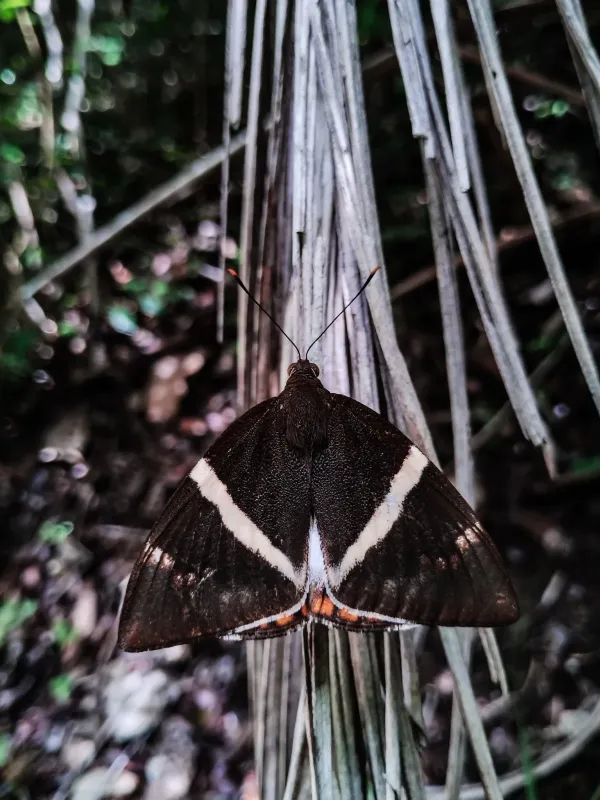
Description
How to identify
Castnia is a genus of large, day-flying moths belonging to the family Castniidae. They are often mistaken for hawk moths due to their robust bodies and narrow, brightly colored wings which serve as an aposematic warning to predators.
With wingspans ranging from 10 to 15 centimeters, these insects are notable for their size and strong flight patterns, allowing them to travel considerable distances between host plants.
Their life cycle consists of four distinct stages: egg, larva (caterpillar), pupa, and adult. The larval stage is the most destructive, as it spends the entire time boring inside the plant.
Caterpillars of Castnia typically exhibit a pale, creamy coloration with a darkened head capsule, which helps them remain inconspicuous while feeding deep inside the plant tissue.
Before pupation, the mature larva constructs a tough, protective cocoon made from wood debris and plant fibers, often hidden within the galleries it excavated inside the host.
What it damages
The primary hosts of Castnia include various species of palms, such as coconut and oil palms, where larvae bore deep into the stems or growing points.
These pests are also highly destructive to orchids and bromeliads, where they hollow out the succulent stems, pseudobulbs, or leaf rosettes, causing rapid deterioration.
Damage to the internal vascular system of the host plant is the most critical issue, as it prevents water and nutrient transport, ultimately leading to the plant's collapse.
Young plantations are particularly vulnerable to Castnia, as a small infestation can easily destroy the apical meristem, resulting in the death of the specimen.
In addition to direct physical damage, the galleries created by the larvae serve as entry points for secondary pathogens like fungi and bacteria, which exacerbate the plant's decline.
Signs of infestation
The presence of sawdust-like frass accumulating at the base of the stem or in leaf axils is often the first visible indicator that a larva is actively feeding inside.
Wilting of the central spear or crown leaves is a classic symptom of severe infestation, signaling that the structural integrity of the plant's core has been compromised.
Small exit or entry holes on the surface of the trunk or petioles may be visible, indicating where the larvae have been active within the plant tissues.
Weakened plants often show signs of stunted growth and pale foliage as the infestation prevents them from accessing sufficient resources from the soil.
In advanced cases, the entire crown may die back, or the trunk may break off at the point of heaviest internal damage, rendering the plant unsalvageable.
Control measures
Effective management begins with strict phytosanitary practices, including the inspection of all incoming nursery stock to prevent the introduction of eggs or larvae.
Systemic insecticides, applied either as soil drenches or via trunk injections, are the most reliable way to target the larvae hidden deep within the plant tissues.
Removal and destruction of highly infested plants are vital to reduce the population pressure and stop the moth from laying eggs on nearby healthy individuals.
Pheromone traps are highly useful for monitoring the population of adult moths, allowing growers to target chemical applications precisely during the flight season.
- Frequent monitoring of palm and orchid health in the greenhouse.
- Sanitizing tools after working with infested plant material.
- Applying preventive systemic treatments to valuable ornamental specimens.
Taxonomy
- Latin name
- Castnia
- Order
- Lepidoptera (butterflies)
- Family
- Castniidae
- EPPO code
- CASTSP
Discussion
No discussions yet — be the first.