
Eupalamides
Eupalamides
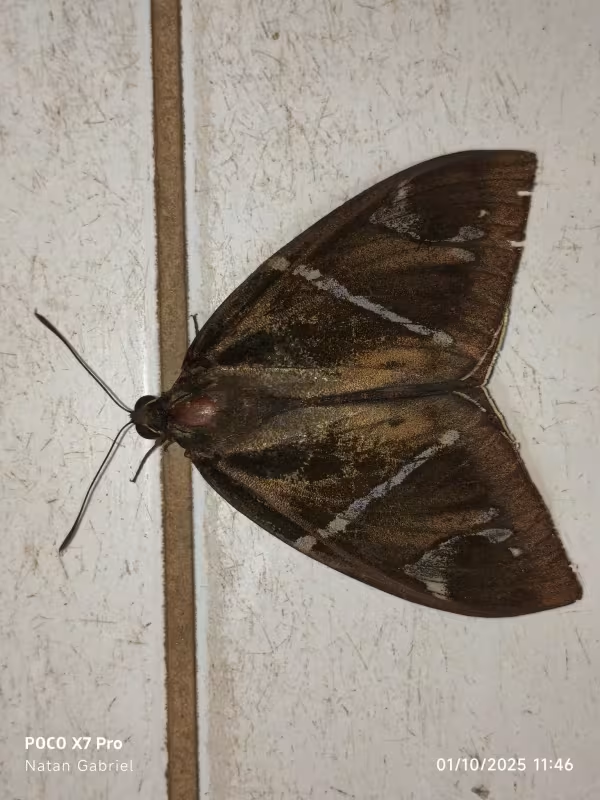
Description
How to identify
Eupalamides belongs to the Castniidae family within the order Lepidoptera. Adult moths are known for their mimicry, often resembling wasps to deter potential predators.
These insects are robustly built with distinct wing patterns that make them easily recognizable when in flight during the daytime.
The larval stage is the most destructive phase of their life cycle. The caterpillars possess powerful mandibles adapted for boring into tough plant materials.
Pupation typically occurs within the host tissue, where the larva constructs a secure chamber to undergo metamorphosis.
The biological cycle is well-adapted to tropical conditions, often resulting in rapid population growth in favorable environments.
What it damages
Eupalamides primarily targets palm species, with oil palms and coconut palms being the most significant economic victims of this pest.
Larvae bore into the bases of young leaves, petioles, and the apical meristem, which is the primary growth point of the palm tree.
The destruction of the apical meristem can lead to the death of the entire tree, causing massive losses in plantation yield.
Ongoing feeding creates galleries within the plant tissues, significantly weakening the structural integrity of the palm.
Open wounds left by the larvae serve as entry points for various secondary infections, including fungal rots and pathogenic bacteria.
Signs of infestation
The presence of frass (larval excrement) appearing as granular sawdust near the base of the petioles is a primary indicator of infestation.
Wilting and chlorosis of the central, spear-like leaves are classic signs that the inner tissues of the palm are being consumed.
Small entry or exit holes visible on the surface of the trunk or petiole indicate that larvae have penetrated the plant structure.
Exudation of sap from the trunk is a common defense reaction of the tree following mechanical damage caused by the feeding larvae.
Visual observation of adults flying over the canopy during sunny weather signifies the start of the breeding season.
Control measures
Early detection through systematic monitoring of plantations is essential for effective population management of Eupalamides.
The deployment of pheromone traps is a highly effective method for monitoring adult moth activity and timing insecticide applications.
Chemical control usually involves the application of systemic insecticides that can reach internal tissues, targeting the borers directly.
Cultural practices include the immediate removal and destruction of heavily infested plant materials to prevent the spread of the next generation.
Biological control, such as the use of entomopathogenic fungi, offers a sustainable alternative to traditional chemical interventions.
Taxonomy
- Latin name
- Eupalamides
- Order
- Lepidoptera (butterflies)
- Family
- Castniidae
- EPPO code
- EPLMSP
Discussion
No discussions yet — be the first.