
Telchin
Telchin
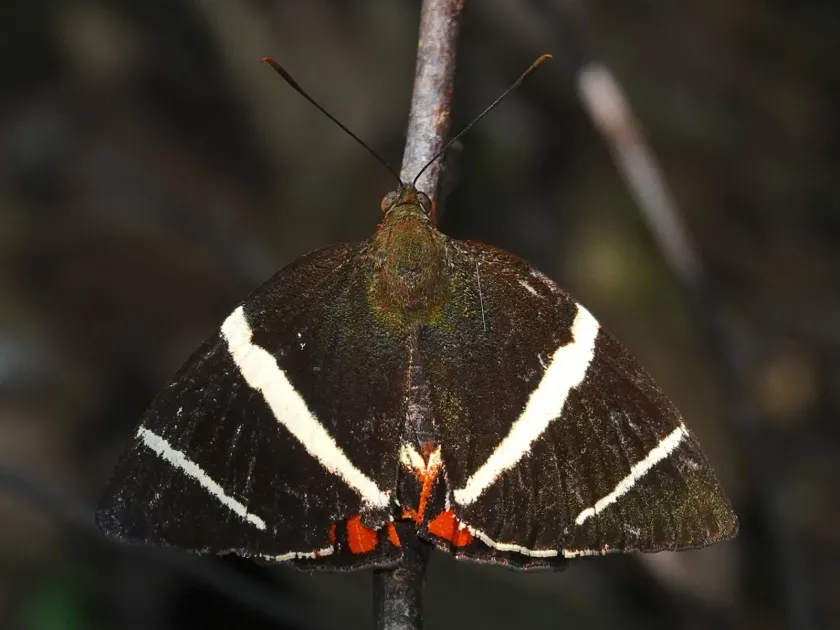
Description
How to identify
The pest known as Telchin belongs to the family Castniidae (Castniid moths). These are large diurnal moths that resemble representatives of the hawk moth family, yet they possess a specific antenna structure with club-like thickenings at the tips.
Systematically, these insects are classified within the order Lepidoptera. The larvae of Telchin are caterpillars that lead a concealed lifestyle, penetrating plant tissues and feeding on their internal structures over a long period of development.
Adults exhibit bright coloration, which is typical for many tropical species of this family. Identification of the pest in field conditions is often difficult due to the cryptic behavior of the caterpillars, which rarely leave their tunnels inside trunks or roots.
The biology of the species is closely tied to tropical and subtropical crops. The life cycle includes complete metamorphosis: egg-laying on the plant surface, a caterpillar stage, pupation, and the emergence of the imago.
For population monitoring, agronomists use pheromone traps and visual inspections of plants to detect characteristic exit holes in the lower stem or root collar area.
What it damages
The primary crops affected by this pest are banana plantations and various types of palm crops grown on an industrial scale.
Telchin caterpillars bore tunnels into banana pseudostems, which disrupts normal sap flow and nutrient transport throughout the entire plant. This damage leads to stunted growth and a significant reduction in the commercial quality of the fruit.
During mass infestations, the root system weakens, making plants extremely vulnerable to strong winds and secondary fungal infections that enter through the wounds.
The economic damage caused by the species is extremely high, as the cryptic lifestyle of the larvae makes early detection nearly impossible, and control measures at late stages are often ineffective.
Damaged specimens often perish within one or two growing seasons if timely measures to localize infestation hotspots are not implemented.
Control measures
Effective protection against Telchin is based on a comprehensive approach, combining quarantine measures and the use of specialized systemic insecticides.
Regular cleaning of plantations from plant debris, where the pest's pupae might overwinter, is highly recommended, as is the destruction of severely infested plants through uprooting and burning.
For chemical control, injection methods are used to deliver the active substance directly into the stem, allowing the pesticide to reach the feeding sites of the larvae.
Biological control methods include the use of entomopathogenic nematodes and specific fungal preparations capable of infecting caterpillars within their tunnels.
- Regular inspection of the lower trunk area for frass (sawdust-like excrement).
- Installation of traps with attractants to monitor the population of adult moths.
- Strict adherence to crop rotation and spatial isolation of new plantings.
Taxonomy
- Latin name
- Telchin
- Order
- Lepidoptera (butterflies)
- Family
- Castniidae
- EPPO code
- TLCHSP
Discussion
No discussions yet — be the first.