
Palm borer
Eupalamides cyparissias
Description
How to identify
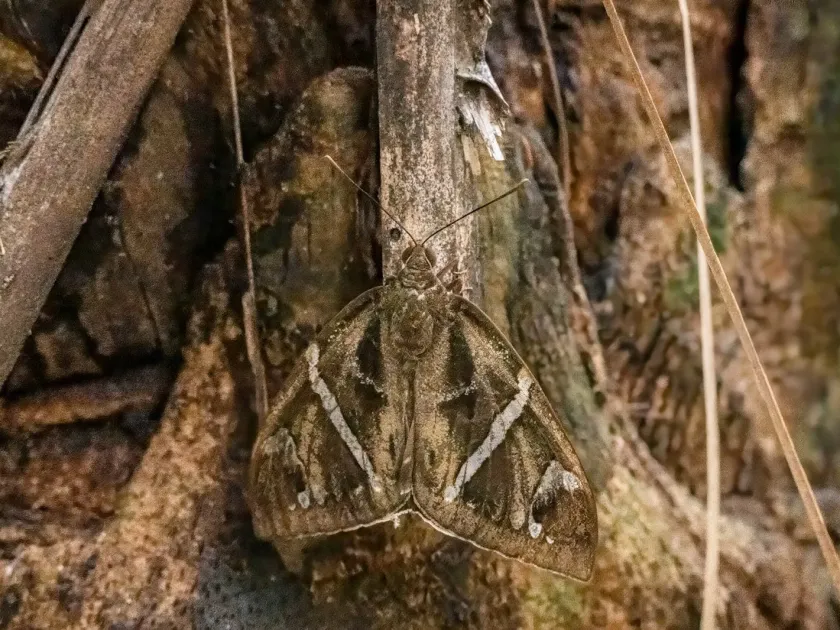
The palm borer (Eupalamides cyparissias) is a moth belonging to the Castniidae family. While the adult moths are noted for their distinct appearance and relatively large size, the primary threat to palm plantations lies in the larval stage of their life cycle.
This pest is characterized by its hidden behavior. The female moth typically lays eggs in the crevices of the trunk or at the base of the leaf fronds. Once hatched, the larvae bore into the tree's internal tissue to feed.
The life cycle is closely linked to tropical conditions. In stable environments, the pest can reproduce year-round, resulting in overlapping generations that make consistent monitoring and management highly essential for plantation health.
The larvae go through several developmental instars, constantly expanding their galleries inside the trunk. This protective environment makes them particularly resistant to topical chemical applications, necessitating specialized control strategies.
Pupation occurs within the tunnels carved by the larvae inside the tree. Upon maturing, the pupa often protrudes slightly from the exit hole, providing a clear visual indicator that the adult moth is about to emerge.
What it damages
This pest primarily infests various species of palm trees, with significant economic impacts on commercial oil palm plantations and ornamental landscape trees. The internal damage caused by the larvae is often invisible until it reaches an advanced stage.
The larvae create extensive horizontal and vertical tunnels within the trunk, which disrupts the plant's vascular system. This blockage prevents the transport of water and nutrients, leading to the severe decline of the palm tree.
These boring activities create entry points for secondary infections. Pathogens, such as fungi and bacteria, easily penetrate the damaged wood, accelerating the decay and potential collapse of the tree structure.
In young palm trees, the destruction of the central apical bud by the larvae is fatal. This leads to the complete death of the plant, forcing growers to invest in replanting, which adds significant costs to plantation maintenance.
Severe infestations can decimate a plantation within a short period. The cumulative effect of decreased production and tree mortality makes the palm borer one of the most critical pests to manage in palm-growing regions.
Signs of infestation
The most reliable sign of a palm borer infestation is the presence of frass, or sawdust-like waste, around the base of the tree or tucked into the leaf axils. This is the excrement pushed out by the larvae while they burrow.
Visible holes on the trunk surface become evident as the larvae grow. These boreholes are often the first major diagnostic feature, indicating that the tree has already sustained significant internal damage.
Foliage decline is a key symptom of an infested palm. Lower leaves start to yellow, droop, and eventually turn brown. This happens because the root-to-leaf nutrient flow has been compromised by the damage to the trunk.
Structural instability of the trunk is a late-stage warning sign. Due to the honeycombing effect of the larval galleries, the tree loses its strength and can snap or break under its own weight or during strong winds.
The detection of empty pupal cases protruding from the trunk is a definitive sign that the adult moths have emerged. This confirms that the colony is active and that immediate control measures must be implemented to prevent further spread.
Control measures
Effective management begins with strict monitoring programs. Using pheromone traps is an excellent method for capturing adult moths, which helps estimate population density and timing for targeted control actions.
Trunk injection of systemic insecticides is widely regarded as the most effective curative treatment. The chemical travels through the tree's vascular system, ensuring that the hidden larvae ingest or come into contact with the treatment.
Sanitation practices are vital. Infested and dead trees should be removed and destroyed promptly to eliminate breeding sites. Leaving dead wood in the field only encourages the migration of the pest to healthy trees.
Biological control agents, such as entomopathogenic nematodes or fungi, can be introduced directly into the larval tunnels. This provides a more sustainable option compared to broad-spectrum chemical sprays, especially in environmentally sensitive areas.
A comprehensive integrated pest management (IPM) approach is necessary. By combining regular surveillance, pheromone trapping, and precise chemical or biological interventions, growers can significantly reduce palm borer populations and protect their harvests.
Taxonomy
- Latin name
- Eupalamides cyparissias
- Order
- Lepidoptera (butterflies)
- Family
- Castniidae
- EPPO code
- CASTDA
Discussion
No discussions yet — be the first.