
Thistle moth
Tebenna bjerkandrella
Description
How to identify
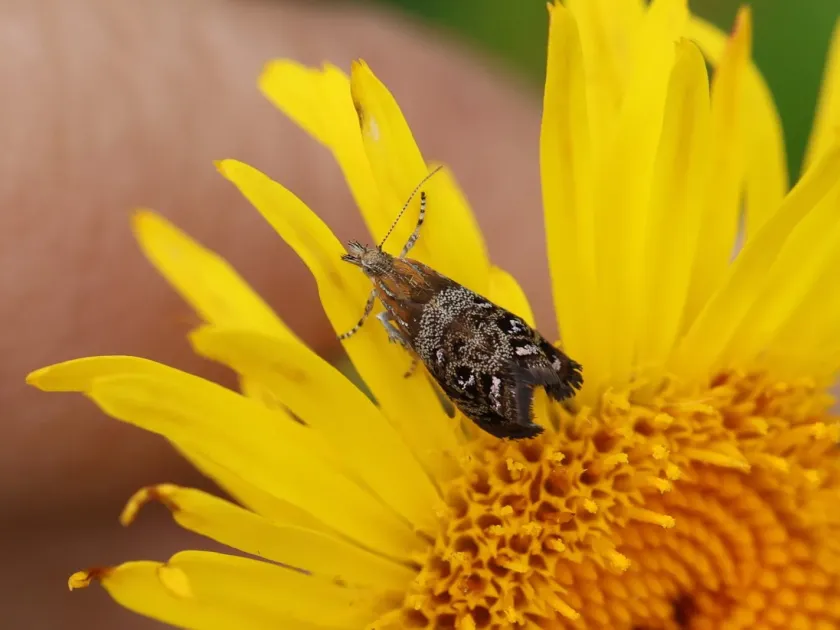
The thistle moth (scientific name Tebenna bjerkandrella) belongs to the Choreutidae family of moths. It is a small insect with a wingspan of approximately 10–12 mm.
The forewings are dark, brownish-black with a metallic sheen, featuring distinct white or silvery spots along the edges, making them easily identifiable in daylight.
The larvae (caterpillars) are yellowish-green with dark tubercles and short bristles. They possess a dark head capsule, which is a common diagnostic feature for this species.
The life cycle includes complete metamorphosis: egg, larva, pupa, and adult. The pupal stage is protected by a white silken cocoon often hidden within folded leaves.
Unlike many other moths, adults are diurnal and can be observed feeding on nectar or resting on leaves during sunny weather.
##damage##The thistle moth primarily targets plants in the Asteraceae family. In agricultural settings, it is a known pest of sunflowers.
The larvae feed on the foliage, initially causing skeletonization and eventually creating larger holes by consuming the parenchymal tissue between the veins.
In addition to sunflowers, the pest thrives on wild thistles, burdock, and other related weeds, which serve as primary hosts before the larvae migrate to cultivated crops.
While leaf damage is the most common, heavy infestations can lead to larvae feeding on flower buds, potentially impacting seed development and overall head quality.
The secondary impact includes the weakening of the plant's immune system, making it more susceptible to fungal infections and environmental stress.
When it appears
The first generation of moths typically emerges in late spring, with activity levels closely tracking the accumulation of growing degree days.
Females deposit eggs on the undersides of leaves. The egg stage lasts roughly 7–10 days, followed by several weeks of larval development.
Depending on the climatic zone, the species can complete two or three generations per year, allowing for population growth throughout the summer.
The insect typically overwinters in the pupal stage, hidden within plant debris, soil, or sheltered crevices, ensuring high survival rates through winter.
Peak damage generally occurs during the mid-summer months when the larval population reaches its highest density during the sunflower's vegetative growth phase.
Signs of infestation
The presence of the pest is first marked by "windowing," where the larvae consume the leaf tissue while leaving the upper epidermis intact, creating transparent spots.
As the larvae grow, they tie leaves together with silk webbing, creating protective shelters that prevent predators and chemical contact.
Accumulation of dark, granular frass (excrement) inside these silken enclosures is a clear indicator that the larvae are currently feeding on the plant.
Infested plants often show signs of leaf curling, yellowing, and premature senescence of the foliage, which reduces the total photosynthetic area.
- Silken webs tying leaves together
- Skeletonized leaf patches
- Visible presence of dark granular waste
- Diurnal moth activity around crops
Control measures
Cultural control is the most effective approach, focusing on the rigorous removal of weeds like thistles and burdocks from field margins to eliminate host reservoirs.
Deep fall tillage is recommended to destroy overwintering pupae by burying them deeper into the soil or exposing them to harsh weather conditions.
Chemical control should be implemented only when larval counts exceed the economic injury level, utilizing authorized systemic or contact insecticides.
Application timing is critical; sprays must be applied when larvae are young and actively feeding on the leaf surface before they build protective webs.
Biological control methods, such as releasing Trichogramma wasps, can effectively reduce the population by parasitizing the eggs before they hatch.
Taxonomy
- Latin name
- Tebenna bjerkandrella
- Order
- Lepidoptera (butterflies)
- Family
- Choreutidae
- EPPO code
- TEBEBJ
Discussion
No discussions yet — be the first.