
Choreutis hyligenes
Choreutis hyligenes
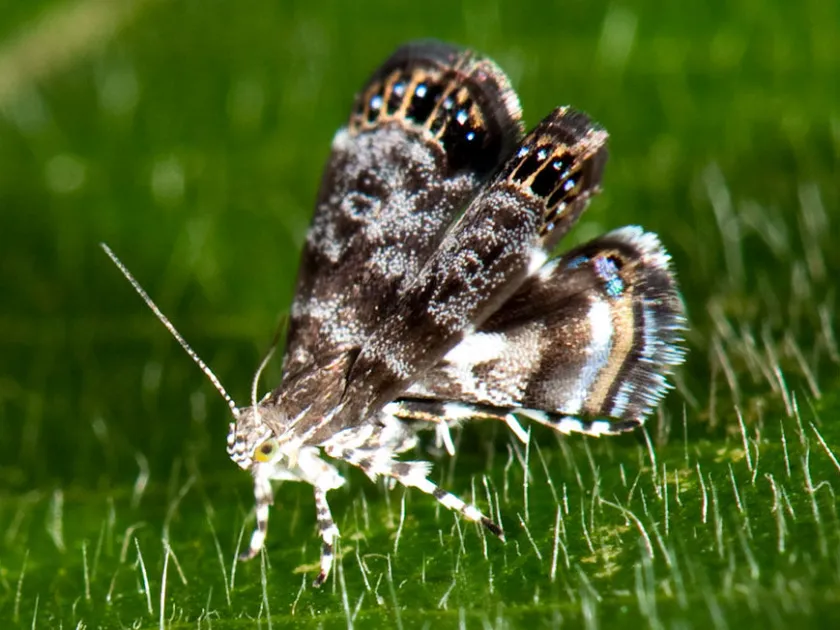
Description
How to identify
Choreutis hyligenes belongs to the order Lepidoptera and the family Choreutidae. Unlike many other leaf-rollers, this species is typically active during the daylight hours, making it easier to observe.
The adult moth is small, with a wingspan usually measuring between 10 and 15 mm. Its wings feature a dark, metallic pattern that provides excellent camouflage against tree bark and foliage.
The larvae (caterpillars) are characterized by high mobility and well-developed prolegs, allowing them to retreat quickly into their silken shelters when disturbed by predators or human activity.
The pupal stage occurs within firm silken cocoons. These are usually constructed in folded leaf margins or hidden within the cracks of woody branches, providing physical protection against environment.
The life cycle involves complete metamorphosis: egg, larva, pupa, and adult. The population growth is highly dependent on ambient temperatures and the availability of suitable host plants in the area.
What it damages
The primary hosts of this pest include various species within the Rosaceae family. Fruit trees and ornamental shrubs are the most frequent targets for feeding throughout the growing season.
Larvae consume the leaf parenchyma, skeletonizing the leaves by eating the tissue between the veins. Severe infestations lead to significant loss of leaf area, reducing the plant's photosynthetic capacity.
Developing fruit and flower buds are also at risk. The larvae may feed directly on these organs, causing deformation of the fruit and reducing its market value at harvest time.
Stunted growth of young shoots is a common symptom in high-density populations. This weakening makes the host plant more susceptible to opportunistic pathogens and winter damage.
While often localized, the damage can spread rapidly across a plot if left unmanaged, leading to cumulative losses that impact the overall productivity of the orchard or garden.
Signs of infestation
The most visible sign of an infestation is the presence of silk-spun leaf rolls. Caterpillars use these structures as protection while they feed, creating distinct 'tubes' from the leaf blades.
The appearance of 'windows' on the leaves, where only the upper or lower epidermis remains, indicates active feeding. If left unchecked, these patches turn brown and drop prematurely.
The presence of frass (caterpillar excrement) accumulated inside the folded leaves confirms that the pest is currently active. This is a crucial diagnostic feature for scouts and gardeners.
Small, whitish to gray cocoons found on the underside of leaves or within bark crevices indicate that the insect is transitioning to the pupal stage, signaling the end of the feeding cycle.
Observation of small moths flying in short, jerky patterns around the host plant during sunny afternoons often precedes a new wave of egg-laying and larval emergence.
Control measures
Cultural control remains the foundation of management. Removing and destroying infested leaf litter during autumn helps to eliminate overwintering pupae and reduces the initial population for the next season.
Biological control using Bacillus thuringiensis (Bt) products is highly effective against young larvae. These treatments target the moth specifically while preserving beneficial predatory insects.
Chemical insecticides should be applied selectively. Timing is critical: applications are most effective immediately after egg hatch, before the larvae have fully constructed their protective leaf rolls.
- Use pheromone traps for precise timing of treatment interventions.
- Encourage natural enemies, including lacewings and parasitic wasps.
- Maintain tree vigor through balanced fertilization and correct irrigation.
- Ensure orchard sanitation by removing weeds that may host alternate generations.
Regular monitoring combined with canopy thinning allows for better airflow and light penetration, creating an unfavorable microclimate for the development of Choreutis hyligenes.
Taxonomy
- Latin name
- Choreutis hyligenes
- Order
- Lepidoptera (butterflies)
- Family
- Choreutidae
- EPPO code
- SIMAHY
Discussion
No discussions yet — be the first.