
Choreutis tigroides
Choreutis tigroides
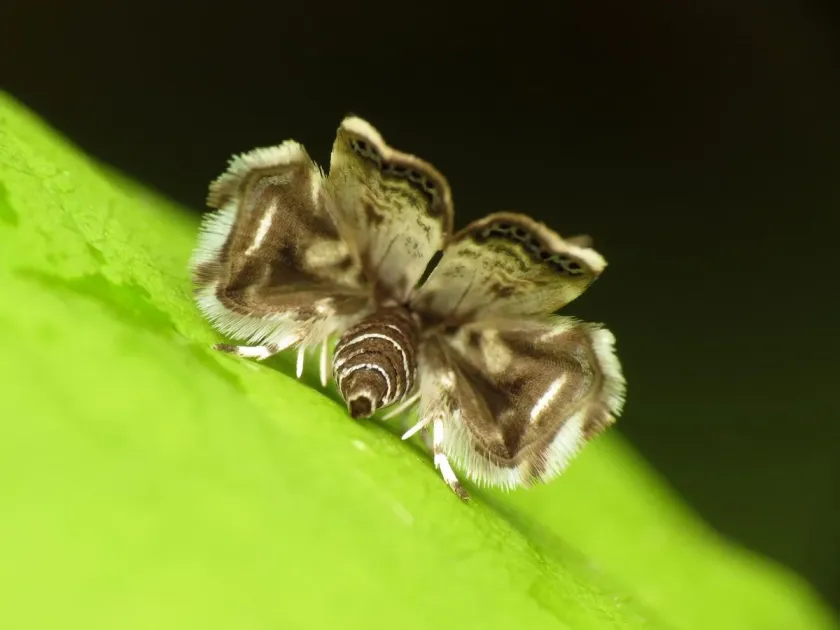
Description
How to identify
Choreutis tigroides is a small moth belonging to the family Choreutidae within the order Lepidoptera. The species is named for the distinctive striped pattern on its wings that resembles tiger markings, making it relatively recognizable to trained observers.
Like other moths, it undergoes a complete metamorphosis involving four life stages: egg, larva (caterpillar), pupa, and adult. The adults are generally nocturnal, which often masks their presence in agricultural fields during the day.
The larvae possess well-developed chewing mouthparts adapted for consuming leaf tissue. Their coloration is often cryptic, allowing them to blend into the foliage of their host plants, which is a key survival strategy.
Pupation typically occurs on the host plant inside a silken cocoon. These cocoons are frequently hidden within folded or spun leaves, providing the developing pupa with protection against environmental stressors and predators.
As a phytophagous species, Choreutis tigroides can reach high population densities under favorable conditions, necessitating active monitoring and timely management in affected cropping systems.
What it damages
The larval stage is responsible for the economic damage caused to crops, primarily targeting members of the Asteraceae family. The larvae consume leaf blades, which directly impairs the plant's photosynthetic efficiency.
Significant infestations lead to defoliation, where the loss of leaf surface area stunts the plant's overall growth, reduces vigor, and inevitably lowers the final yield and market quality of the harvest.
When populations are high, the feeding damage can lead to almost complete consumption of the green leaf tissue, leaving only the structural veins behind. This severe stress weakens the plant significantly.
The damaged tissue serves as an entry point for secondary pathogens, such as fungi and bacteria, which can exacerbate the decline of the plant health and lead to premature necrosis of foliage.
Assessing the economic threshold is vital; farmers should implement scouting protocols to determine if the larval density warrants intervention to prevent substantial financial losses.
When it appears
The flight period and egg-laying activity are closely tied to the warming spring and summer temperatures. Depending on the climate and latitude, the moth can complete multiple generations within a single growing season.
Larval activity usually peaks during the periods of optimal growth for host plants. Environmental factors, particularly temperature and humidity, play a crucial role in determining the speed of development and survival rates of the larvae.
The species typically overwinters in the pupal stage, often sheltered within plant debris or in the topsoil layer. This strategy allows the insect to remain dormant and survive through harsh winter conditions.
The emergence of adults in the spring is synchronized with the availability of host plant foliage, ensuring that newly hatched larvae have an immediate food source for development.
Monitoring adult populations with pheromone or light traps provides crucial data, enabling farmers to forecast larval emergence and schedule necessary pest control operations effectively.
Signs of infestation
One of the earliest signs of an infestation is the presence of "windows" in the leaves, created when larvae feed on the parenchyma while leaving the upper or lower epidermis intact.
The formation of silken webbing, which the caterpillars use to tie leaves together or create protective shelters, is a major indicator that the pest has established itself on the crop.
Accumulated frass (larval excrement) found on the leaves or at the base of the plant is a clear sign of active feeding and confirms the presence of a population currently damaging the foliage.
Severe infestations often result in visible wilting, curling, or distortion of the leaves and growing tips, which occurs as the larvae feed and manipulate the host plant tissue.
- Visible holes and skeletonized areas on leaves.
- Silk webbing connecting leaf surfaces.
- Curled or folded leaves harboring larvae inside.
Control measures
Cultural control is a foundational strategy, involving deep plowing after harvest to bury and destroy overwintering pupae residing in soil or crop residues.
Sanitation practices, such as removing weeds that serve as alternative hosts, are essential to break the pest's life cycle and reduce its overall pressure on the main crops.
Biological control agents, such as Bacillus thuringiensis, are highly effective for targeted control of young larvae and are preferred to maintain ecological balance in the field.
Chemical control should be used as a secondary option, employing selective insecticides only when the damage threshold is met, ensuring that applications follow strict label directions.
Adopting an integrated pest management (IPM) approach, including the rotation of insecticides with different modes of action, is critical to prevent the development of resistance in the pest population.
Taxonomy
- Latin name
- Choreutis tigroides
- Order
- Lepidoptera (butterflies)
- Family
- Choreutidae
- EPPO code
- SIMATI
Discussion
No discussions yet — be the first.