
Apple leaf skeletonizer
Choreutis pariana
Description
How to identify
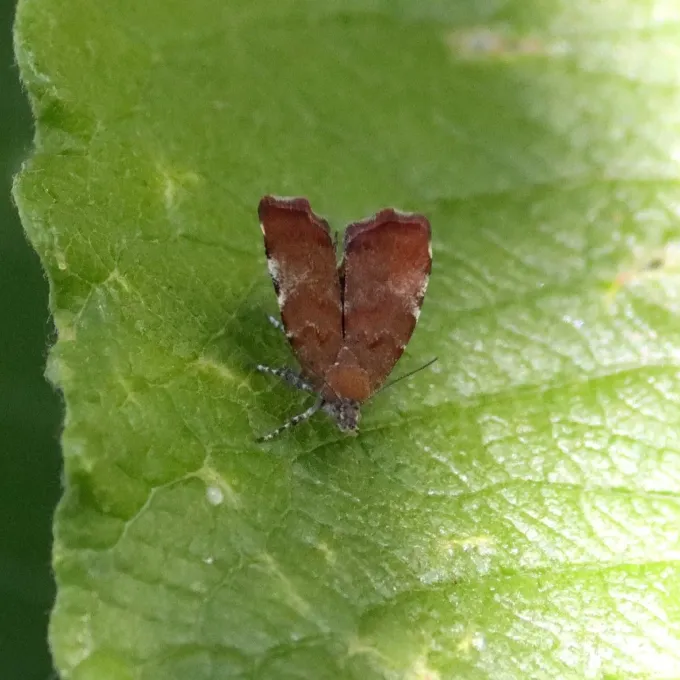
The apple leaf skeletonizer (Choreutis pariana) is a small moth belonging to the family Choreutidae. The adult moth has a wingspan of approximately 10–12 mm, with brownish wings marked with characteristic spots and bands.
The larvae are small caterpillars reaching about 10–12 mm in length. They are typically yellowish-green in color with a dark head and noticeable light-colored spots on their bodies.
The pupae develop inside a dense, spindle-shaped silk cocoon. These cocoons are typically spun on the underside of leaves or within leaves rolled up by the larvae.
Adult moths overwinter in bark crevices, leaf litter, or other sheltered locations. They become active in early spring as temperatures rise, preparing for the first reproductive cycle.
This species is widely recognized as a serious pest in temperate regions across Eurasia and parts of North America, affecting various members of the Rosaceae family.
What it damages
The primary hosts of this pest include apple, pear, and mountain ash (rowan) trees. It can also be found on hawthorn and other related ornamental shrubs in the garden.
The damage is caused by the caterpillars, which start feeding on the leaf surface shortly after hatching. They skeletonize the leaves, consuming the green tissue and leaving only the veins intact.
As the larvae grow, they create protective webs, pulling leaves together. This webbing effectively creates nests where the larvae feed and eventually pupate, causing significant aesthetic and physical damage.
Severe infestations can lead to massive defoliation of the tree. This loss of foliage reduces the plant's ability to photosynthesize, which directly impacts fruit production and overall tree health.
The weakened trees show reduced vigor, making them more susceptible to subsequent winter damage and secondary infections by various fungal or bacterial diseases.
When it appears
Depending on the climate, the apple leaf skeletonizer can complete two to three generations per year. The timing of each generation is highly dependent on local temperatures.
The first adult flight occurs early in the spring. Females lay their eggs singly on the undersides of the host plant leaves, starting the first cycle of the season.
Larval development typically lasts about 2 to 3 weeks. After this period, the caterpillar constructs its cocoon to pupate, eventually emerging as a moth for the next generation.
The population density usually peaks during the mid-to-late summer months, as the second and third generations often occur simultaneously, causing the most visible damage.
As temperatures drop in the autumn, the final generation of adults seeks shelter to enter diapause, surviving the winter in protected environments until the following spring.
Signs of infestation
The most reliable sign of an infestation is the presence of silk-webbed nests or skeletonized leaves, often appearing at the tips of the branches.
- Skeletal patterns on the leaves where the chlorophyll has been consumed.
- Visible white silk webbing connecting leaves together into clusters.
- Presence of tiny yellow-green caterpillars hiding within folded or webbed leaves.
- Premature yellowing and leaf drop in the mid-summer period.
- Reduced growth and diminished fruit quality on heavily infested branches.
Control measures
Cultural control is a crucial first step; clearing and disposing of fallen leaves and garden debris in autumn helps reduce the number of overwintering pupae.
Chemical control using insecticides is effective when timed correctly. Treatments should be applied during the period of peak larval hatching to target the caterpillars before they build protective webs.
Biological control methods, such as the application of Bacillus thuringiensis based products, are highly effective against young larvae and are safer for beneficial pollinators.
Proper pruning and thinning of the tree canopy are essential. A well-ventilated tree is less attractive to the moth and allows for better penetration of spray treatments.
Monitoring using pheromone traps can provide data on adult moth activity, helping orchardists time their insecticide applications for maximum efficiency and reduced chemical usage.
Taxonomy
- Latin name
- Choreutis pariana
- Order
- Lepidoptera (butterflies)
- Family
- Choreutidae
- EPPO code
- SIMAPA
Discussion
No discussions yet — be the first.