
Nettle-tap moth
Anthophila fabriciana
Description
How to identify
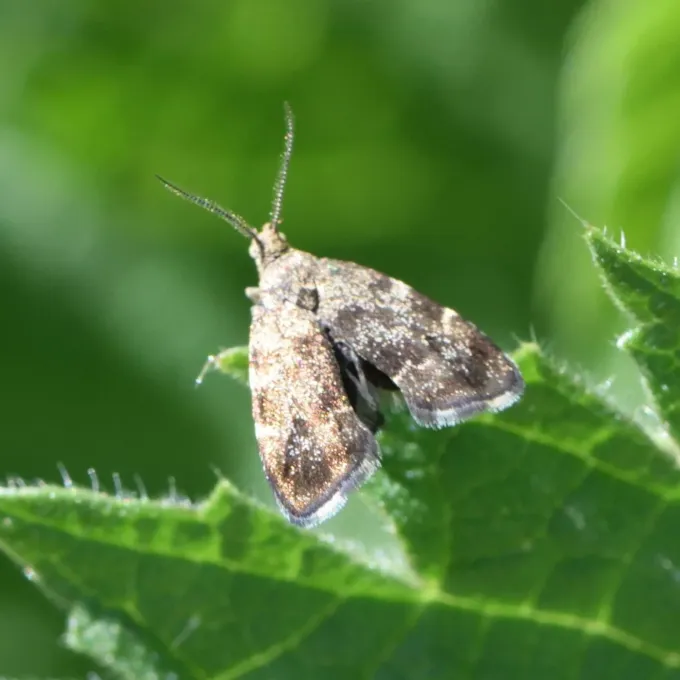
The Nettle-tap moth (Anthophila fabriciana) is a small moth belonging to the family Choreutidae. It has a wingspan of approximately 10–14 mm and features distinct dark wings with metallic spots, making it relatively recognizable.
Unlike many other moth species, this insect is diurnal, meaning it is most active and visible during sunny daytime hours as it flies among its host plants.
The larvae, or caterpillars, are yellowish-green with dark spots and sparse hairs, which helps them blend in with the leaf tissue they are feeding upon.
Pupation occurs within a characteristic white, silken cocoon often spun on the underside of leaves or within the folded leaf edges, protecting the developing pupa.
The species undergoes complete metamorphosis, typically completing two generations per year in temperate climates depending on weather conditions.
What it damages
The primary host plant is the common nettle (Urtica dioica), but the moth can also infest ornamental or culinary herbs such as mint and lemon balm in garden settings.
Damage is caused by the caterpillars, which skeletonize the leaf or consume the soft tissues while leaving the veins intact, significantly reducing the plant's photosynthetic area.
The larvae often spin silk webs to fold or roll leaves, which leads to physical deformation of the foliage and can stunt the growth of young shoots.
Severe infestations can lead to a significant loss of leaf quality, making medicinal or culinary herbs unmarketable or unsuitable for home use.
In addition to direct feeding damage, the wounds created by the larvae provide entry points for secondary pathogens like fungi, which can cause further tissue necrosis.
When it appears
Adult moths of the first generation typically emerge in spring, usually between April and May, as temperatures rise and host plants begin active growth.
The second generation of adults appears later in the summer, prolonging the period of activity until early autumn when conditions begin to cool down.
Eggs are laid individually or in small clusters on the underside of leaves, ensuring that the hatched larvae have immediate access to their primary food source.
Active larval feeding occurs throughout the summer months, coinciding with the peak vegetative growth phase of the infested plant species.
Overwintering usually takes place in the adult stage, with moths seeking shelter in bark crevices, dry plant debris, or protected garden structures to survive cold periods.
Signs of infestation
The most evident sign of an infestation is the presence of silk-webbed, curled, or rolled leaves at the tips of shoots, where larvae are typically sheltered.
Transparent leaf patches, or "windows," are formed where the caterpillars have eaten the leaf epidermis while leaving the vein structure perfectly visible.
Small, dark fecal pellets (frass) accumulated inside the webbed leaf structures are clear indicators of recent and ongoing larval feeding activity.
Visual observation of small, dark moths flying actively among host plants on sunny days is often the first indicator that a population is present in the area.
Finding white, papery cocoons attached to the undersides of leaves or within the folded edges is a definitive sign that the larvae have reached the pupation stage.
Control measures
Manual removal and destruction of rolled or webbed leaves is the most effective and eco-friendly control method for small-scale garden infestations.
Implementing a strict weeding program to remove wild nettles from the vicinity of culinary herb beds helps reduce the primary reservoir for the pest.
Biological insecticides containing Bacillus thuringiensis are highly effective against larvae of this family and offer a safe solution for integrated pest management.
Chemical control should be reserved for severe outbreaks, ensuring the use of products labeled for use on herbs and strictly adhering to pre-harvest intervals.
Maintaining strong plant health through proper soil management and hydration enhances the plant's ability to withstand minor herbivore damage and recover quickly.
Taxonomy
- Latin name
- Anthophila fabriciana
- Order
- Lepidoptera (butterflies)
- Family
- Choreutidae
- EPPO code
- AHPHFA
Discussion
No discussions yet — be the first.